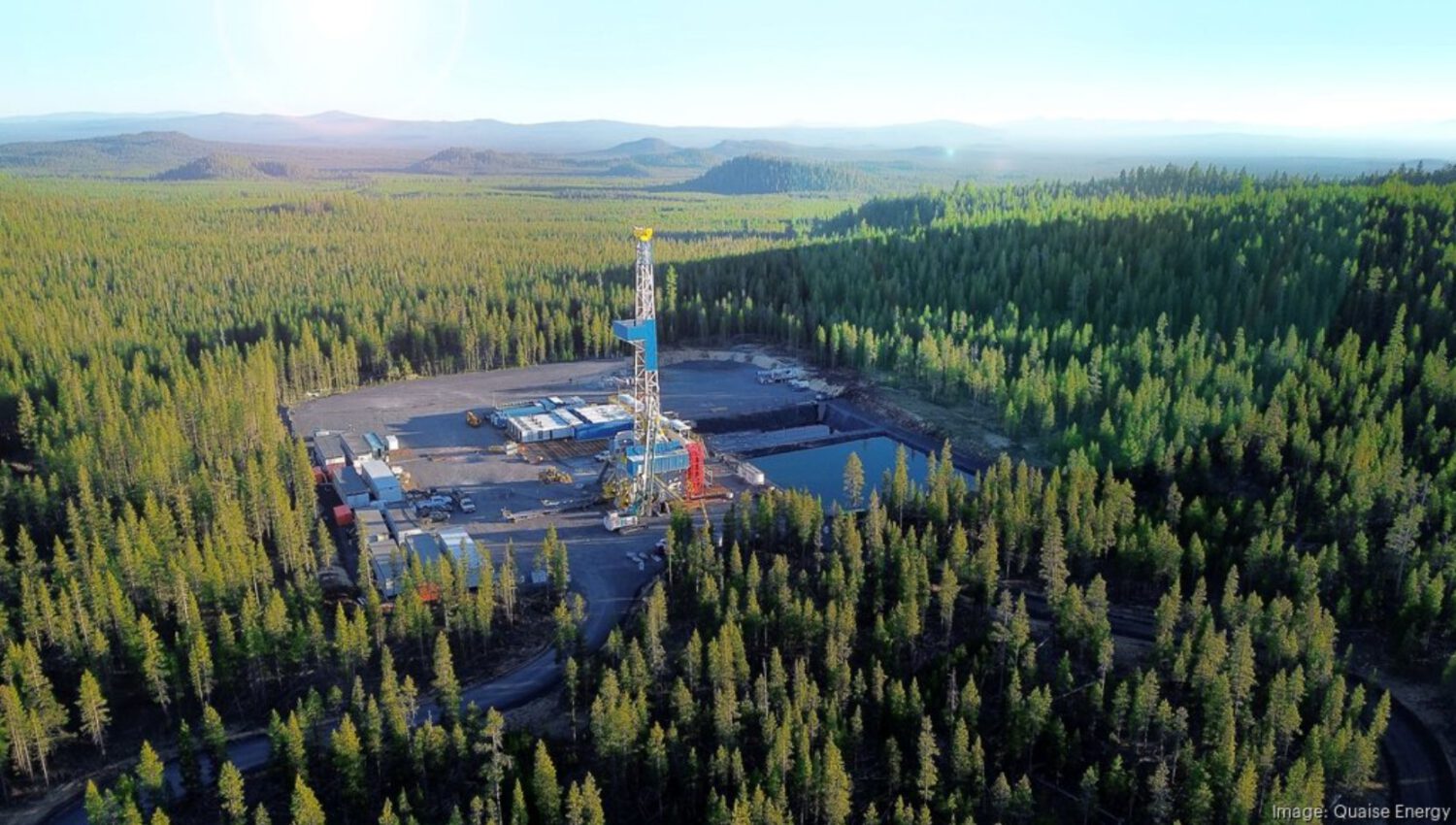
Solar panels go dark at night. Wind turbines sit idle in calm weather. Google has signed an agreement to purchase 50 megawatts of geothermal electricity from a planned facility near Newberry Volcano in central Oregon, targeting a source that runs regardless of either condition.
The buyer is Google; the seller is Quaise Energy, a Texas-based startup. Quaise and Oregon Public Broadcasting both describe the deal as the first commercial-scale power-purchase agreement for superhot geothermal electricity.
What the Contract Actually Says
The agreement commits Google to a future electricity supply while leaving key financial details undisclosed.
Deliveries could begin as early as 2030, though the contract price, duration, and full financing structure were not disclosed in available reporting. The electricity is intended to support Google’s three data-center campuses in The Dalles, Oregon, as well as regional communities on the same grid.
The agreement gives Quaise its first major commercial customer, a development that could support project financing and outside investment.
Newberry Volcano, Phase by Phase
The project is structured in distinct stages, and the technology used in each stage differs significantly.
Project Obsidian is planned on federal geothermal leases in Deschutes National Forest, on the southern flank of Newberry Volcano south of Bend. The project is structured in stages, and the distinction between them matters.
The first phase, the one tied directly to the Google agreement, uses conventional drilling to reach rock at a reported target depth of roughly 4 kilometers, where temperatures exceed 300 degrees Celsius. That heat turns injected water into steam, the steam drives turbines, and the turbines produce electricity.
A later phase is where Quaise’s signature technology enters. The company’s system uses a gyrotron to direct millimeter-wave energy into rock, heating and vaporizing material that conventional drill bits face severe limitations in penetrating. That system is planned to push drilling toward approximately 4.8 kilometers, targeting even hotter rock and higher output potential, though both depths are reported project targets rather than completed results.
Firm Power in an AI-Hungry Grid
Geothermal energy’s continuous output addresses a gap that solar and wind generation cannot easily fill.
Data centers running AI workloads demand electricity around the clock. Low-carbon sources that can match that profile without large-scale battery storage remain scarce, and geothermal energy is one of the few that can provide firm generation regardless of weather.
The Google agreement reflects a broader industry search for reliable, carbon-free electricity as data-center demand accelerates. The deal gives Quaise a commercial anchor that could support financing and validate a still-emerging technology.
What Remains Unproven
Several technical, regulatory, and financial variables stand between the current agreement and an operating power plant.
Quaise’s millimeter-wave drilling system has not yet been demonstrated at full commercial power-plant scale as of the available reporting. That system is primarily associated with the project’s later expansion phases, not the initial 50-megawatt delivery.
The 2030 delivery target is a projection, not a guarantee. Permitting, environmental review, and transmission construction from the Newberry site to a substation near La Pine could each affect the schedule. Reservoir performance and financing decisions could also shift the timeline.
One secondary report, citing The Wall Street Journal, estimated the total deal value above $500 million. Neither Quaise nor Google has confirmed that figure.
A Starting Point, Not a Finish Line
The initial agreement is best read as the opening stage of a much larger planned project.
Fifty megawatts is roughly enough electricity for 50,000 average homes, according to Oregon Public Broadcasting. Quaise has outlined a growth path that includes a subsequent 250-megawatt phase and a possible eventual capacity exceeding 1 gigawatt, though both remain contingent on the initial project performing as planned. Project Obsidian is a planned commercial demonstration, not yet proof that superhot geothermal works at scale, but it represents a major attempt to find out whether it can.