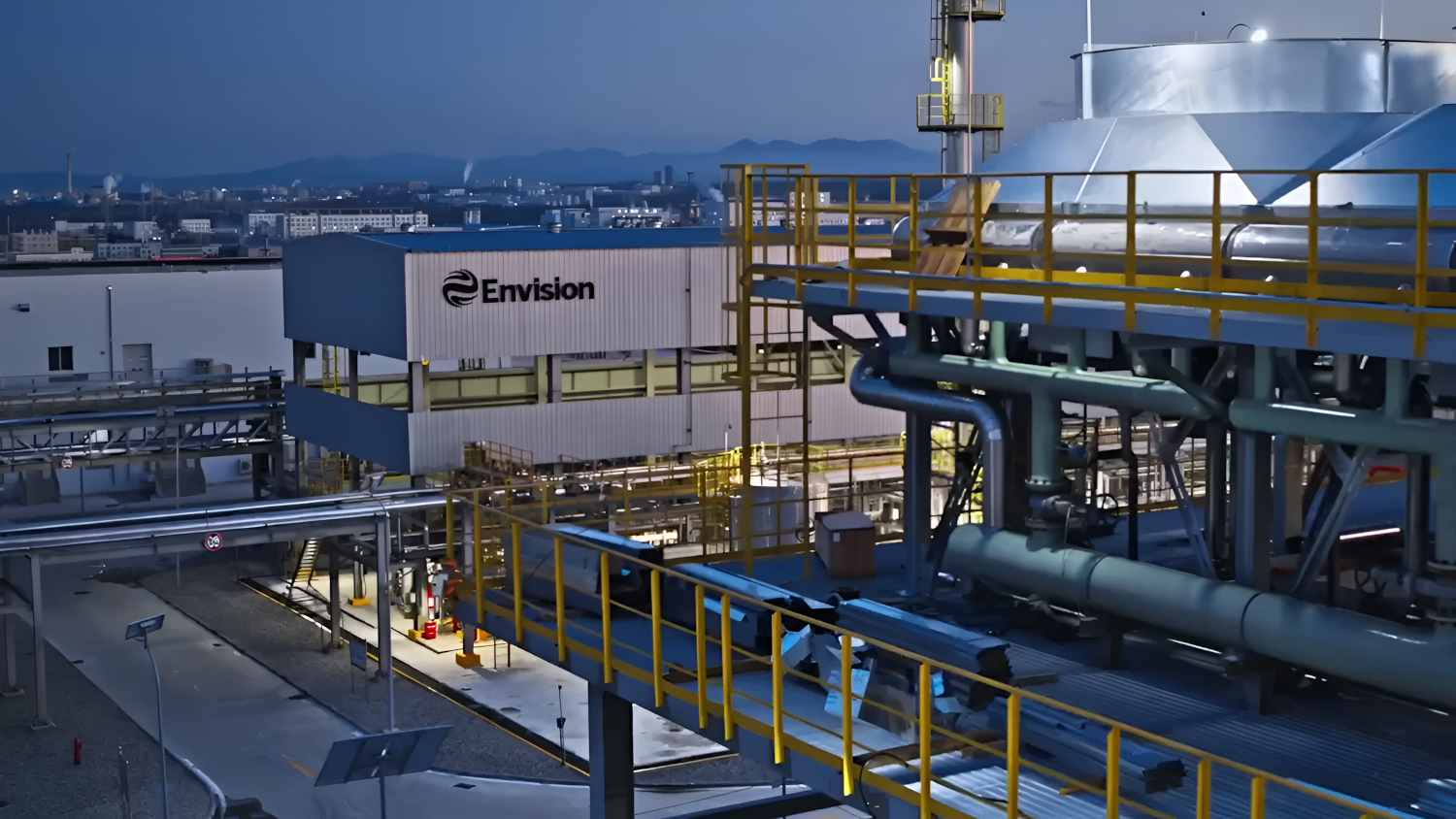
Envision Group delivered the first 120 MW phase of its Galaxy AI campus in Ulanqab, Inner Mongolia, in less than one year, according to a November 2026 site visit report from research firm SemiAnalysis. The full campus is planned for up to 800 MW of IT capacity across four phases, with completion expected by end of 2027.
That 800 MW figure invites comparison with the Stargate campus in Abilene, Texas, which SemiAnalysis has reported at approximately 820 MW of critical IT capacity. The comparison is a useful frame, not a verdict: the two projects differ in financing structure, accelerator configuration, cooling design, and construction scope.
What SemiAnalysis Says About Cost
The reported cost gap looks structural, not coincidental.
SemiAnalysis estimated Galaxy’s construction cost at below $3 million per megawatt, roughly one-fifth the cost of a comparable U.S. project. That figure is SemiAnalysis’s estimate, not an audited industry benchmark, and it does not apply universally to Chinese AI infrastructure.
Part of the gap may reflect vertical integration rather than cheaper construction alone. Envision has installed more than 100 GW of wind turbines globally and is applying that supply-chain experience directly to Galaxy. Combining wind generation, battery storage, transmission equipment, and data-center construction under one company may reduce procurement layers and coordination requirements.
The Power Strategy Is the Story
Envision is building its own electricity supply, not just buying from the grid.
Two dedicated wind farms total 420 MW of installed capacity. They are sited roughly 80 kilometers apart to reduce the chance that both experience low-wind conditions at once. Four-hour battery storage shifts generation from windy periods into gaps, and Envision is targeting more than 60% of electricity for the campus’s first two phases from those wind farms, against an expected 240 MW data-center load.
All-in electricity costs in Inner Mongolia run approximately $0.055 per kilowatt-hour, according to SemiAnalysis, among the lowest figures cited in the report. The broader questions around AI data centers and energy infrastructure remain significant across the industry.
Reliability Is Not Solved, Just Managed
Variable wind output means storage and backup remain essential, not optional.
Inner Mongolia wind runs at a capacity factor of roughly 35% to 40%, meaning average output over time is well below the turbines’ rated maximum. Firm power sources would generally be required for continuous AI workloads. Geographic diversification and batteries reduce the problem; they do not eliminate it.
A Small but Notable Power Electronics Pilot
A 5 MW test converts high-voltage AC directly to 800-volt DC for server racks.
A pilot at the site converts incoming 10-kilovolt AC electricity directly to 800-volt DC for server racks using solid-state transformer technology, removing intermediate transformer, UPS, and rectifier stages. Eliminating those stages could improve power-delivery efficiency, though whether the approach scales economically across an 800 MW campus remains undemonstrated.
Context on the Numbers
Competing project-size figures reflect different boundaries, not a single consistent plan.
Envision’s public descriptions of the project have varied, with some references exceeding 2 GW or reaching 3 GW. Those figures may reflect different project boundaries or expansion stages; the available evidence does not reconcile them, and they should not be treated as interchangeable with the 800 MW IT-capacity figure. That 800 MW number covers IT load only, not total facility power demand including cooling and other infrastructure.
Galaxy sits inside a broader Inner Mongolia data-center pipeline that reportedly totals around 3 GW, according to SemiAnalysis. The defensible conclusion is that Envision is presenting a competing model for AI infrastructure deployment: vertically integrated, renewables-anchored, and fast. Whether that model transfers beyond its specific regulatory, geographic, and supply-chain conditions is a separate question.