
Everybody’s got a junk drawer full of little gadgets that aren’t plugged in anymore. Smart sensors, lights, whatever, the drawer is full of them. They’re not broken either, they just weren’t worth the effort to actually use.
You’ve also probably got something smart that’s stayed plugged in because it was easy to install and use. That’s what we’ve picked out for this guide: smart gadgets that don’t take a master’s degree to set up and don’t take more effort to use than the thing they’re replacing.
1. Linkind Smart Light Stick

Most smart bulbs have one move: the whole bulb turns blue, or the whole bulb turns orange. Screw the Linkind Smart Light Stick into any E26 socket and you get 50 zones you control one at a time, so a single lamp can hold a sunset, a gradient or a moving flame.
While Linkind is big on the flame effect, when we tested it the thing that mattered most to us was distance. From across the room you’d take the bulb’s light show for the real thing, so give it an open or glass fixture so you can watch the magic.
It still works as a light too, which is why we didn’t ever unscrew it. You get 850 lumens, about what a 60-watt bulb gives you, and a white range from 1000K to 6500K, so you can go candle-warm for dinner or cool daylight for chores. That makes it just as useful on a regular Tuesday afternoon as it would be for a Halloween party, and because it screws into a lamp you already own, you’re not mounting a strip behind the TV to get mood lighting.
Our own testing showed that setup takes a phone and nothing else. It joins over Wi-Fi with no hub to buy, and because it speaks Matter, it drops into Alexa, Apple Home or Google Home. There are more than 120 presets in the app when you don’t feel like building your own, and you can group up to 16 bulbs so a whole porch or stair rail runs one effect at once.
2. Aqara Presence Sensor FP2
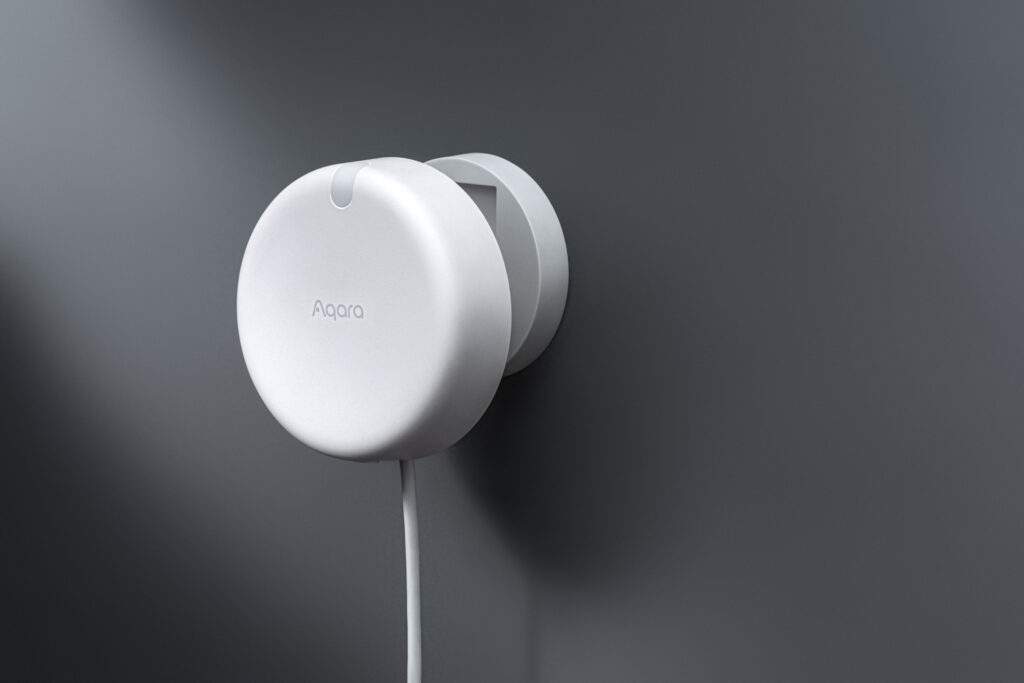
You sit down to read and ten minutes later the lights go out on you, so you wave an arm at the ceiling like an idiot and they come back. That’s a motion sensor doing exactly what it was built to do, which is watch for movement, and you weren’t moving.
The FP2 uses 60GHz millimeter wave radar, so it sees that a body is in the chair rather than waiting for the body to wave. Mount it on a wall and it maps the whole room, splitting a space of up to about 430 square feet into as many as 30 zones and tracking up to five people across them, which means the desk and the couch can run completely different rules. It takes wired USB-C, so there are no batteries to think about, and it joins over Wi-Fi with no Aqara hub in the picture.
3. SwitchBot Bot
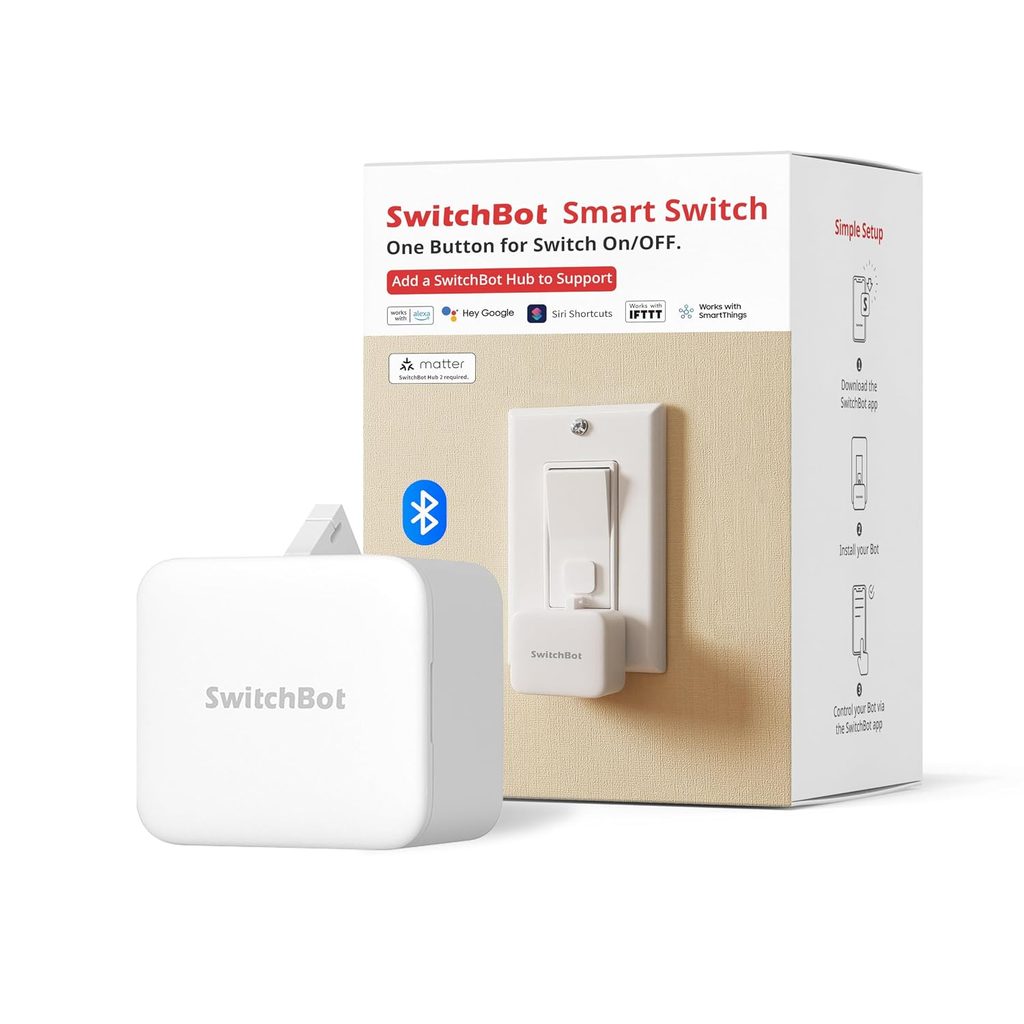
Your coffee maker has one button on it and the button is twelve feet from the bed. So you’ve looked at smart coffee makers, which are a lot of money to spend on what is, at the end of the day, a button.
The SwitchBot Bot is a little plastic box with an arm in it. You stick it on with the adhesive pad, and when you tell it to, the arm swings out and presses the button for you. It’ll do the bathroom fan, the garage paddle switch, the light switch behind the bookcase, and it pushes with up to 8 newtons, which handles the buttons and rockers you find around a house. On its own it runs over Bluetooth, and adding a SwitchBot Hub opens up remote triggers and Alexa, while a Hub 2 brings it into Apple Home.
4. ecobee Smart Thermostat Premium
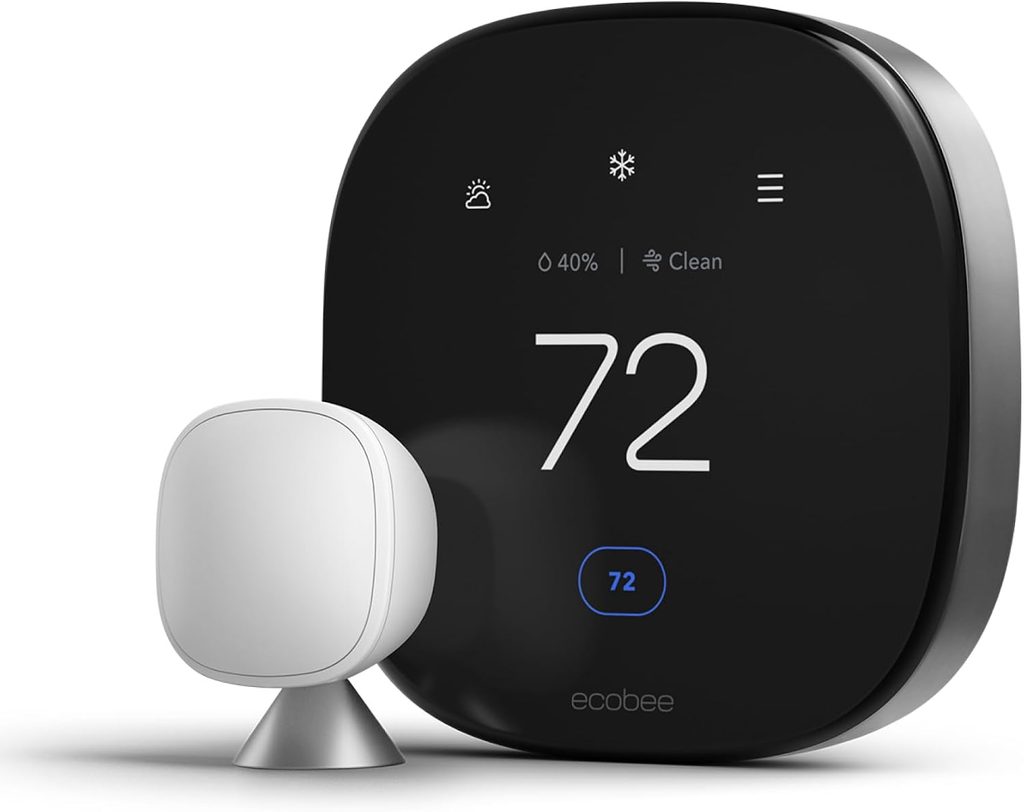
The thermostat on your wall measures the temperature of your hallway, which is where nobody is. That’s the problem ecobee solved with remote sensors, and the Premium ships with one in the box, so you can tell the system to heat the bedroom at night and leave the hall alone.
It layers radar occupancy sensing on top, which means the thermostat knows whether a room is in use rather than guessing from a schedule. There’s an air quality monitor built in that flags when indoor readings drift, and a speaker with your choice of Siri or Alexa, so it doubles as the voice assistant in a hallway that didn’t have one. ecobee’s Power Extender Kit handles the wiring in older homes, and the whole thing carries a three year warranty, which is unusually long for a thermostat.
5. SwitchBot S20

You bought a robot mop and now you fill a clean tank before every run and carry a tank of gray water to the sink after it. That’s two jobs you didn’t have before, and it’s why the mop function on most of these gets switched off by about March.
The S20 plumbs in. Its water station ties into the supply and drain near your washing machine, so the robot fills itself, dumps the dirty water on its own, and you never touch a tank again. The other dock handles the dry side, pulling the bin into a bag that goes about 90 days between changes and blowing 50 degree air through the mop pads so they come out dry instead of sour. Suction tops out at 10,000 Pa, and the one to get is the version listed as S20 with Auto-Fill and Drain System, since that’s the package with the plumbed station in it.
6. Aqara Curtain Driver E1

It’s seven in the morning, the bedroom is pitch dark, and you’re awake but nothing else is. Somebody has to get up and haul the curtains open, and it’s going to be you, and it’s cold.
The E1 clips onto the curtain rod that’s already up there and drags the curtains along it on a schedule. No new rail, nobody in your house drilling anything, and the curtains you picked stay on the window. It pulls up to 26 pounds, so lined curtains across a normal window are no trouble, and it comes in a rod version for round rods and a track version for U and I rails. The battery goes nine months to a year between charges, or you can leave it on USB-C and forget it, and it joins your Aqara hub over Zigbee alongside the rest of the system.
7. YoLink Water Leak Sensor 2

You’re two states away for a long weekend when the braided hose behind the washing machine lets go. Nobody’s home to hear it. You find out Sunday night when you walk in and the laundry room floor gives a little under your foot.
The Water Leak Sensor 2 is a puck you drop on the floor behind the machine, and the second it gets wet it screams between 95 and 105 decibels and fires an alert at your phone. The radio is what earns it a spot here, because it runs LoRa rather than Wi-Fi, so the alert makes it out of a basement corner or a crawlspace where your router gave up years ago. A YoLink hub picks that signal up and pushes it to your phone and your Alexa speakers. Two AAA batteries keep it alive, and a three and a half foot probe cable comes along if you’d rather sense down a run of pipe than at one spot.
8. Lutron Caséta Diva Smart Dimmer
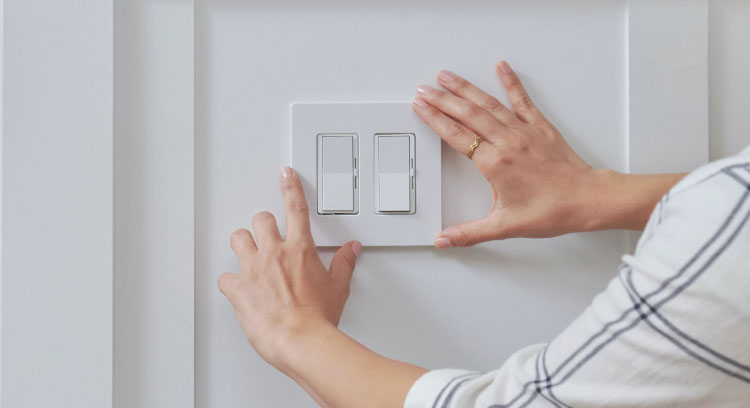
You put smart bulbs in the living room and they were great for a month. Then somebody flipped the wall switch on their way out, and now the app can’t reach any of them and your kid is standing in the dark asking why the lights are broken.
The Diva goes in the wall instead of the socket, which is what fixes that for good. It replaces the dimmer, so the ceiling fixture gets schedules and app control while the switch on the wall still works like a switch for everyone in the house who doesn’t care about any of this. It also needs no neutral wire, and that’s the thing that puts it in houses built before the mid-1980s where most smart switches can’t go at all. It drives up to 150 watts of dimmable LED, Lutron’s Smart Hub adds the app, the schedules and the voice control, and the Pico remotes pair straight to the dimmer so you can stick one by the bed.
9. Flume 2 Smart Home Water Monitor
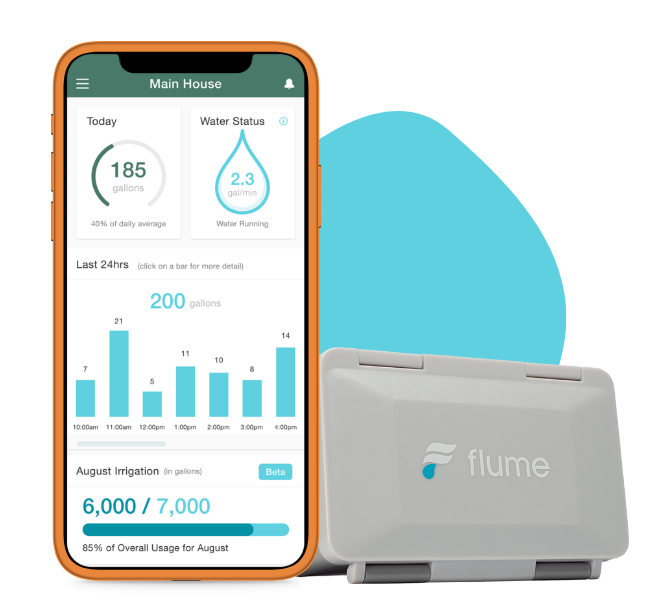
You open the water bill and it’s ninety dollars more than last quarter. There’s nothing on it to call about and nothing to look at, so you stand there wondering whether that’s the sprinklers, the kids, or something that’s been dripping inside a wall since February.
Flume straps to the outside of the meter you already have and reads its magnetic field, so nobody cuts a pipe and nobody shuts the water off. It’s about ten minutes with the included straps. From there it resolves down to a hundredth of a gallon, which is fine enough to tell the dishwasher from the shower from the irrigation line, and it flags a continuous trickle as a leak long before the bill does. A bridge plugs in indoors and carries the readings to your phone, four lithium AAs run about a year, and buying direct gets you the alerts and the full fixture breakdown with no monthly fee.
10. Reolink Video Doorbell WiFi

Most video doorbells sell you hardware and then rent you the footage. The D340W puts a microSD card slot in the doorbell and leaves person, vehicle, animal and package detection switched on for free, so after the purchase you owe Reolink nothing.
The sensor is 5 megapixels in a tall 3:4 shape, which matters more than the resolution does, since a portrait frame shows you the box on the step as well as the face at the lens. The chime is in the box. It hardwires to the doorbell transformer you already have rather than running on a battery, which means there’s no ladder every few months and no charging cycle to remember.
11. Eve Energy
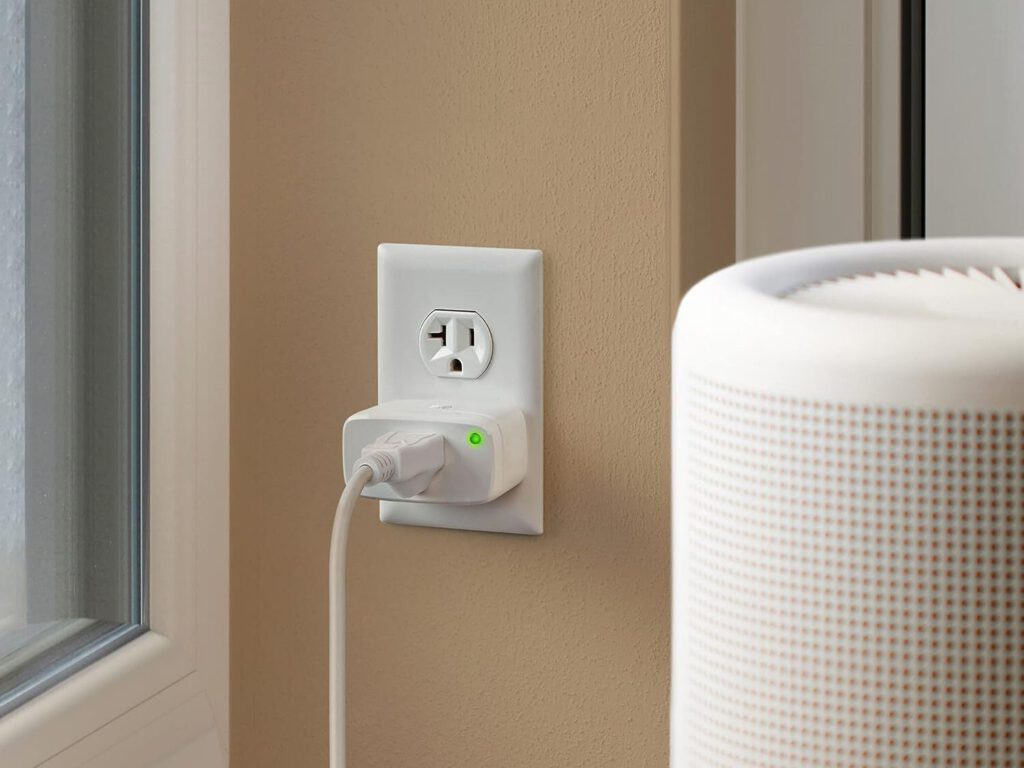
There’s a second freezer in your garage that’s been running since 2019 and you have no idea what it costs you. Might be eight dollars a month. Might be forty. You’ve never had a way to find out short of reading the meter before and after, which nobody does.
Put Eve Energy between the plug and the wall and it tracks what that freezer pulls over days and weeks, then turns it into dollars once you’ve typed in your utility rate. It takes up to 15 amps, so it covers everything in the house short of a space heater, and you get scheduling and remote switching on top. It runs Matter over Thread, which means an Apple TV 4K, a HomePod mini or a Thread capable Echo brings it into Apple Home, Alexa, Google Home or SmartThings with a scan and a tap.
12. Aqara Smart Lock U400

You’re at your own front door with a bag in each arm and a gallon of milk hanging off one finger, trying to punch a six digit code with your elbow. Your keypad lock fixed the problem of losing keys, and then it handed you this one instead.
The U400 adds ultra wideband, so the lock picks your phone up on the way along the path and opens before you get there, with an iPhone 11 or newer or an Apple Watch Series 6 or newer in your pocket. Everyone else in the house gets their own way in, since it holds up to 50 fingerprints, takes a code on the keypad, carries an Apple Home Key in the Wallet and a Samsung Wallet key through SmartThings. The rechargeable battery goes about six months and tops up over USB-C from the inside panel. It fits a standard single cylinder deadbolt and carries an IP65 rating, so weather on an exposed front door is fine.
13. Rachio 3 Smart Sprinkler Controller

You’re backing out of the driveway in the rain and the sprinklers come on behind you. They come on because it’s Tuesday, and you told the box Tuesday on a Saturday in April, and the box has no idea it’s raining.
The Rachio 3 reads the forecast and the recent rainfall and skips the cycle, which is the whole reason anyone buys one of these. It comes in 4, 6, 8, 12 and 16 zone versions, joins over 2.4 or 5GHz Wi-Fi, and charges nothing monthly for the scheduling or the rain skips. Rachio sells a weatherproof enclosure if the controller is going on an outside wall, and the standard models carry a two year warranty.
14. Airthings View Plus
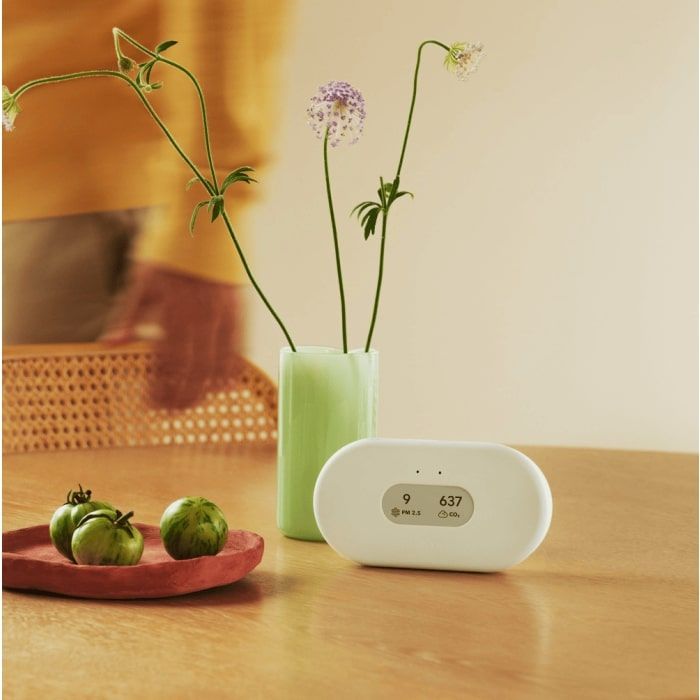
Everybody who spends an afternoon in your finished basement comes up with a headache, and nobody can tell you why. The room smells fine. It looks fine. You’ve already opened a window, and that didn’t change anything.
The View Plus sits on a shelf down there and reads seven things at once: radon, PM2.5, carbon dioxide, VOCs, temperature, humidity and air pressure. Radon is the one to care about, since it’s the second leading cause of lung cancer in the US and it has no smell, and where a hardware store kit gives you one number from one week of one year, this gives you a number that updates for as long as it sits there. Six AA batteries come in the box and last about two years, or you can run it on USB-C, and the readings land in a free app with no hub and no subscription.
15. Google Nest Learning Thermostat, 4th generation

There’s a heating schedule in your thermostat from the week you moved in, and your life stopped matching it about a year later. You’ve never reprogrammed it. Nobody reprograms a thermostat, which is why half the houses in America are heating empty rooms on a timetable from a job somebody doesn’t have anymore.
The Nest watches what you actually do and rebuilds the schedule to match, and the fourth generation now puts a remote temperature sensor in the box, so the bedroom gets a vote the first night. The display is the other upgrade, a 2.7 inch round screen at 600 by 600 that lights up with the temperature as you walk past, driven by the same Soli radar chip Google put in its phones. It speaks Matter alongside Google Home, and for better than 99 percent of homes it’s a straight swap off the wall.