The sit-in baby walker is supposed to help babies get moving. The problem is that pediatricians have warned about them for decades, and they don’t actually teach babies how to walk.
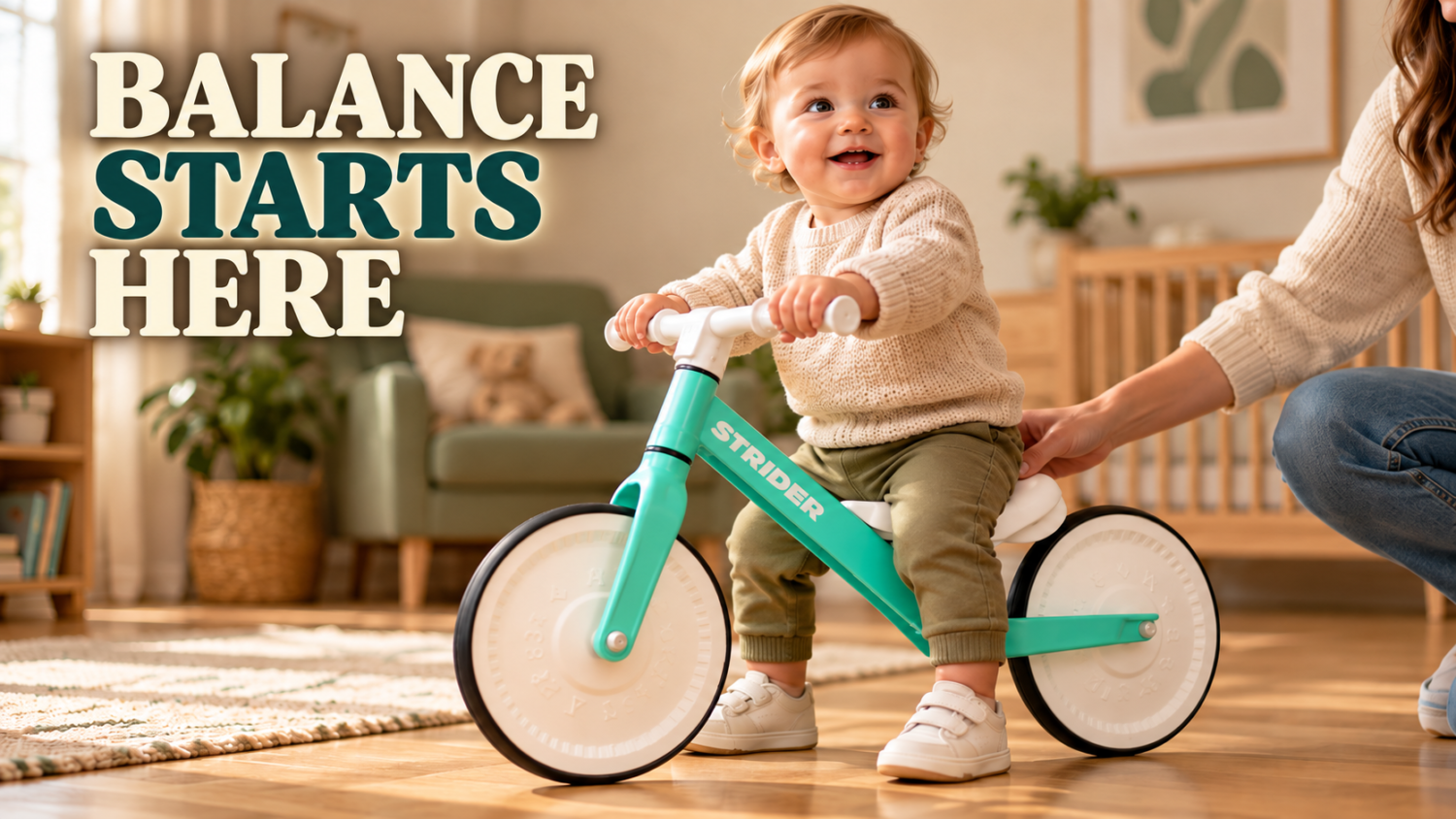
A much more effective alternative is a balance bike. Instead of carrying a child around in a wheeled seat, it makes the child create the movement themselves. Their feet stay connected to the ground, they control their own speed, and they’re actively working on balance, coordination and postural control.
If you’re looking to buy a balance bike to help your baby’s balance development, be wary of what you’re really shopping for. There are lots of 4-wheel toys out there that sell themselves as “balance bikes,” but that’s obviously a misnomer. Anything on four wheels balances by itself. What you want is a two-wheel toy like the one designed by Strider.
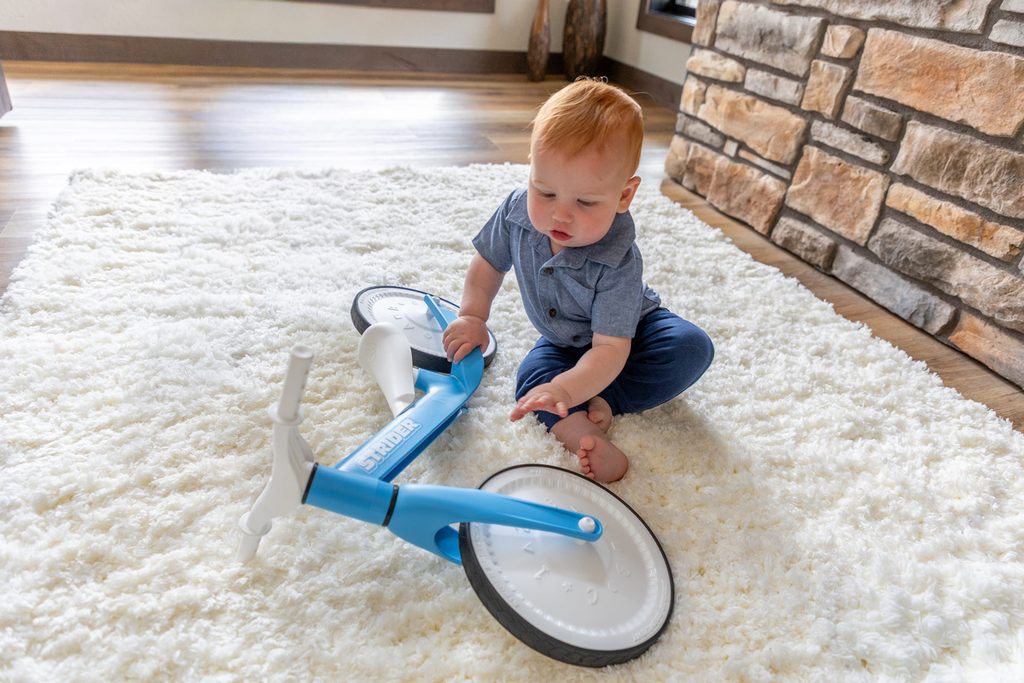
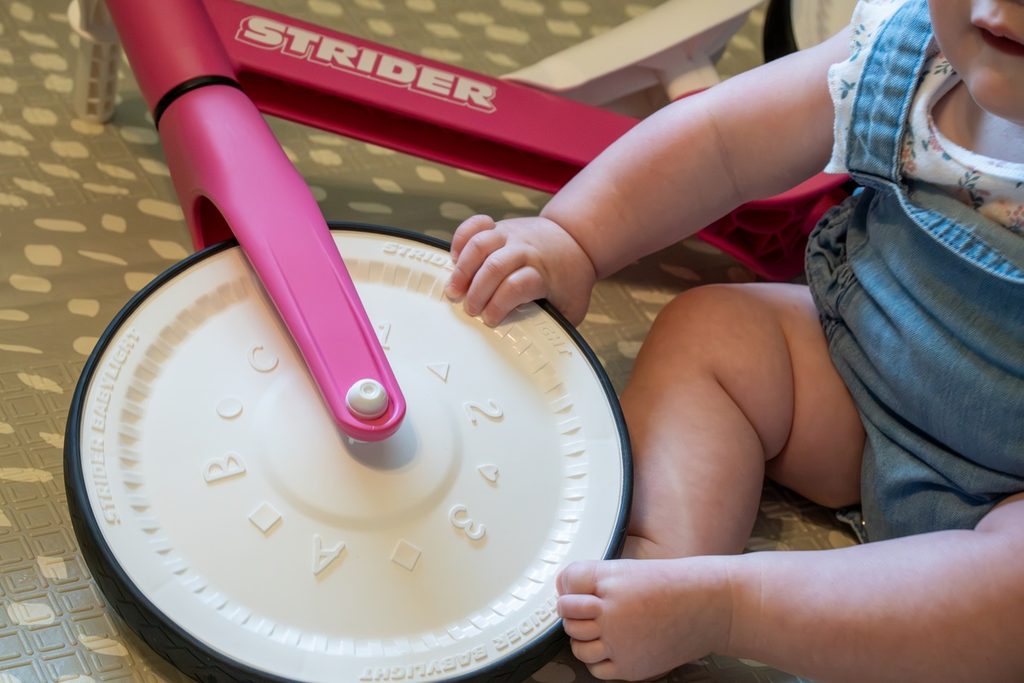
Well-known as the world leader in balance bikes for toddlers, they’ve taken that idea all the way down to infancy with their Baby Balance Bike, for ages 0 to 18 months. It weighs just 2.4 pounds, costs $69.99, and can become part of play surprisingly early. Babies can start interacting with it during tummy time, then progress to sitting with it, standing beside it and eventually using their own feet to move it around.
Balance is one of the foundational skills kids eventually need for walking, running and riding a bike. Research on older children has also found that kids who start with balance bikes tend to develop independent cycling skills earlier than kids who use training wheels, largely because they’re learning to stabilize themselves instead of relying on an external support.
That’s really the appeal. Instead of giving a baby something that moves them around, a balance bike gives them something they have to control themselves.
Four Stages, One Bike
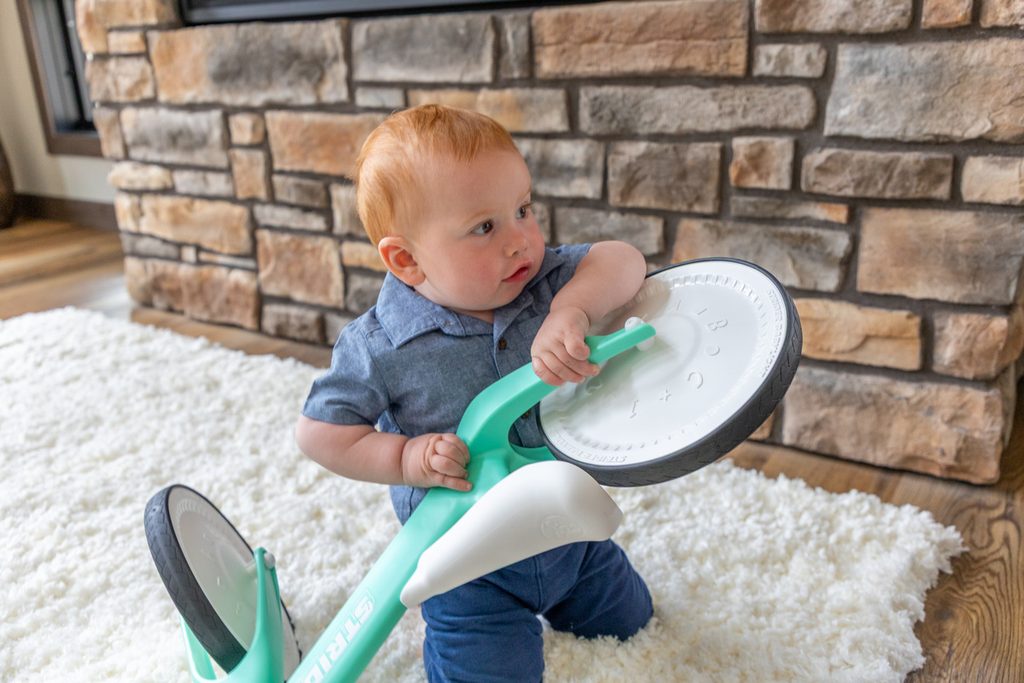
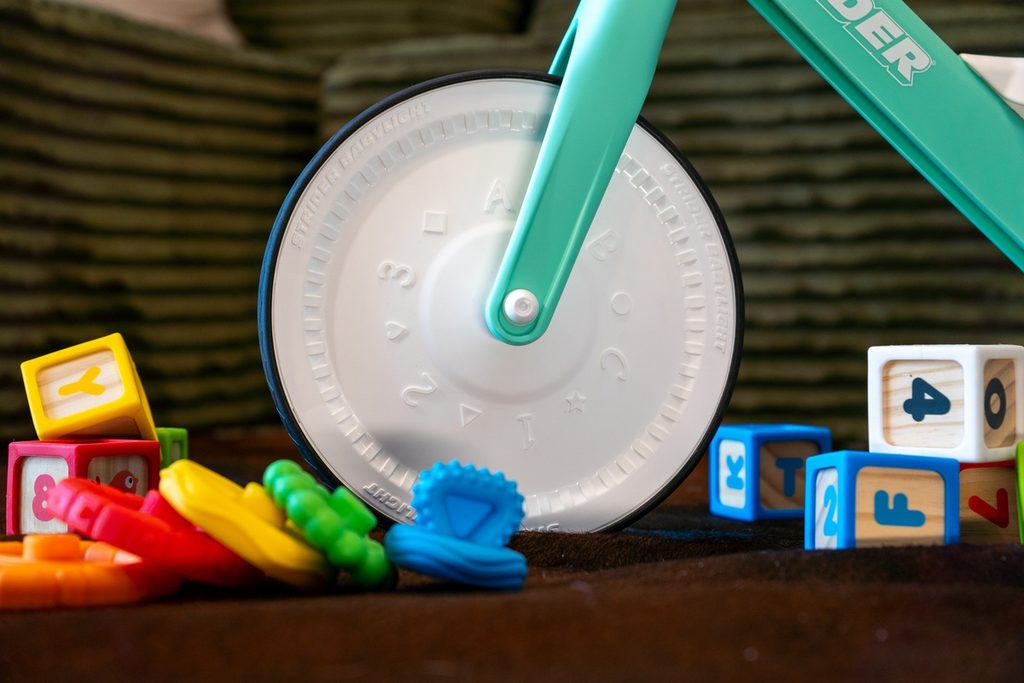
Strider designed the bike to grow with your baby. During tummy time, textured wheels and a bright frame give little hands something to reach for and grab. Then, once they can sit up on their own, spinning those wheels and turning the bars gives them their first lesson in cause and effect.
Stage three puts them in the saddle with both feet flat on the floor, learning to sit steady. Finally, stage four is assisted walking, where they pull themselves up, push off, and take steps with your hand on the seat.
By the time a real bike shows up, your child is already familiar with what it looks like, so there’s less fear to overcome and they can get right into developing a practical skill!
Nothing Blinks, Nothing Beeps
Bikes have another really nice feature, or perhaps we should say, lack of a feature: no batteries. Nothing blinking, beeping, or playing 8-second song loops forever. Just a bike.
It comes in blue, green and pink, in soft tones built to sit in a nursery without being an eyesore. The wheels use a non-scratch TPV compound that rolls across hardwood without leaving a trail, and the molded polypropylene frame can wipe clean after whatever happens to it (and something is going to happen to it, make no mistake). There are no brakes and no gears, by design, since a nine-month-old has no use for either.
Assembly? It takes one screw. Max rider weight is 30 pounds, the inseam range covers 9 to 12 inches, and it’s CPSC-tested to children’s toy safety standards like the rest of Strider’s line.
$69.99, and You’ll Be Using It For Months
Strider backs the $69.99 bike with a 30-day money-back guarantee, no questions asked.
It also does something most gifts can’t manage: put on a second act. Onesies will be outgrown by February, and baby shoes are on a timer the moment you leave the store. But a bike that works during tummy time at four months and again during first steps at fourteen months? That’ll last you more than a year. And, when it’s time for your child to move from it to something closer to a real bike, they’ll take to it like a fish to water.