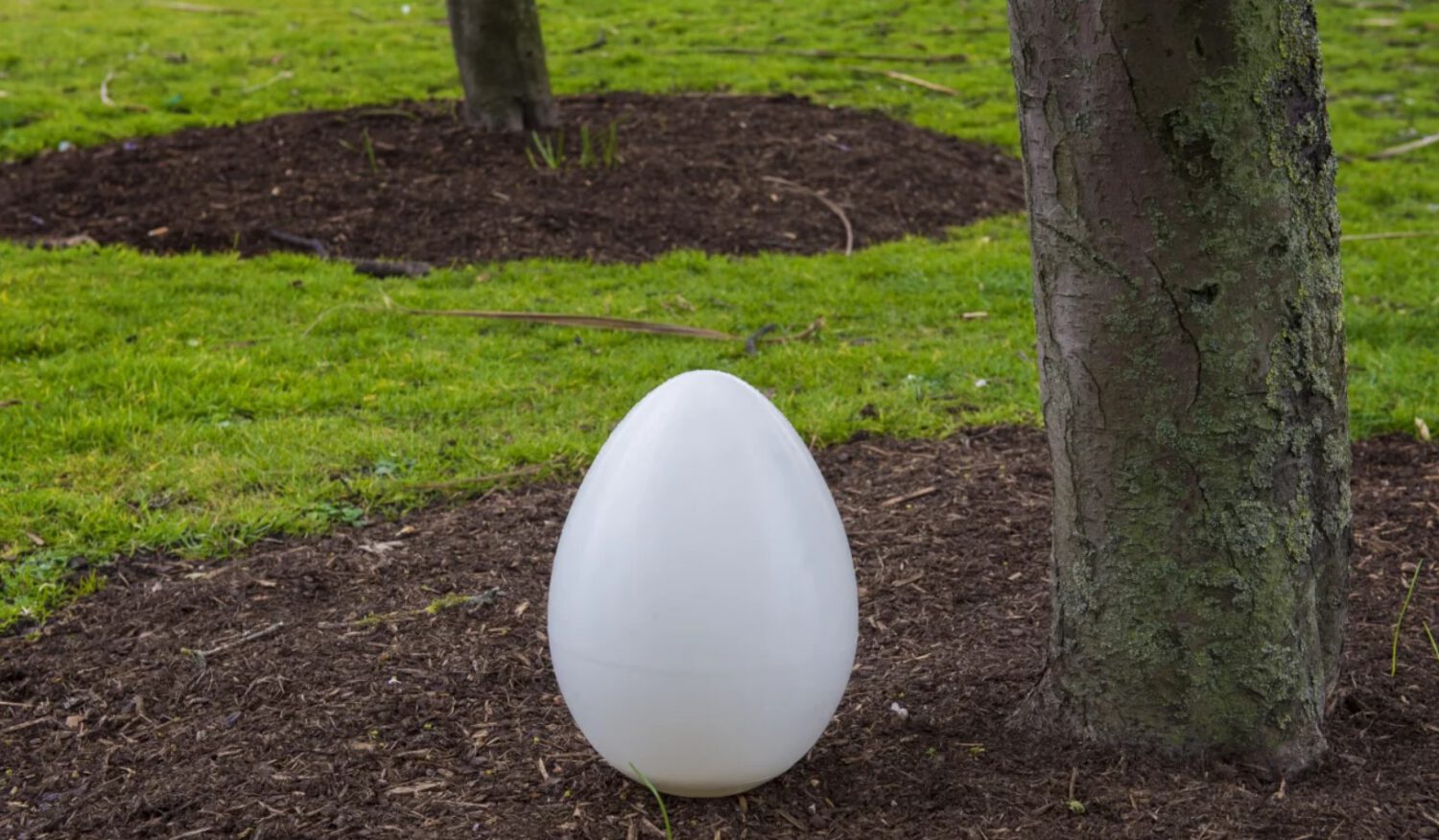
Picture yourself calmly browsing tree species the way you’d scroll Netflix, except the stakes are considerably higher and the subscription is eternal. That is the core pitch of Capsula Mundi, the Italian design project proposing a biodegradable burial pod that replaces your coffin with an egg-shaped capsule and your headstone with a living tree.
It has circulated on social media for years, reliably resurfacing with every new wave of green-living content. The full-body version is not currently offered as a generally available product or burial service, and in Italy, where designers Anna Citelli and Raoul Bretzel developed the concept, it is not currently legal under existing burial rules.
That gap between the idea and the reality is the whole story.
What Capsula Mundi Actually Is
The concept and the internet’s version of it are doing very different things.
Citelli and Bretzel’s design places an unembalmed body in a fetal position inside a bio-polymer capsule made from seasonal plant materials, described by official materials as derived predominantly from seasonal plant sources; secondary reports have identified starches such as corn and potato. A tree chosen by the deceased or their family goes into the ground above it. The concept is intended to avoid embalming chemicals, lacquered wood boxes, and granite slabs.
Here is where the viral posts tend to go sideways. Your body does not literally become a tree. Decomposition returns organic matter and nutrients to the surrounding soil, while the tree grows as a separate organism that benefits from that nutrient cycle as an intended ecological outcome. It is less Annihilation and more composting with spiritual intentions, which is still a meaningful thing, just a different one.
That distinction matters, because the environmental case for the pod depends on honest accounting, not poetic shorthand.
What You Can Actually Buy (and the Legal Fine Print)
The cremation urn is the product that exists; the full-body capsule is still on the drawing board.
Capsula Mundi’s commercially realistic offering is a smaller egg-shaped biodegradable urn for cremated remains, buried with a tree or plant. It faces fewer regulatory obstacles than an intact body does, though where you can legally bury or plant it still depends on local cemetery and health regulations.
According to Capsula Mundi’s own materials, the full-body capsule remains in a development or start-up phase. Africa Check’s fact-checking confirmed it has not become a generally available burial service.
Legal permissions for natural burial vary by jurisdiction. They do not automatically extend to a novel capsule containing intact human remains. Italy, the concept’s home country, does not currently permit the full-body capsule method under its existing burial rules, and the regulatory path forward remains genuinely elaborate.
Why the Idea Keeps Coming Back
Growing interest in lower-impact funerals gives the concept real staying power, even while it waits on regulators.
There is growing interest in lower-impact funerals, memorial forests, and deaths that leave something living rather than a rectangle of stone. A pod that carries the visual language of a sustainable design studio lands differently than a conventional funeral home brochure. That contrast has kept Capsula Mundi circulating well beyond its original audience.
Environmental benefits, though, depend on the whole system. That means no embalming chemicals, responsible material sourcing, and a planting site where the tree can realistically survive for decades rather than quietly dying two winters later.
Getting there requires certification, cemetery infrastructure, and supply-chain reliability, not just a beautiful render shared on Instagram. Choosing your own tree species is, stripped of the hype, a genuinely poignant idea. An oak over your grandmother, a cherry tree for someone who would have wanted something fleeting and dramatic.