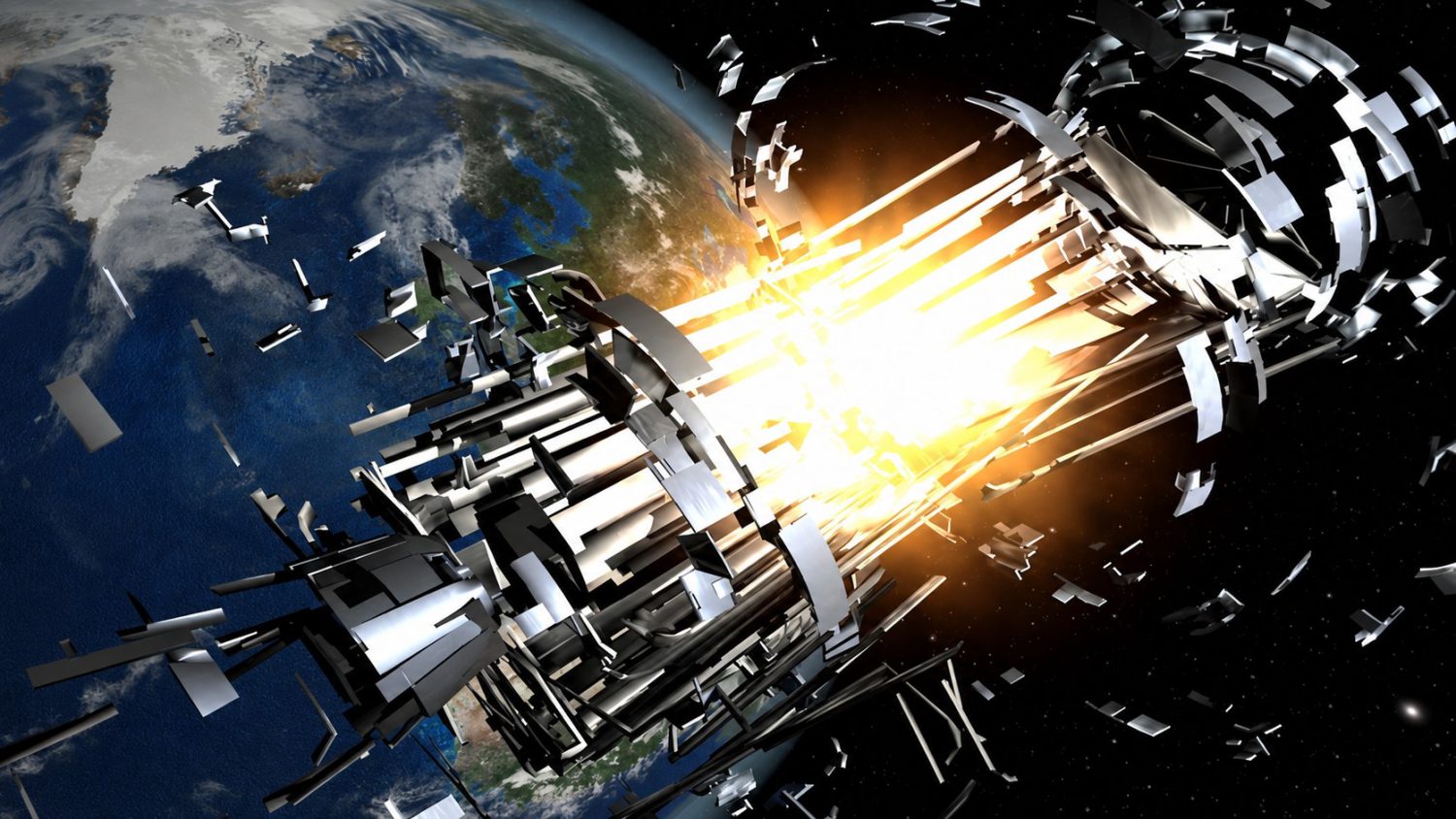
A classified U.S. signals-intelligence satellite launched during the Reagan administration broke apart in low-Earth orbit on September 13, 2026, at approximately 2113 UTC. U.S. Space Forces–Space confirmed the fragmentation event, placing it at roughly 775 kilometers altitude, and is now tracking the resulting debris for collision risk with active spacecraft.
The satellite, publicly catalogued as USA-32, was also known within the National Reconnaissance Office as FARRAH III. The program was reportedly named after Farrah Fawcett, according to reporting from Live Science and IFLScience.
A Spy Satellite Built for a Different Kind of Listening
USA-32 spent decades collecting electronic intelligence from orbit before becoming, unexpectedly, a source of orbital hazard.
USA-32 launched aboard a Titan II SLV rocket on September 5, 1988, as part of the NRO’s classified FARRAH program. Reporting from Live Science and IFLScience, citing declassified NRO material, indicates the program’s mission involved intercepting Soviet radar emissions and radio-frequency signals across a collection range of approximately 2 to 18 gigahertz.
Earlier FARRAH satellites were relatively small and box-shaped. FARRAH III was substantially larger and more cylindrical, with observers describing its shape as resembling a squat tuna can.
Public records do not establish exactly when the satellite ceased functioning. It was still observed in orbit as recently as 2021, more than three decades after launch.
What Caused the Breakup, and What the Debris Means Now
No mechanism has been identified, and the Space Force has ruled out nothing while confirming no immediate threats to other spacecraft.
No official cause has been identified. The Space Force has confirmed the fragmentation event and is assessing consequences, but public statements do not name a mechanism.
Technical possibilities include residual propellant or pressurized-tank rupture and battery failure. A collision with an existing debris fragment is also under consideration. These are inferences drawn from how aged spacecraft typically fail, not confirmed findings.
There is currently no public evidence that USA-32 was intentionally destroyed or targeted by an anti-satellite weapon.
Independent satellite-tracking organization s2a systems reported that fragments had already dispersed across a wide section of USA-32’s orbital track by September 16. The Space Force has incorporated the trackable debris into routine conjunction-assessment screenings. That process evaluates whether fragments could approach or strike active spacecraft.
Officials reported no immediate threats to other satellites. If you operate a spacecraft in low-Earth orbit, conjunction screening is what determines whether a fragment is on a path toward your vehicle. The near-term picture may look manageable, but orbital debris at 775 kilometers can remain in orbit for years, crossing satellite paths at high relative speeds and creating future conjunction risks.
A Reagan-Era Satellite, a Present-Day Problem
The debris population from USA-32 is still being counted, and the broader lesson is already visible.
No public count of USA-32 fragments has been established yet. Tracking data will continue to accumulate, and analysts are expected to refine both the number and orbits of trackable pieces over time.
Satellites designed under Cold War-era standards, before modern debris-mitigation requirements existed, are still capable of generating real hazards in an orbit far more crowded than it was in 1988. The hardware launched to surveil Soviet radar has become, decades later, something that other spacecraft will need to watch out for.