Before Stonehenge was raised, before Egypt’s first pyramid broke ground, before the Nazca people drew their famous lines across the Peruvian desert, someone in what is now southern Arizona shaped a 272-foot fish into the earth. On April 23, 2026, a border-wall contractor drove heavy equipment across it.
Conservation advocates describe the damage as irreparable.
A Sacred Carving, Newly Understood
New research places the Las Playas Intaglio among the oldest ground carvings ever scientifically dated in the Americas.
The Las Playas Intaglio sits inside the Cabeza Prieta National Wildlife Refuge, west of Ajo, Arizona. A geoglyph is an image made by scraping or arranging the desert surface; this one, shaped like a fish, stretches roughly 272 feet in length.
Earlier estimates placed the carving at roughly 1,000 years old. Archaeologists David S. Whitley and geologist Ronald I. Dorn worked with rock samples collected from the site in 1979. Using a method called varnish microlamination, they revised that estimate dramatically.
Their findings, published in The SAA Archaeological Record in September 2026, date the intaglio conservatively at 6,500 to 7,300 years old, with the possibility it is closer to 7,500 years old. The Center for Biological Diversity describes it as the oldest scientifically dated geoglyph in the Americas, a claim attributed to the researchers.
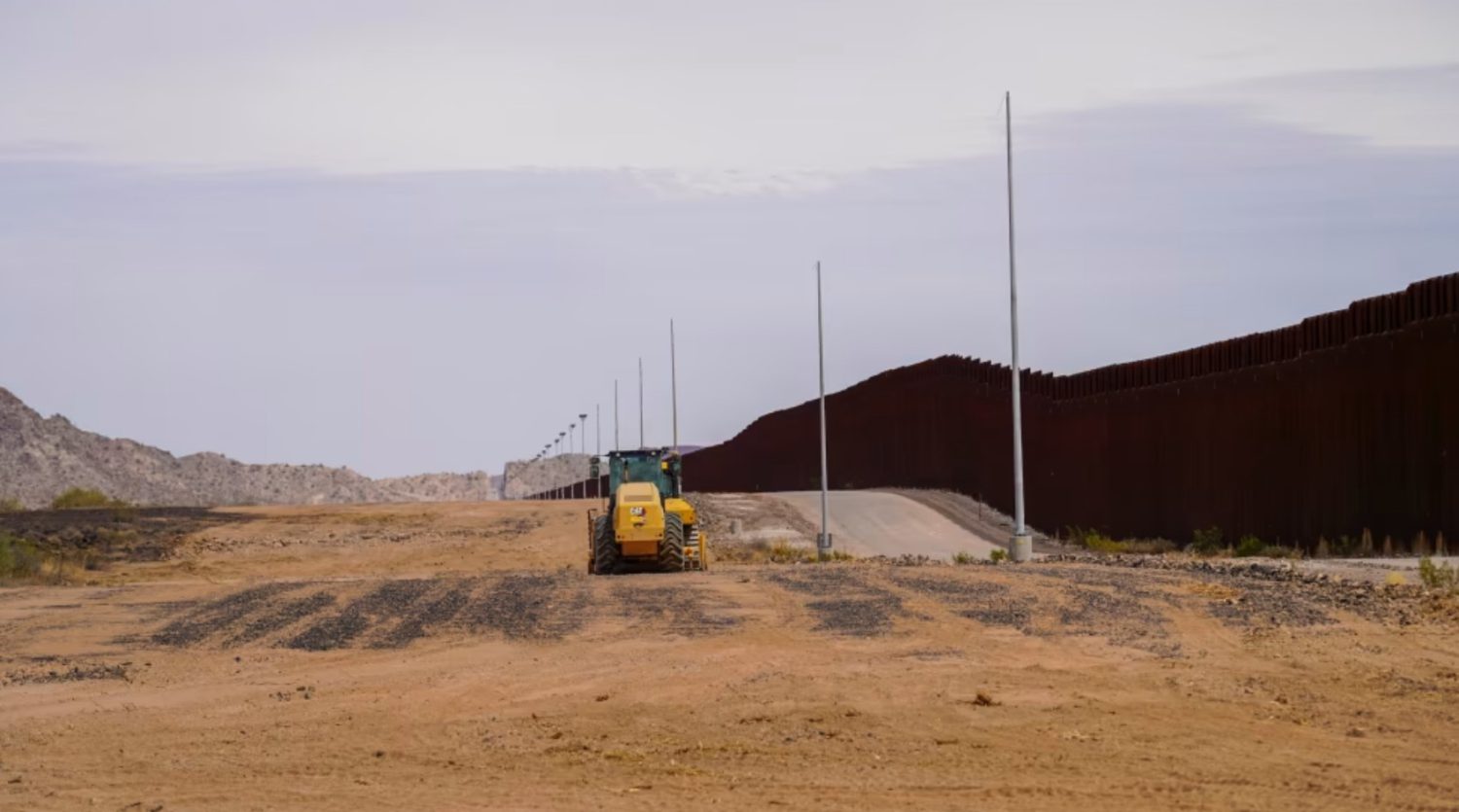
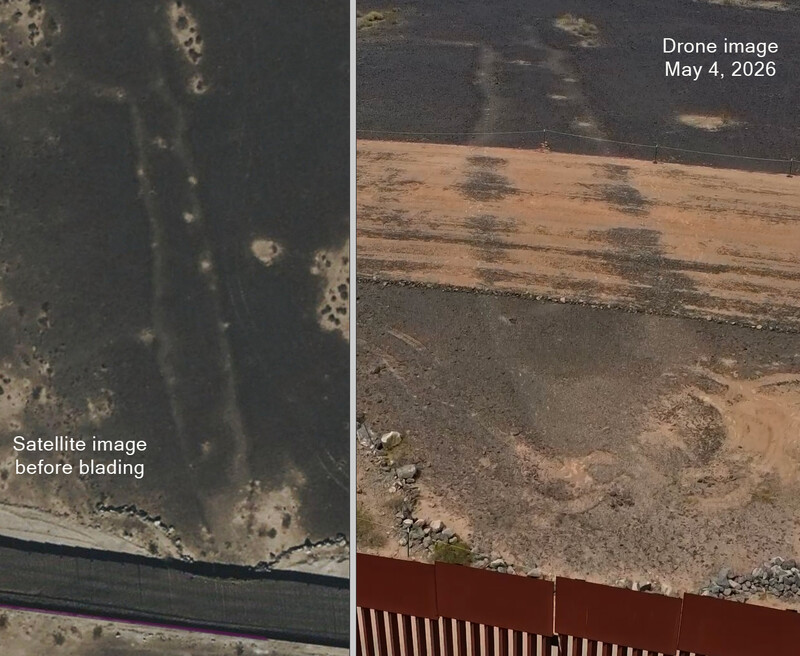
The construction crew preparing land for a second border barrier scraped a heavy equipment cut a corridor estimated at roughly 50 feet wide through the site, dividing part of the fish-shaped figure. The Center for Biological Diversity documented the damage.
“This discovery makes an already devastating loss even more profound. It’s a cultural and historical atrocity.” Russ McSpadden, Southwest conservation advocate, Center for Biological Diversity.
Waived Protections, Tribal Appeals, and an Unanswered Question
The site lies within Indigenous ancestral homeland, and the legal framework that would ordinarily protect it was set aside for border construction.
The intaglio sits within the ancestral homeland of the Tohono O’odham, Hia-Ced O’odham, and other Indigenous peoples. That ancestral connection is central to the significance of the damage.
The Department of Homeland Security invoked waiver authority under the Secure Fence Act of 2006. That authority allowed the agency to set aside specified environmental, cultural, historical, and religious-site protections for border construction projects, though the available record does not establish that every applicable safeguard was eliminated.
The Tohono O’odham Nation is appealing a federal judge’s decision not to block construction through its reservation. No direct statement from tribal representatives was available in the reported record.
U.S. Customs and Border Protection characterized the disturbance as inadvertent. A spokesperson said CBP Commissioner Rodney Scott was engaging directly with tribal leadership. The agency was also reviewing construction protocols and communication procedures.
“The remaining portion of the site has been secured and will be protected in place,” the spokesperson said, according to NBC News.
What the available reporting does not establish is whether the damage resulted from a failure to identify the site, a failure to communicate its location to contractors, or some other cause. That remains an open question.
Conservation advocates and tribal representatives have also raised concerns about planned construction near Quitobaquito Springs, a water source in Organ Pipe Cactus National Monument described as sacred to O’odham peoples and habitat for endangered aquatic species.
The portion of the Las Playas Intaglio that was damaged cannot, according to conservation advocates, be restored. What was scraped away in a single day had persisted for thousands of years.