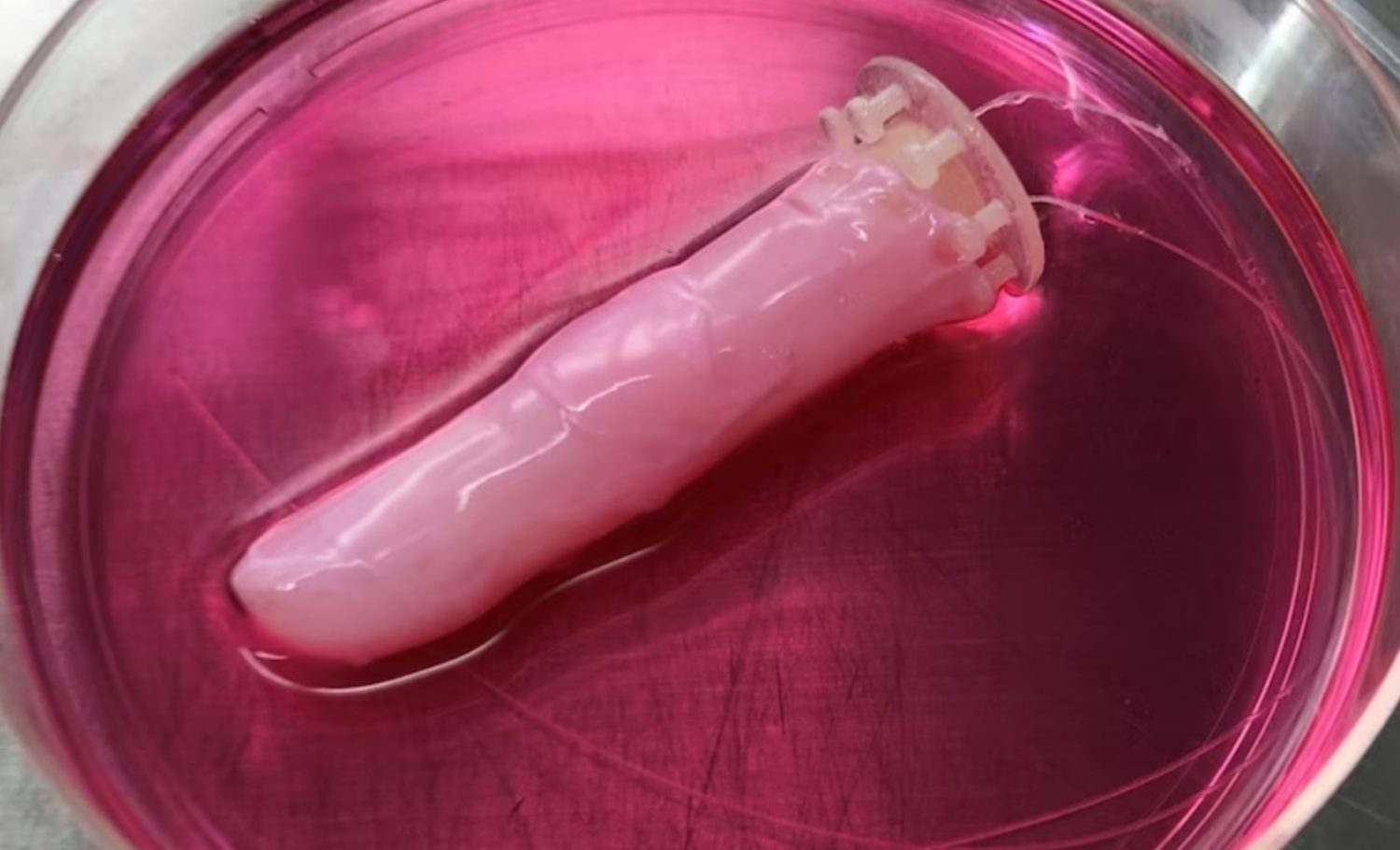
Robotic skin has long been built from silicone, rubber, or polyurethane, materials chosen to approximate human tissue without actually being alive. Researchers at the University of Tokyo built something different: a robotic finger covered not in synthetic material but in cultured living human skin, complete with knuckle wrinkles that form when the finger bends.
This is not a product. It is a laboratory prototype published in Matter on June 9, 2022, and its significance lies in demonstrating that biological tissue can coexist with a robotic structure and retain meaningful skin properties.
How the Skin Was Built
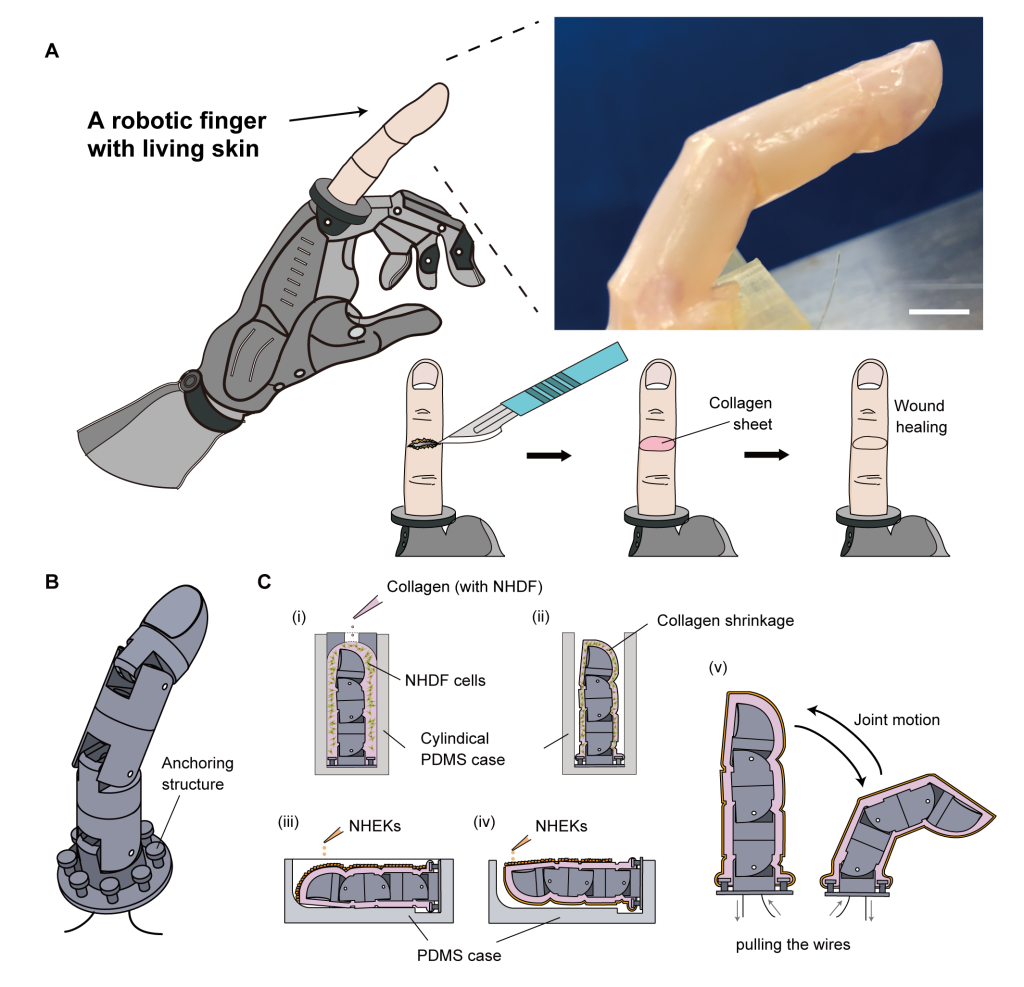
The team used a tissue-moulding process to grow two principal layers of human skin directly around a working robotic finger.
The work was led by biohybrid engineer Shoji Takeuchi, with co-authors Michio Kawai, Minghao Nie, Haruka Oda, and Yuya Morimoto. The robotic finger was immersed in a mixture of collagen and human dermal fibroblasts, which formed a connective dermal layer around the structure. Human keratinocyte cells were then applied to create an epidermis.
According to the Takeuchi Laboratory’s research summary, the construct covered the three-joint finger seamlessly and developed barrier properties confirmed through tissue and functional analyses. Both principal layers of human skin, dermis and epidermis, were present in the finished construct.
What the Skin Can and Cannot Do
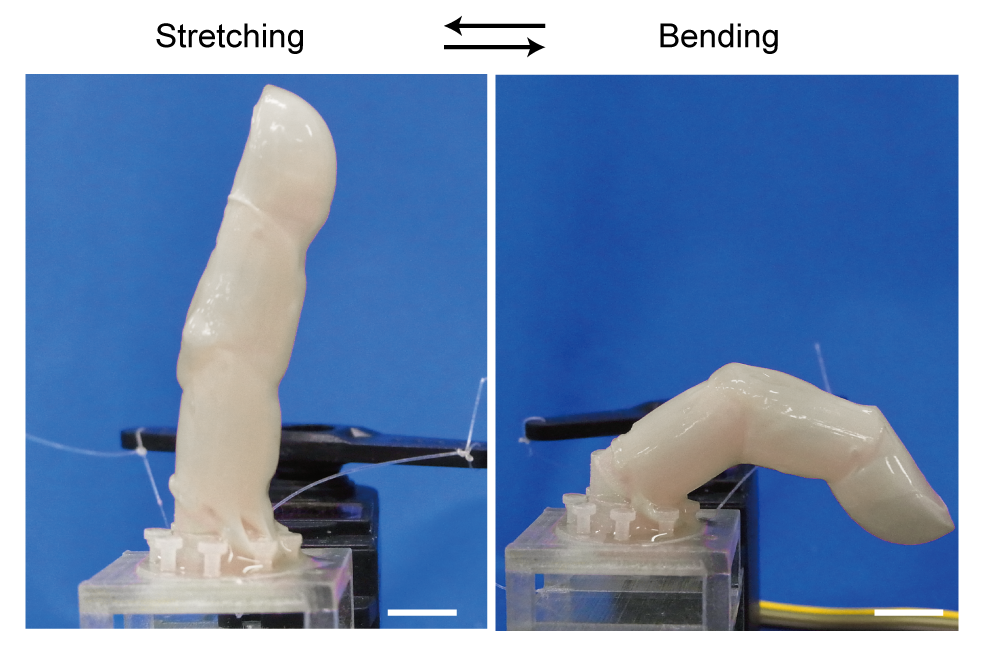
The skin moved, wrinkled, and underwent assisted repair, but it did not demonstrate sensation, immune function, or autonomous healing.
When the finger articulated, the covering stretched and moved with it. The wrinkles that appeared at the joints were a biological tissue response to mechanical stress, not a pattern molded into a surface.
To test repair capability, the researchers cut the dermal layer and grafted an acellular collagen sheet over the wound. Surrounding fibroblasts gradually integrated the material over approximately seven days, a process the research brief characterizes as assisted biological repair rather than spontaneous healing, because the collagen sheet required deliberate application.
“We have created a working robotic finger that articulates just as ours does, and is covered by a kind of artificial skin that can heal itself,” Takeuchi said, as quoted in the University of Tokyo press release. The study demonstrated appearance, movement, barrier behavior, and assisted repair; it did not demonstrate touch sensation, temperature sensing, immune function, or autonomous healing.
Living cells require controlled moisture, nutrients, and suitable environmental conditions to remain viable. That requirement alone places the system far outside what any consumer product could currently sustain.

A Long Road From Lab to Application
Tissue longevity, nutrient delivery, and scaling to larger robotic structures are among the unresolved engineering challenges ahead.
Future research would need to address vascularization or nutrient delivery, robust attachment to larger robotic structures, and maintenance outside controlled culture environments. Potential application areas, including humanoid robots, prosthetic coverings, and platforms for medical or cosmetic testing, remain long-term directions rather than near-term products.
If you are building a mental timeline for this technology, keep it measured. Closing the gap between a single lab finger and a robot you might encounter in a hospital or care setting is a problem that will occupy researchers for years to come.