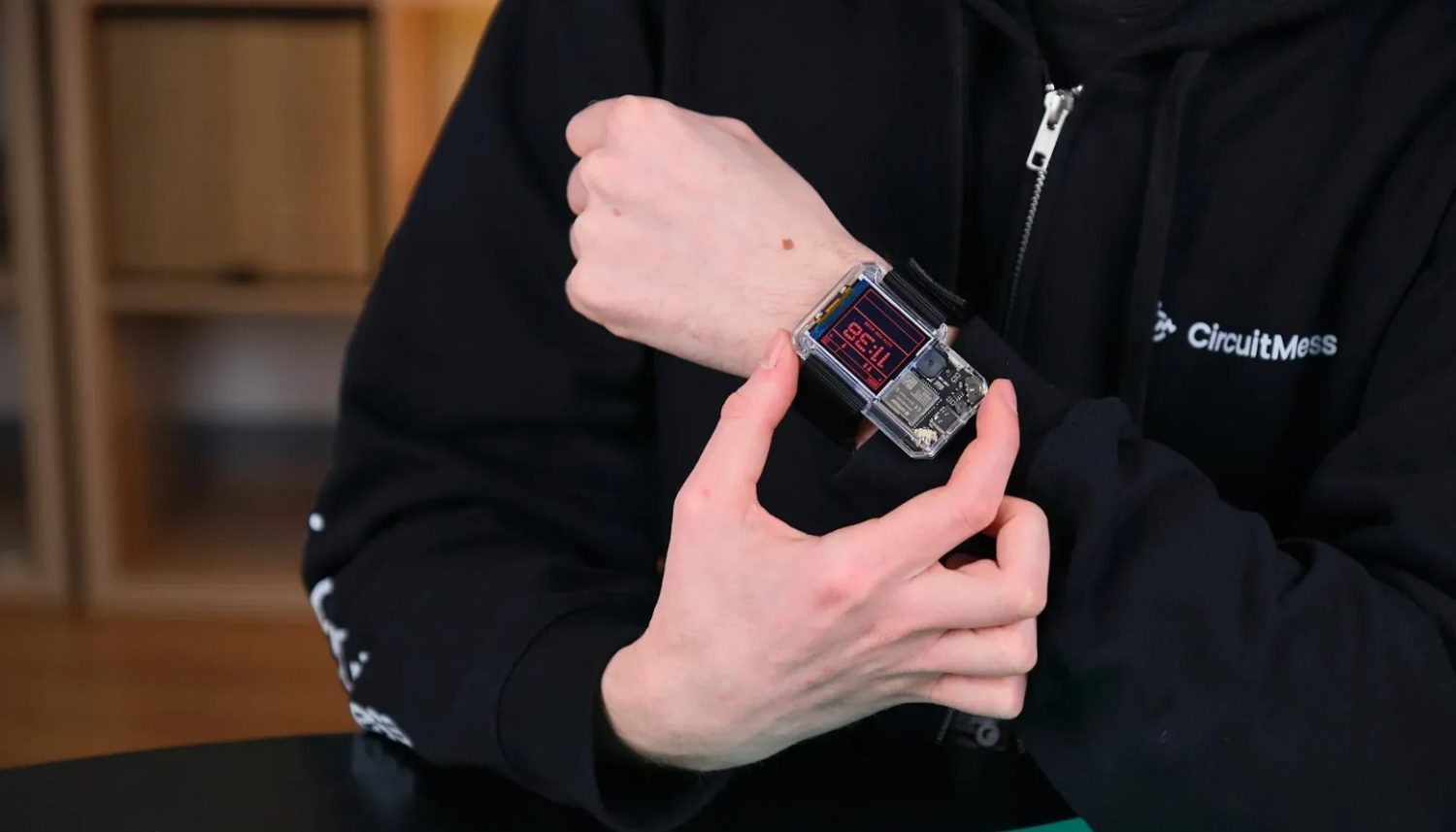
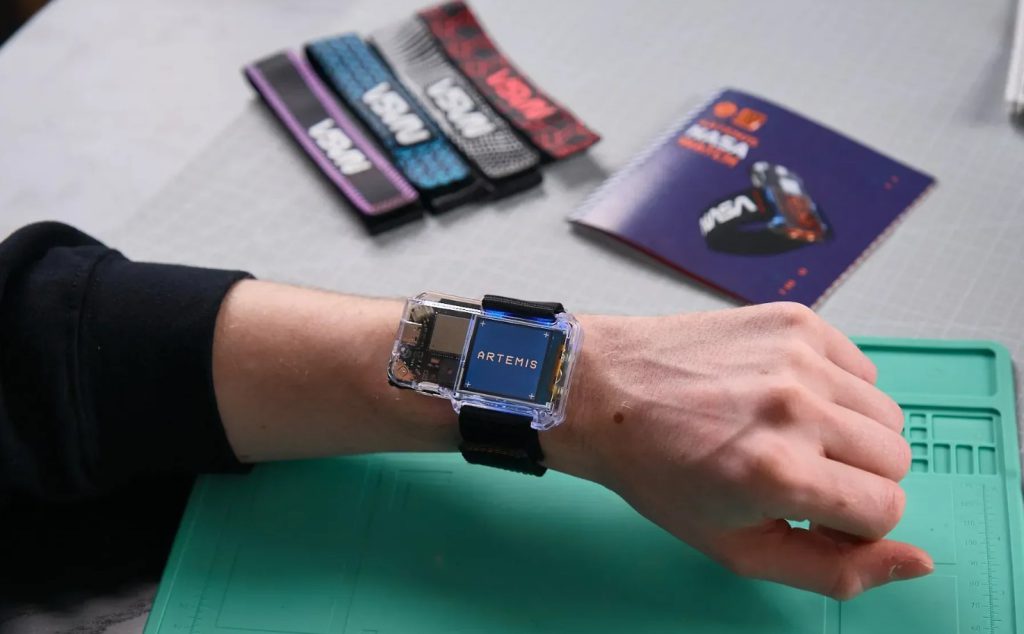
If your definition of a smartwatch starts with heart-rate tracking and ends with an app store, the NASA Artemis Watch 2.0 is not your device. CircuitMess built this $149 wearable for makers, educators, and space enthusiasts who want to write code for their watch, not just download apps onto it. NASA Artemis branding ties the device to one of the most recognized programs in contemporary space exploration.
What It Actually Does
The Artemis Watch 2.0 pairs with Android and iPhone over Bluetooth for activity tracking and phone notifications, but its sensor lineup skips the health features most fitness trackers lead with.
Paired over Bluetooth with Android or iPhone, the Artemis Watch 2.0 handles activity tracking and incoming phone notifications. Motion data comes from an accelerometer and gyroscope, so step counting and basic movement detection are on the table.
A heart-rate monitor and a blood-oxygen sensor are both absent. This watch sits closer to a Raspberry Pi strapped to your wrist than to a fitness tracker.
Hardware at a glance (specifications provisionally reported; confirm against CircuitMess documentation before purchase):
- ESP32-S3 dual-core microcontroller with Bluetooth and reported Wi-Fi connectivity
- Sensors: accelerometer, gyroscope, compass, and temperature sensor
- USB-C port for charging and code uploads
- Physical button, user LEDs, RGB LED, buzzer, and real-time clock
- Reported 600 mAh battery with an estimated two-to-three-hour runtime (unconfirmed by CircuitMess; treat as provisional)
That runtime estimate deserves a direct flag. Two to three hours per charge, if accurate, makes this a project device you sit down with, not an all-day wearable you forget about.
Open Code, Closed-Ecosystem Antidote
Where the Artemis Watch 2.0 separates itself is software: the firmware is open and reprogrammable through Python, CircuitBlocks, and the Arduino IDE.
CircuitBlocks is CircuitMess’s block-based environment aimed at beginners. Custom watch faces, animations, small games, and sensor experiments are all within reach depending on your skill level.
That flexibility puts it in a different category from mainstream smartwatch operating systems, where user-level firmware access is essentially off-limits. For a classroom or a curious teenager, that openness is the feature.
One detail remains unresolved before you order: sources conflict on whether the display is a full-color LCD or a monochrome screen. Confirm that directly with CircuitMess.
Price and Availability
CircuitMess currently lists the Artemis Watch 2.0 at $149, though earlier independent coverage cited a $129 launch price.
The reason for that gap is not established in available reporting; it may reflect a price change, regional variation, or a different product configuration. Optional bundles have been reported, including a collector’s package with additional straps and a combined kit pairing the watch with a Mars rover project. Availability and pricing on those bundles may vary.
The purchase makes the most sense for STEM learning, maker experimentation, and NASA-themed collecting. It makes less sense if long battery life, biometric health tracking, or third-party app support are anywhere near the top of your list.
If you want a wearable you can genuinely rebuild in software, the Artemis Watch 2.0 offers that access at a reasonable entry point for the category. Just plan to keep a USB-C cable close by.