Workers at Toyota factories are reportedly strapping on finger-shaped jigs molded after a humanoid robot‘s hands, then performing precise assembly movements so the robot can learn from them. That unusual training method sits at the center of Toyota’s broader plan to deploy roughly 400,000 robots across its manufacturing network starting in 2028, backed by approximately $6.42 billion in annual investment.
What Toyota Is Actually Building
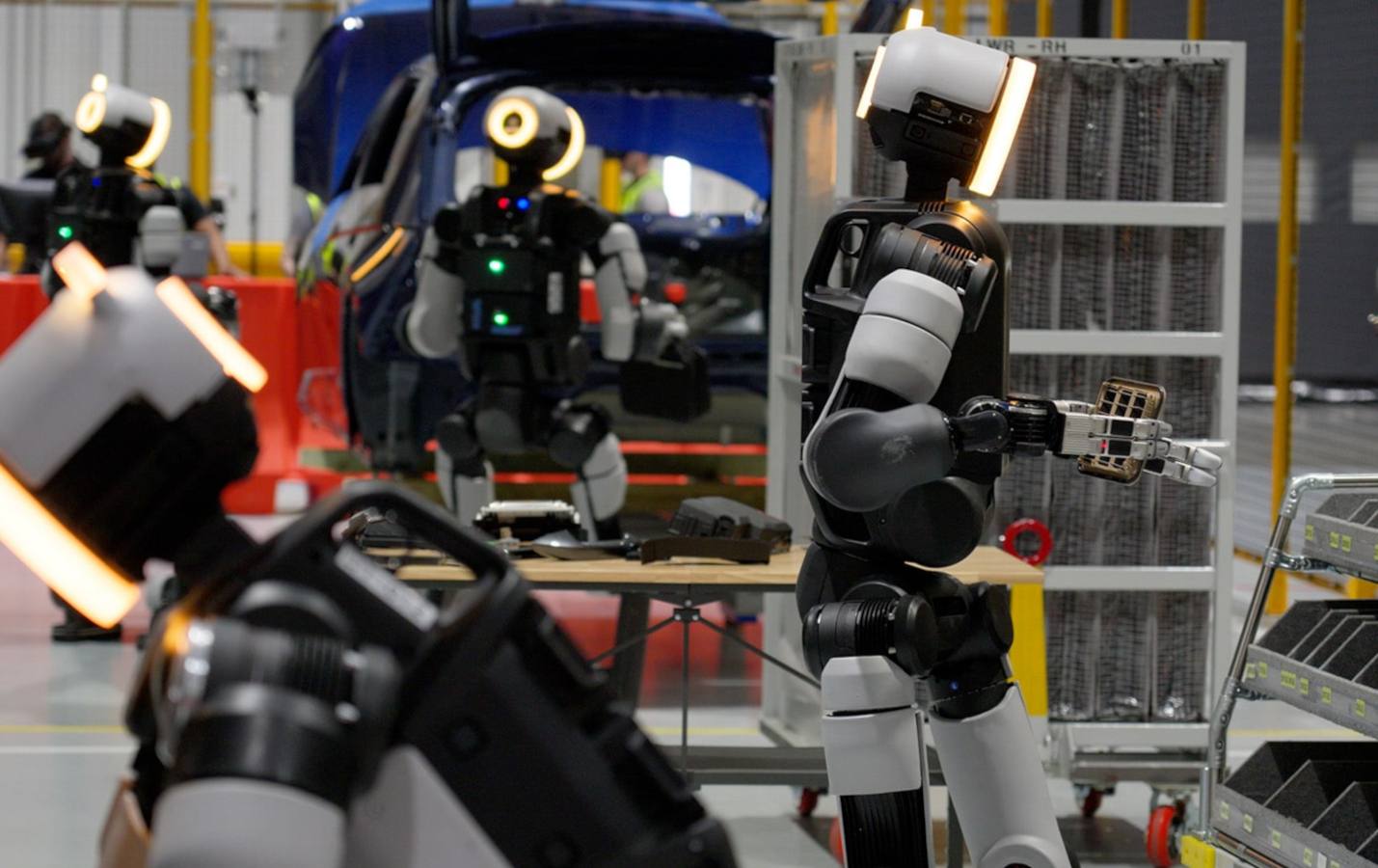
ELEY is a wheeled, two-handed humanoid designed for manipulation tasks; its training method is as notable as the machine itself.
The robot in question, called ELEY, moves on wheels and uses two hands built for assembly work. Rather than relying solely on fixed programming or simulation, Toyota has workers demonstrate movements directly, with finger-shaped jigs helping translate human motion into data the robot can learn from.
Toyota Motor Group’s 400,000-robot target breaks down to roughly 150,000 units at its own automotive plants. An additional 250,000 would go to group-company facilities producing components and materials.
The available reporting does not establish how many of those 400,000 units will be humanoids versus conventional industrial machines. It also does not confirm how many robots Toyota has already deployed today.
The $6.42 billion annual figure covers both new robots and the replacement of existing machines, according to Manufacturing Dive.
Several details about the plan remain unresolved:
- What proportion of the 400,000 robots will be humanoid versus specialized industrial systems
- Toyota’s current total robot deployment baseline
- Specific workforce impact across Toyota’s approximately 60 factories and 11 U.S. plants
- Regulatory requirements for humanoid robots operating alongside employees in continuous production
What “Coexistence” Actually Means for Workers
Toyota’s stated goal is robots and humans working side by side, but the workforce math stays unresolved.
Toyota executive vice president Hiroki Nakajima described the company’s goal as “a world where robots coexist with humans, rather than replacing them,” according to Ars Technica citing Nikkei Asia. (Editor’s note: verify this quote against the original Nikkei interview before publication.)
In practice, coexistence can mean robots handle repetitive, strenuous, or hazardous tasks. People then supervise systems, maintain equipment, and manage exceptions that require judgment.
That arrangement does not guarantee every existing role or current headcount remains unchanged. Toyota’s deployment plan does not resolve legitimate questions about how automation could reshape job duties, staffing levels, or bargaining power over time.
Toyota is not acting alone here. On September 21, 2026, Boston Dynamics and Hyundai Motor Group opened the Robotics Metaplant Application Center at Hyundai’s Georgia facility. The facility exists specifically to train Atlas humanoid robots for automotive manufacturing, with Hyundai outlining a longer-term target of up to 25,000 robots across Hyundai and Kia facilities.
The broader automaker push toward humanoid robots reflects shared pressures: factories being retooled for electric vehicles, aging workforces, and skilled-labor shortages. Toyota’s plan is part of that industry shift, not a singular outlier.
The Real Test Still Comes Later
The central question is not whether ELEY can learn a task from a human demonstration. It is whether a humanoid robot can perform that task safely, continuously, and at lower total cost than a person or a purpose-built machine. That test plays out across an active production floor, shift after shift, and the data to answer it will not exist until deployments begin in 2028.