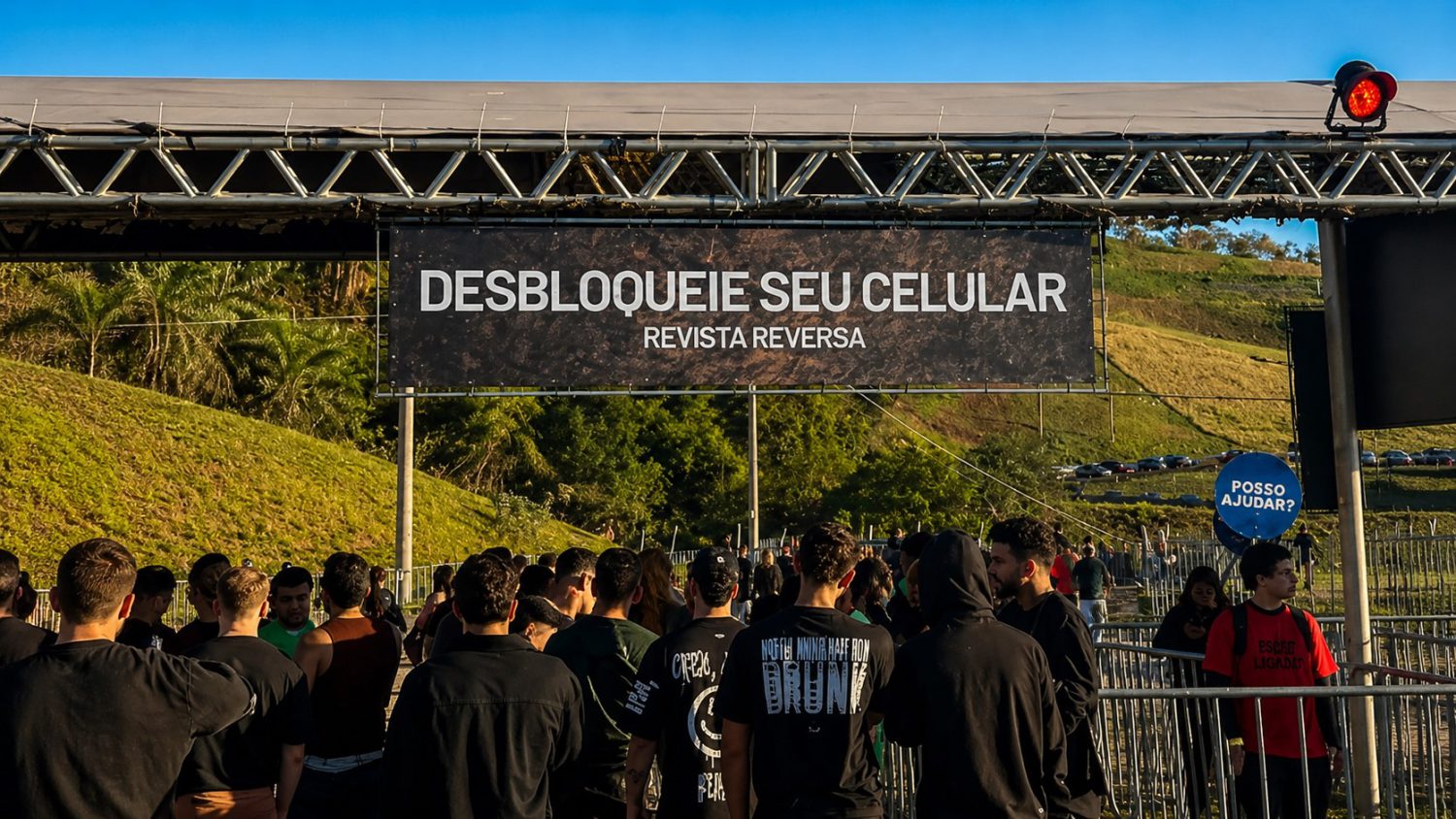
At a packed Rio de Janeiro festival, security stops you at the gate not to check a ticket, but to demand you unlock your phone and prove it is yours. This is a documented practice at multiple Brazilian events since at least 2022, and it sits in genuinely contested legal territory.
A Real Problem Drove an Unusual Response
Phone theft at Brazilian festivals reached a scale that pushed both private venues and public prosecutors toward an unconventional solution.
Rio police have deployed undercover officers in costume specifically to catch thieves during Carnival, according to AP News. Pickpockets and organized groups routinely target attendees. The financial and personal damage extends well beyond a lost device, since stolen unlocked phones give thieves direct access to banking apps, messaging accounts, and personal data.
Rio’s Nau Cidades venue, which hosted the Baile Urucum event in 2022, confirmed the practice in an official statement reported by G1/Globo. The search and unlock request is “a procedure adopted to inhibit the action of thieves who have been operating inside shows and events, stealing belongings and especially cell phones from participants,” according to Nau Cidades. The venue framed it as a universal check applied to all attendees leaving the space.
The implementation at Belo Horizonte’s Bloco do Silva event in January 2024 went further. Attendees were physically searched on exit and required to show unlocked phones, and those who refused were reportedly not permitted to leave, per Estado de Minas reporting.
What the Law Actually Says
Brazilian legal experts and criminal statutes draw a clear line between asking for a phone unlock and compelling one.
Brazilian legal experts interviewed by G1/Globo are clear on one point: the request can be made, but it cannot be forced. Private security staff hold no legal authority to compel a phone unlock without police or judicial involvement, and any coercion, threat, or humiliation during the process crosses a legal line.
A criminal lawyer cited in the Estado de Minas report on Bloco do Silva argued that forced device inspection without consent can constitute illegal invasion of a computing device. Under Brazilian federal law, that offense carries criminal penalties under Article 154-A of Law 14.155/2021.
Allegations that the unlock rule was applied selectively based on race added a civil rights dimension to the Baile Urucum incident. Young attendees filed a complaint with Rio’s Delegacia de Crimes Raciais e Delitos de Intolerância, the specialized racial crimes unit, according to G1/Globo reporting. Selective enforcement of a security measure is a separate and serious legal exposure for organizers.
Not every authority sees the practice as problematic. The Public Prosecutor’s Office of Ceará formally recommended “reverse screening,” including exit phone unlock checks, for the São João de Maracanaú festival. Per the MPCE’s official communication, the procedure is already used at large events like Fortal and is described as a legitimate anti-theft strategy.
What This Means If You’re Attending
No federal rule defines what festival organizers can require from attendees regarding device access, leaving the legal landscape unsettled.
No nationwide legal standard currently defines what festival organizers can require from attendees regarding device access. The rules are being shaped by local prosecutors’ recommendations and, where complaints are filed, case-by-case decisions.
If you attend a Brazilian festival and face an exit unlock request, legal experts are clear: you are not obligated to comply. That consensus, reported by Globo, holds unless a police officer with proper authority is directly involved. Refusal should not legally result in detention, though documented cases show that some venues have tried exactly that. Knowing how to stay safe at large public events extends beyond physical security to protecting your device and data.