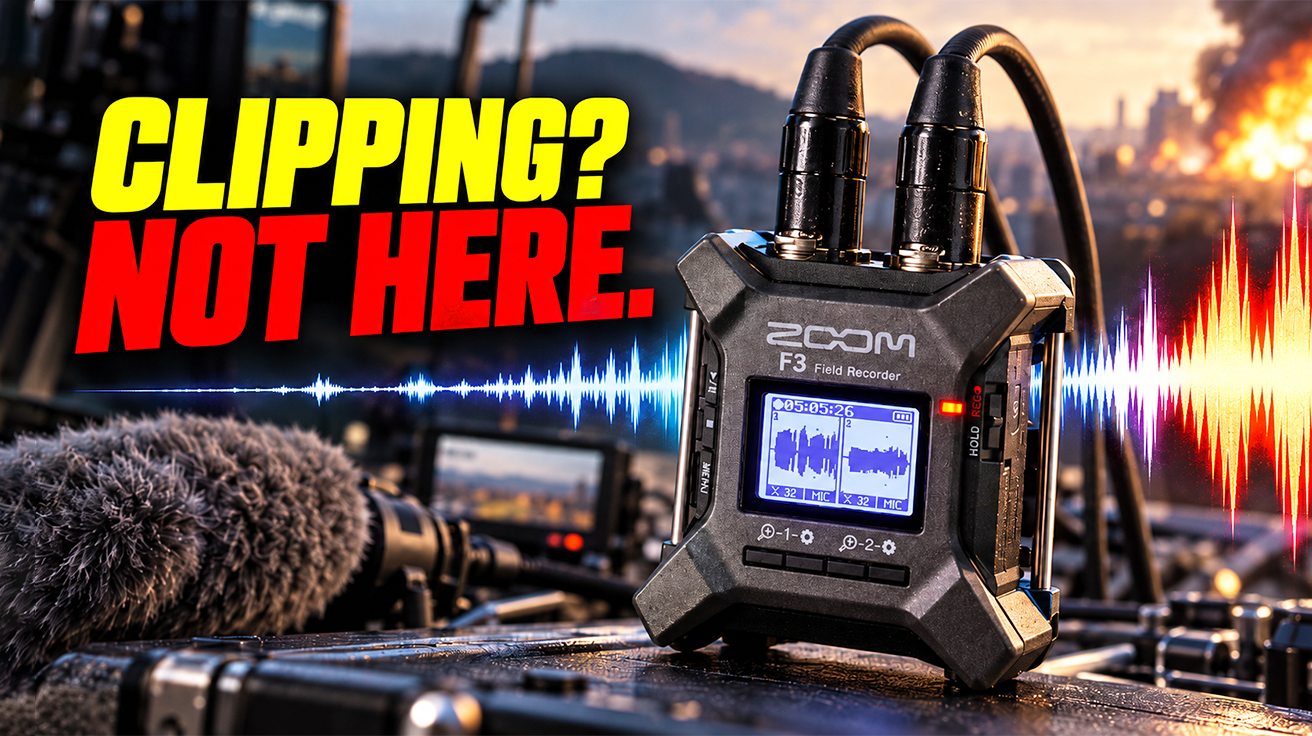
The advent of 32-bit float recording fundamentally altered location sound, making clipping a relic of audio’s past. Professional audio no longer requires hauling a sound cart the size of a mini-fridge. Broadcast-grade results now fit inside a camera bag. This selection integrates 32-bit float capability, robust redundancy, and intelligent rigging, proving compact size does not mean compromised quality. These tools deliver broadcast-ready sound while keeping the footprint minimal.
This content may contain affiliate links. If you wish to support us and use these links to buy something, we may earn a commission.
13. DJI Mic 2 Wireless Microphone System
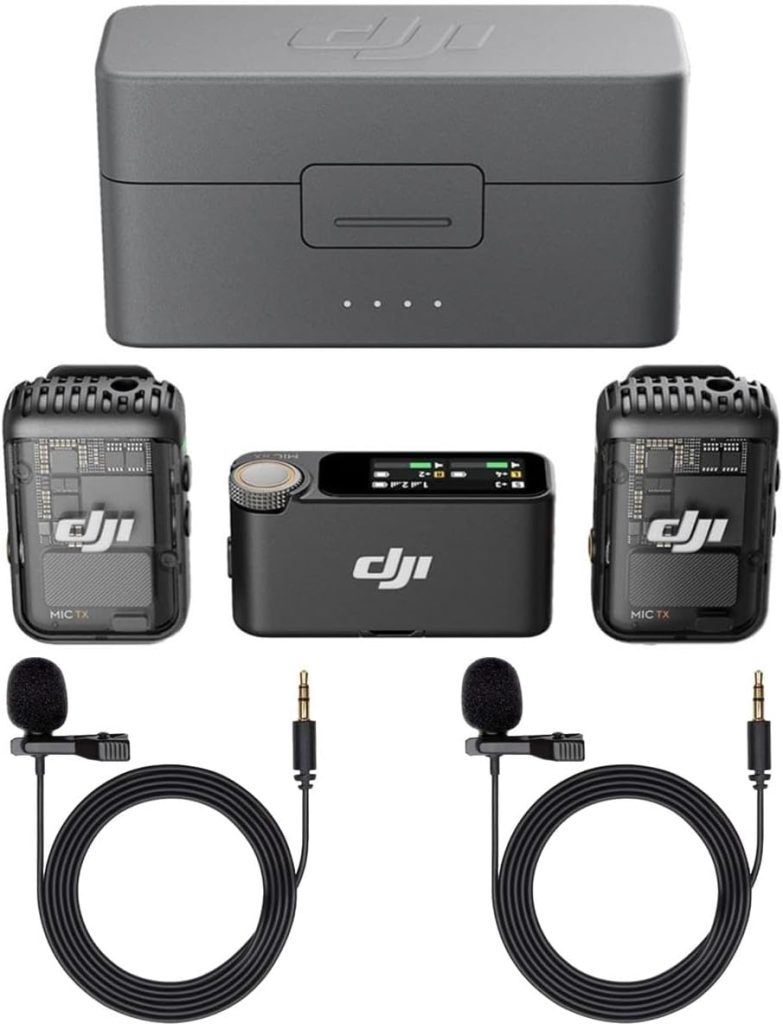
Internal 32-bit float recording on each transmitter creates redundancy that prevents wireless dropout disasters.
Losing crucial audio because of wireless interference feels like a digital mugging, yet the DJI Mic 2 ensures the sonic safety net stays deployed. Its transmitters each pack 8 GB of internal storage, recording up to 11 hours of pristine 32-bit float audio directly, with files automatically segmented into 23-minute chunks. This feature is a lifesaver when capturing an unscripted interview where audio levels spike unexpectedly. The wide dynamic range eliminates the constant fear of clipped recordings.
These tiny powerhouses measure roughly 46 × 31 × 22 mm (transmitters) and 54 × 28 × 22 mm (receivers), about the size of a couple of AirPods cases stacked together. The system operates in the 2.4 GHz band, offering a robust 250 m (820 ft) range, according to the DJI user manual.
External lavalier mics connect via the 3.5 mm input, and the whole kit folds away like a minimalist’s dream. This surprisingly efficient and reliable primary wireless solution doesn’t demand prime real estate in the gear bag.
12. RØDE NTG3 Shotgun Microphone

RF-bias design and supercardioid pattern deliver broadcast dialogue quality in unpredictable weather.
Professional sound mixers have long trusted the RØDE NTG3, often citing its robust performance as a direct competitor to industry legends. This RF-bias condenser microphone boasts a supercardioid polar pattern, delivering strong off-axis rejection to keep extraneous noise out of dialogue. With low self-noise around 13 dBA, it captures clean audio even in quiet environments.
Its unique RF-bias design offers high resistance to humidity and condensation, a crucial feature when gear failure isn’t an option. Film shoots halting due to mic issues in a surprise rain shower represent every sound mixer’s nightmare, but the NTG3 is built for precisely those conditions. On a demanding outdoor film set battling unpredictable weather, its metal body, roughly 255 mm long, holds up like a seasoned veteran.
It requires 48 V phantom power via a balanced XLR, providing a reliable frequency response of 40 Hz–20 kHz with a gentle presence boost for dialogue clarity. This microphone consistently delivers high-quality dialogue, cementing its place as an invaluable asset.
11. Deity VPY RX Wireless System
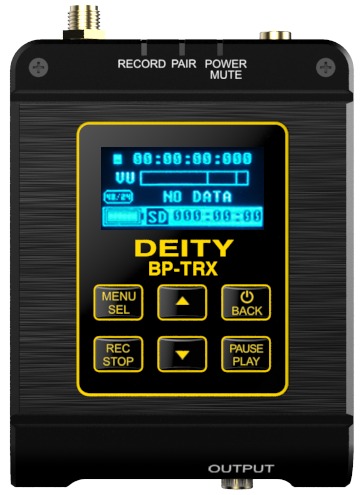
Traditional bodypack reliability comes with a footprint too large for ultra-compact rigs.
Wireless system design presents an inherent paradox: robust performance often demands a larger physical footprint. The Deity VPY RX system exemplifies this, serving as a benchmark for professional setups where reliability matters more than ultra-compact size.
These traditional wireless packs typically use UHF and 2.4 GHz frequencies, offering balanced or unbalanced outputs and lavalier compatibility. It performs like a seasoned studio musician, reliable and unflappable. A sound engineer trying to integrate the VPY RX into a compact rig will quickly find these bodypack-style receivers and transmitters are just a little too large.
While its quality is undeniable and its RF performance robust, its physical footprint ultimately makes it unsuitable for minimalist production. For TikTok-style quick shoots where every millimeter counts, this system is simply too much.
10. Zoom F3 Field Recorder
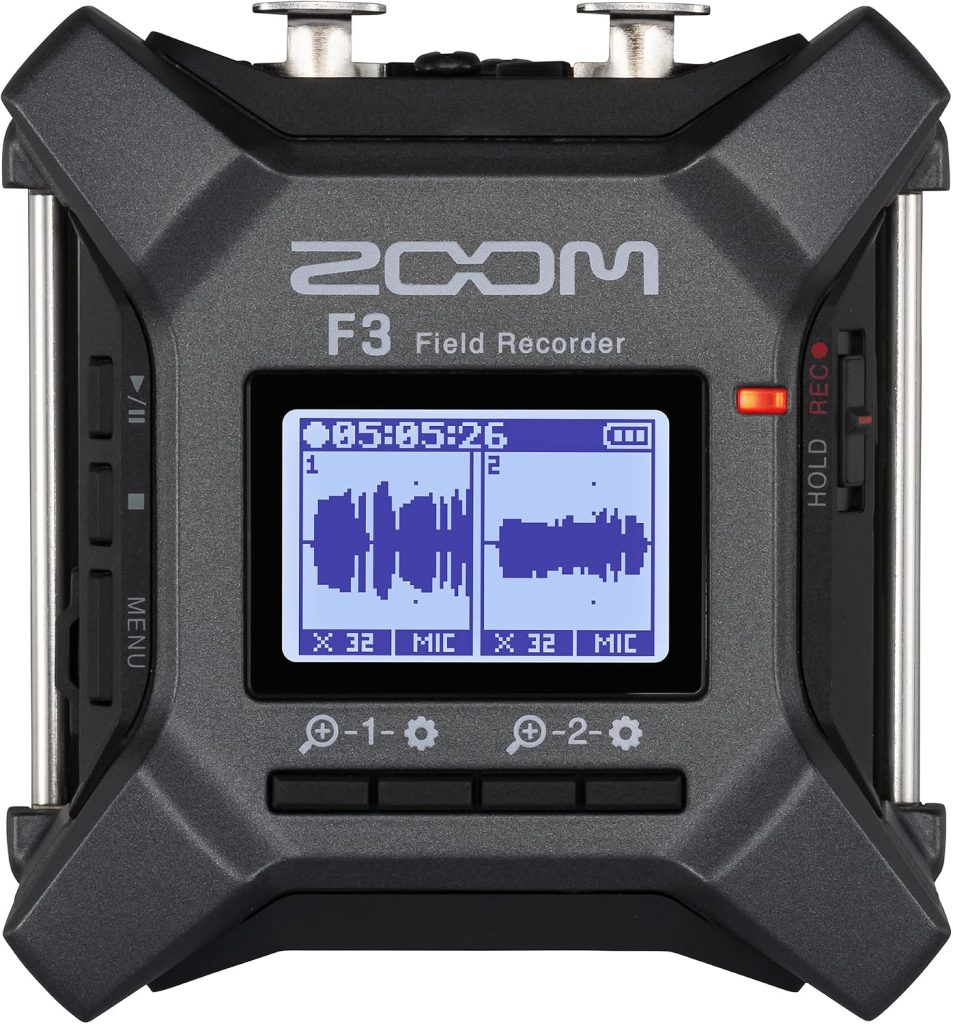
This 32-bit float recorder eliminates gain staging anxiety while fitting in the palm of a hand.
Traditional audio recording often demands meticulous gain staging, a high-wire act where one wrong knob turn means irreparably clipped audio. The Zoom F3 sidesteps this stress with 32-bit float recording at up to 192 kHz. This feature captures every nuance from a whisper to a shout without babysitting the levels.
It comes with two locking XLR inputs, backed by ultra-low-noise preamps boasting an EIN around -127 dBu, ready for +24 V or +48 V phantom power. Weighing just 242 g and measuring approximately 75 × 77 × 48 mm, this recorder vanishes into any setup. It supports microSDXC cards up to 1 TB, enough for over 180 hours of pristine recording.
The F3 runs for over 8 hours on alkaline batteries, extending to 18 hours on lithium, ensuring power won’t run out mid-take. During a spontaneous TikTok dance challenge that needs perfect audio, this adaptability makes it the robust brain of any run-and-gun audio kit, capturing dialogue or ambient sound with unflappable precision.
9. SmallRig Cage for Zoom F3
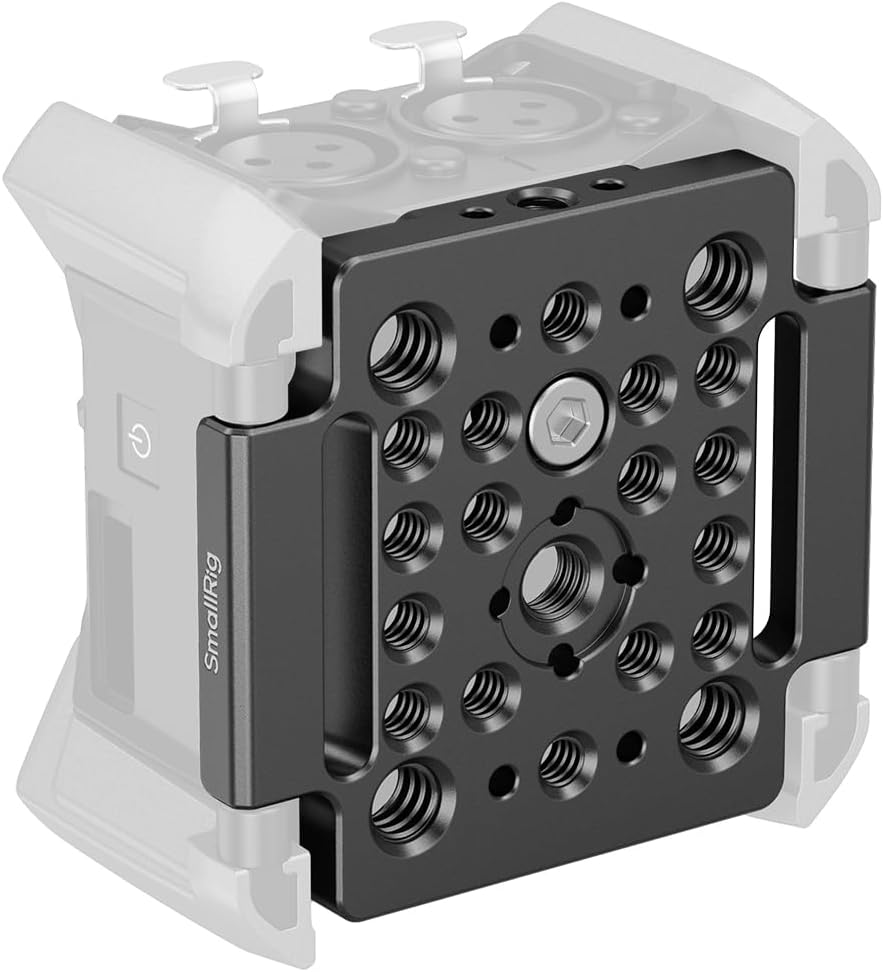
Precision-machined aluminum transforms the F3 from a simple recorder into a modular mounting platform.
SmallRig’s dedicated cage for the Zoom F3 fundamentally transforms the recorder’s functionality, turning a minimalist device into a modular powerhouse. This cage, precision-machined from CNC-machined aluminum alloy, wraps around the F3 like a custom-fitted suit of armor. It leaves unfettered access to all critical functions: XLR inputs, essential controls, the SD card slot, and power connections.
The design adds multiple 1/4″-20 threads and accessory mounting points, allowing attachment of everything from battery banks to wireless receivers and articulating arms. On a documentary shoot requiring rapid assembly of a multi-accessory audio rig under pressure, this cage provides the solid backbone for mounting devices, making quick transitions possible.
Anyone who has tried to awkwardly tape a power bank to a tiny recorder knows that particular brand of chaos. This setup effectively transforms the F3 from a simple field recorder into a compact command center, ready for whatever sonic challenge comes next.
8. SmallRig Universal Phone Mount
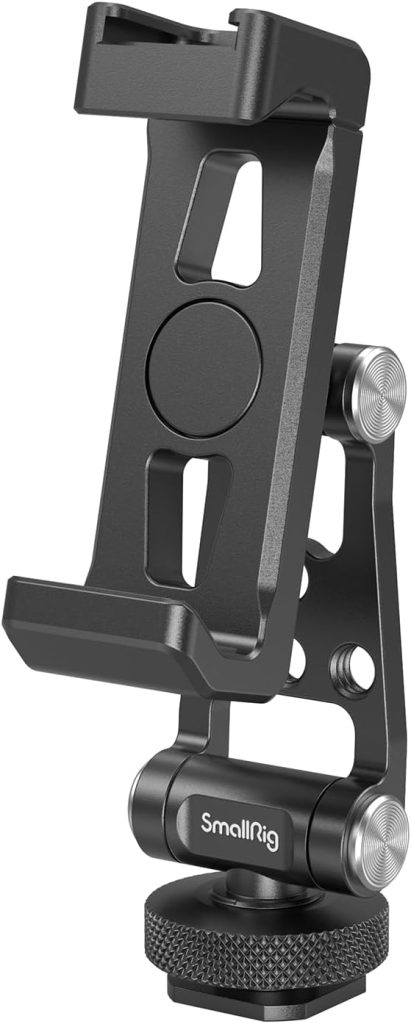
Repurposed as a battery holder, this adjustable clamp extends recording time by hours.
The SmallRig Universal Phone Mount, typically designed with adjustable clamps for smartphones, features 1/4″-20 threaded holes or cold shoe mounts for versatile attachment. Running out of juice on a remote audio shoot is an issue this mount effectively remedies.
Its rubber-padded, adjustable clamp jaws secure a USB power bank behind the recorder cage, instantly converting the mount into an essential power hub. This extends recording time by hours for remote work. Many models fold or lock, ensuring compact storage.
This ingenious repurposing proves adaptable accessories are the ultimate rigging cheat code, delivering seamless power when every second counts.
7. SmallRig Hinge Mount
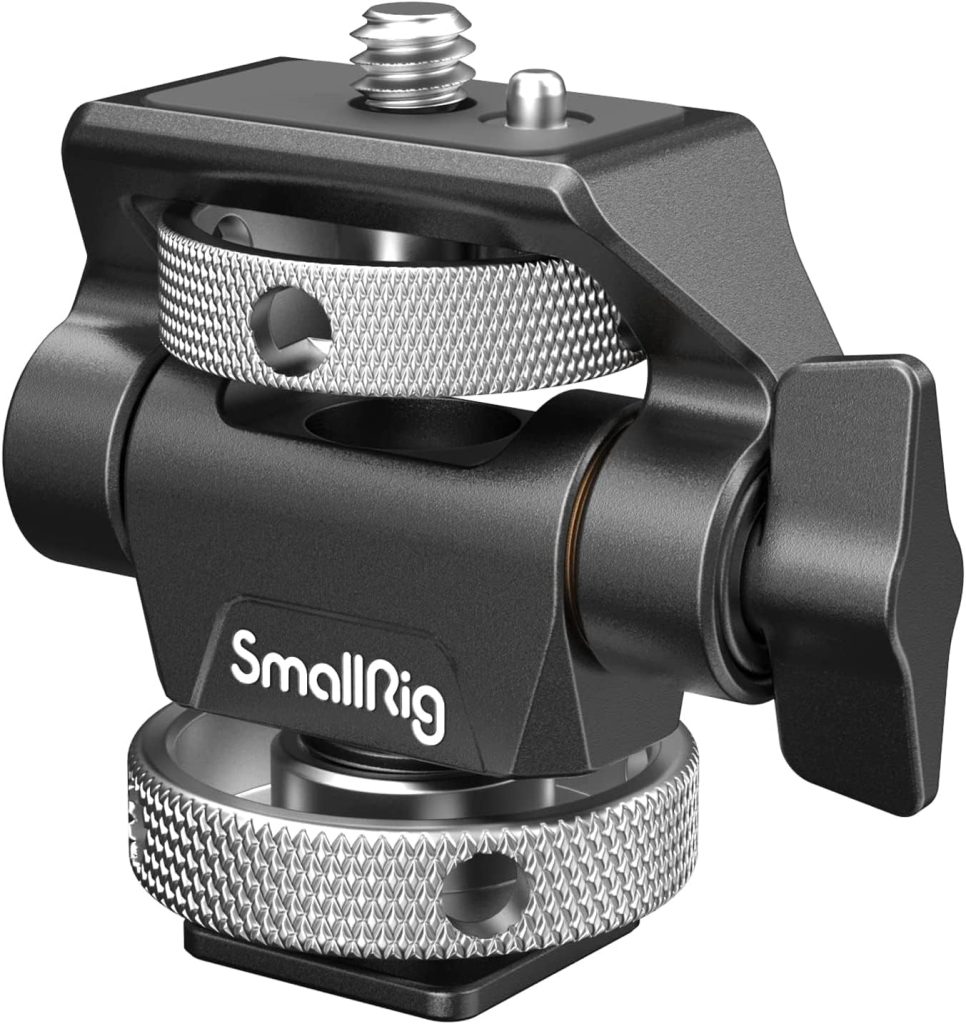
Folding articulation keeps wireless receivers accessible without blocking critical ports.
Optimizing the ergonomics of a compact audio rig often feels like a high-stakes game of Tetris, where every millimeter counts and misplacing one piece blocks another. The SmallRig hinge mount, typically featuring 1/4″-20 threaded interfaces, cuts through that complexity by providing flexible, non-obstructive mounting for accessories.
This clever bit of kit lets components tilt and fold away, like the DJI Mic 2 receiver, ensuring crucial XLR ports, power inputs, and SD card slots on the Zoom F3 remain accessible. On set, deploying a wireless receiver becomes simple; this mount allows folding it out into position for use and then snapping it away for storage without dismantling the entire setup.
Anyone who has ever wrestled with a tangled camera bag knows the satisfaction of a perfectly organized loadout. These adaptable components contribute directly to a streamlined, efficient production workflow, allowing focus on the sound, not the struggle.
6. Sigma Lens Case
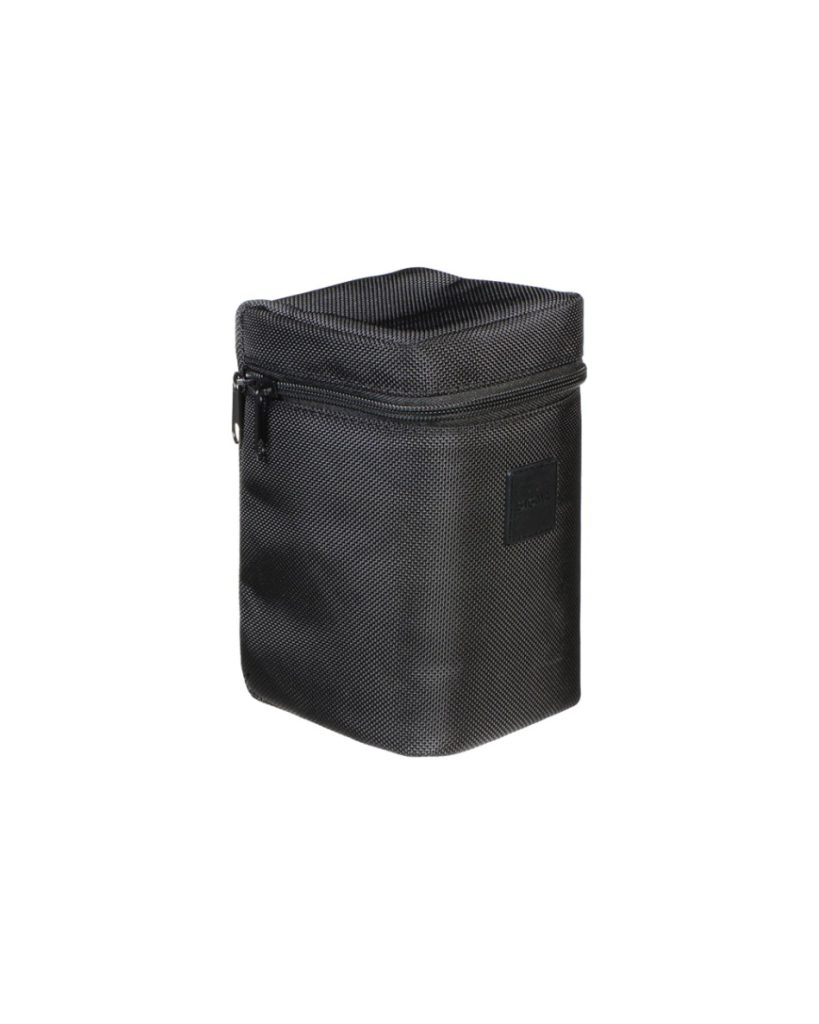
Padded lens protection repurposed as the perfect compact audio kit carrier.
An old Sigma lens case, a padded, zippered soft case typically foam-lined, finds perfect new life protecting compact audio kits. Originally designed for lenses, it now offers robust defense for gear. Maximizing every cubic inch through this repurposing is resourceful.
It effortlessly fits the Zoom F3 rig, including its SmallRig cage, attached battery, and cables. For creators on a shoot, this resourceful hack ensures the rig is cushioned against transit, tucking neatly into a camera bag. Such consolidated audio offers crucial portability and robust protection.
5. Battery Bank
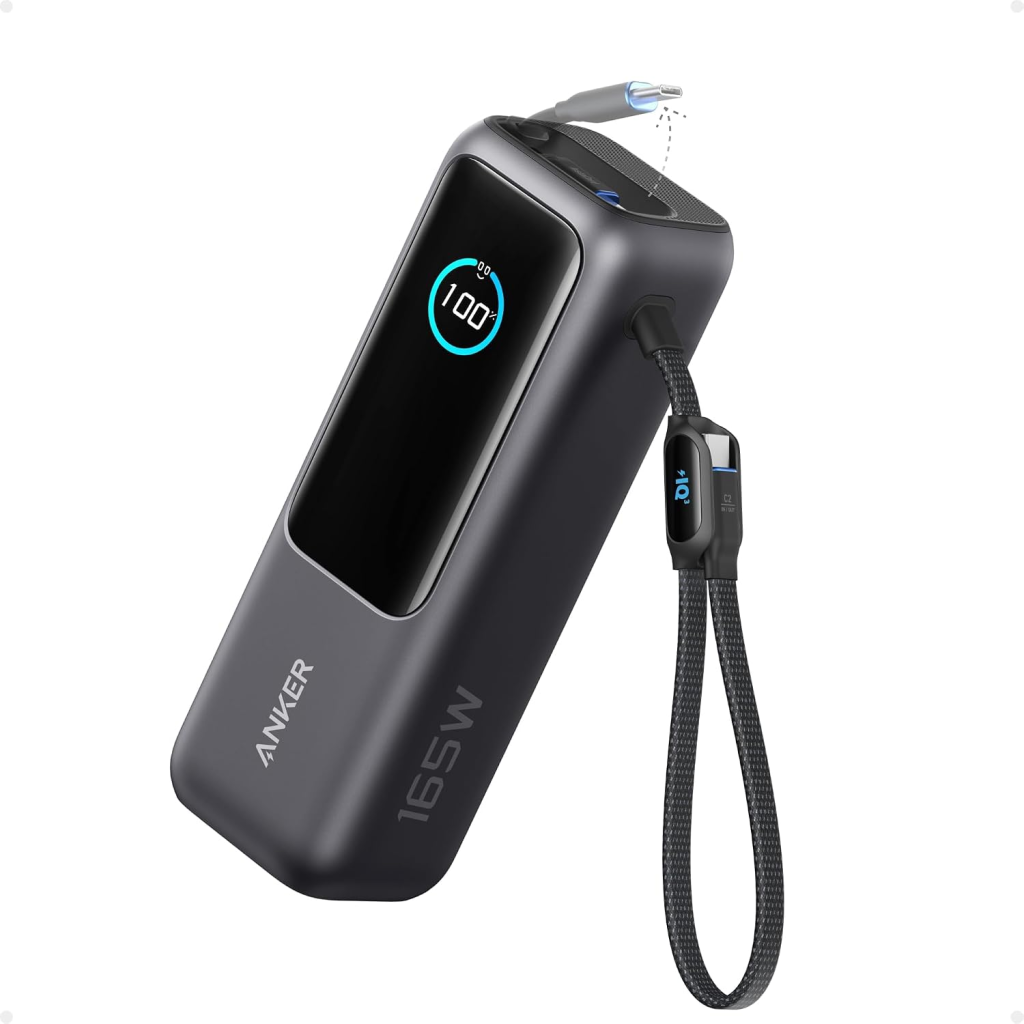
Integrated cable and visible power metrics prevent mid-shoot battery failures.
This portable power solution ensures the audio kit never falters. It features an integrated attached cable, which serves as a crucial spare, saving scrambles for lost connections. A clear screen displays the exact battery level and real-time power draw, so monitoring consumption is never guesswork.
This design keeps the recorder running for extended periods, expertly sidestepping mid-take battery changes. On an all-day shoot in a remote forest, far from any outlet, the visible power levels enable confident consumption management.
The integrated cable means one less thing to remember when every second counts. This setup provides uninterrupted, confidently managed audio recording, ensuring the story keeps rolling without a hitch.
4. Boom Pole with Internal Wiring
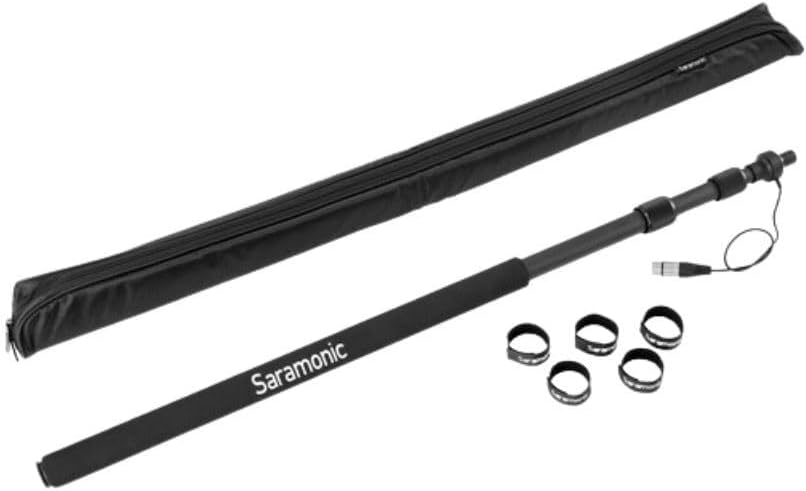
Internally routed cable eliminates external wire management in compact setups.
Many boom operators once accepted that compact poles meant battling external cables. This internally wired design feeds the cable directly through the pole, removing the hassle of running external wires. This instantly streamlines audio capture, making on-set workflow smoother.
Anyone who has wrangled a knot of wires understands this substantial upgrade. Despite its compact form, it still extends far enough to capture pristine audio, offering crucial versatility. Navigating a tight film set becomes easier, deploying the mic quickly without becoming a human knot of cables.
This dual advantage of portability and operational efficiency transforms shoot readiness.
3. Right-Angle 3.5mm Adapter
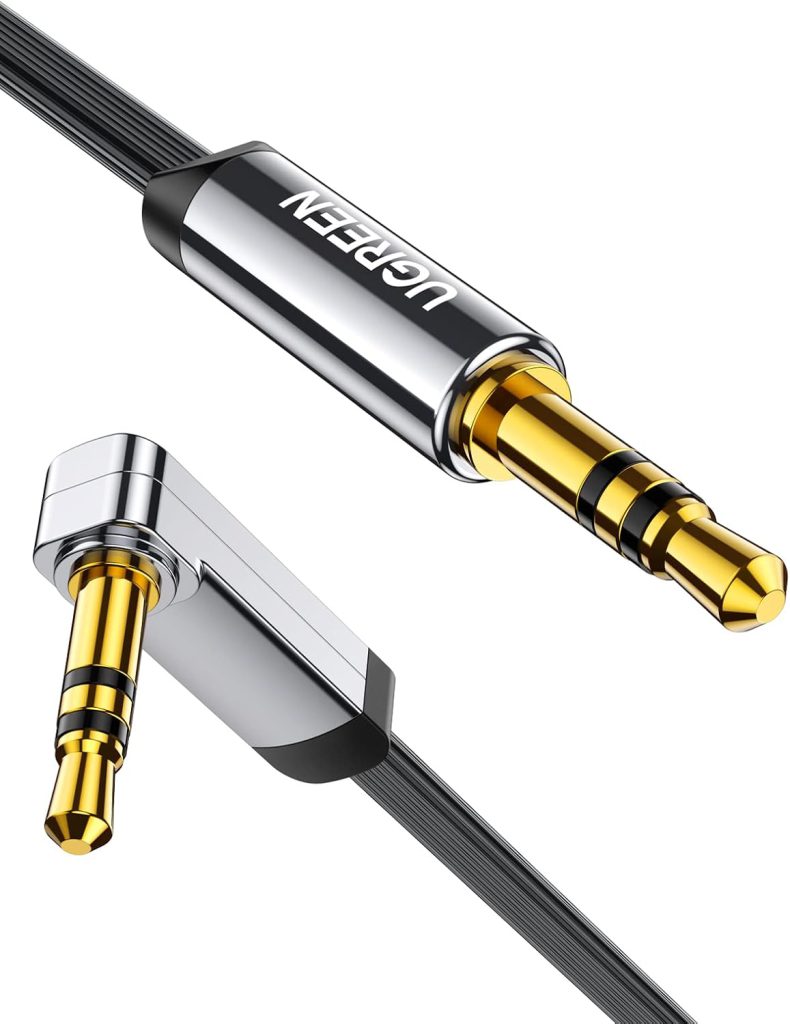
Spatial flexibility restores headphone monitoring when other accessories block straight plugs.
Sometimes a perfectly crafted audio rig feels like a game of Jenga, one wrong move away from collapse, especially when other accessories block crucial ports. The right-angle 3.5mm adapter solves this spatial puzzle, immediately regaining access to that essential headphone jack.
This small, unassuming piece allows headphone connection without changing the entire setup. The digital equivalent of parallel parking on a crowded street, it makes the impossible suddenly manageable when gear like bulky wireless receivers obstruct the workspace. An audio operator on a tight shoot, grappling with a tiny Zoom F3 field recorder squeezed into a SmallRig cage, surrounded by battery packs and wireless units, suddenly finds that straight headphone plug becomes a non-starter.
This adapter allows seamless connection of monitoring headphones, turning what could be a workflow-halting issue into a simple flick of the wrist. It ensures monitoring capabilities remain intact, keeping operators dialed into the sound, even when the setup looks like a Rube Goldberg machine for audio.
2. Tiny XLR to 3.5mm Cable
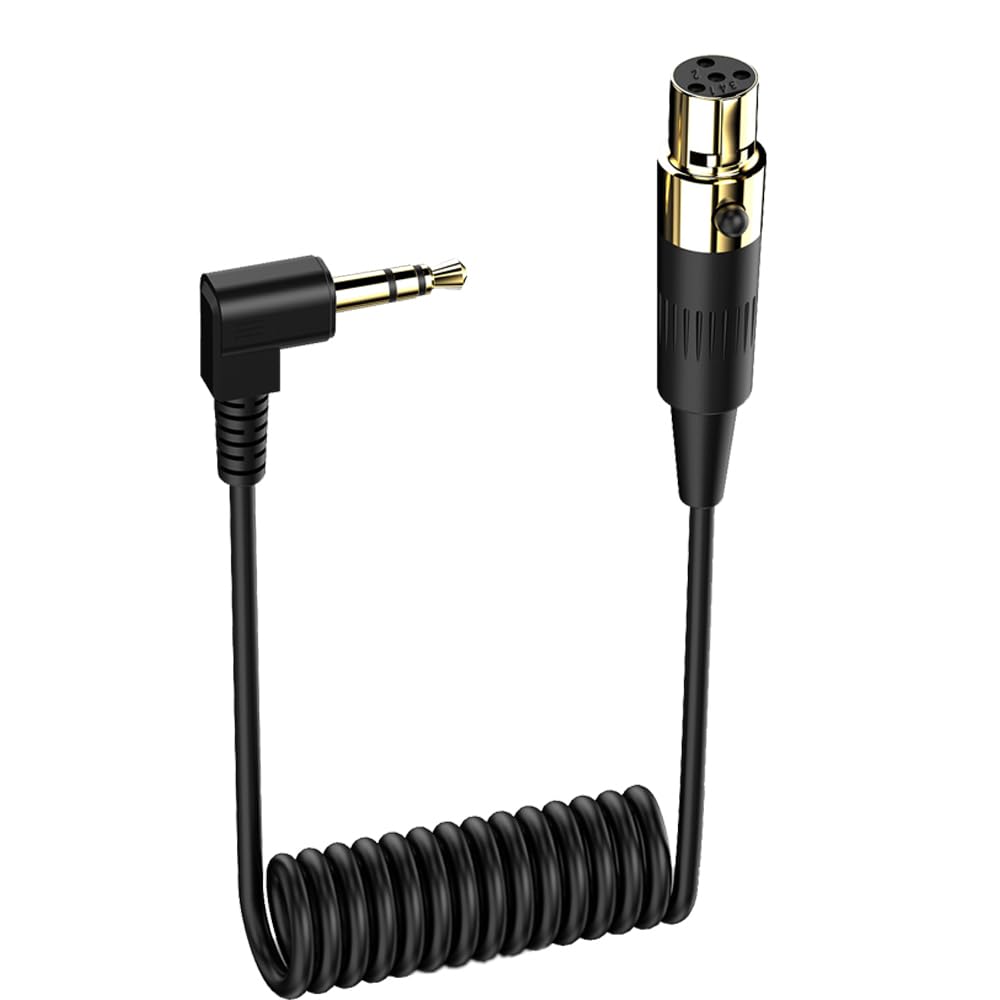
Compact form factor connects boom mics to recorders without occupying excessive space.
A ridiculously tiny XLR to 3.5mm cable simplifies compact setups by bridging professional microphones to consumer-style inputs. This precise connection transforms a potential cabling challenge into a neat, functional solution.
Such compact cables elevate a minimalist rig, ensuring all ports stay accessible and the setup remains production-ready. The small form factor makes it ideal for tight spaces where standard XLR cables would create clutter or obstruct other connections.
1. Articulating Arm with Claw Mount
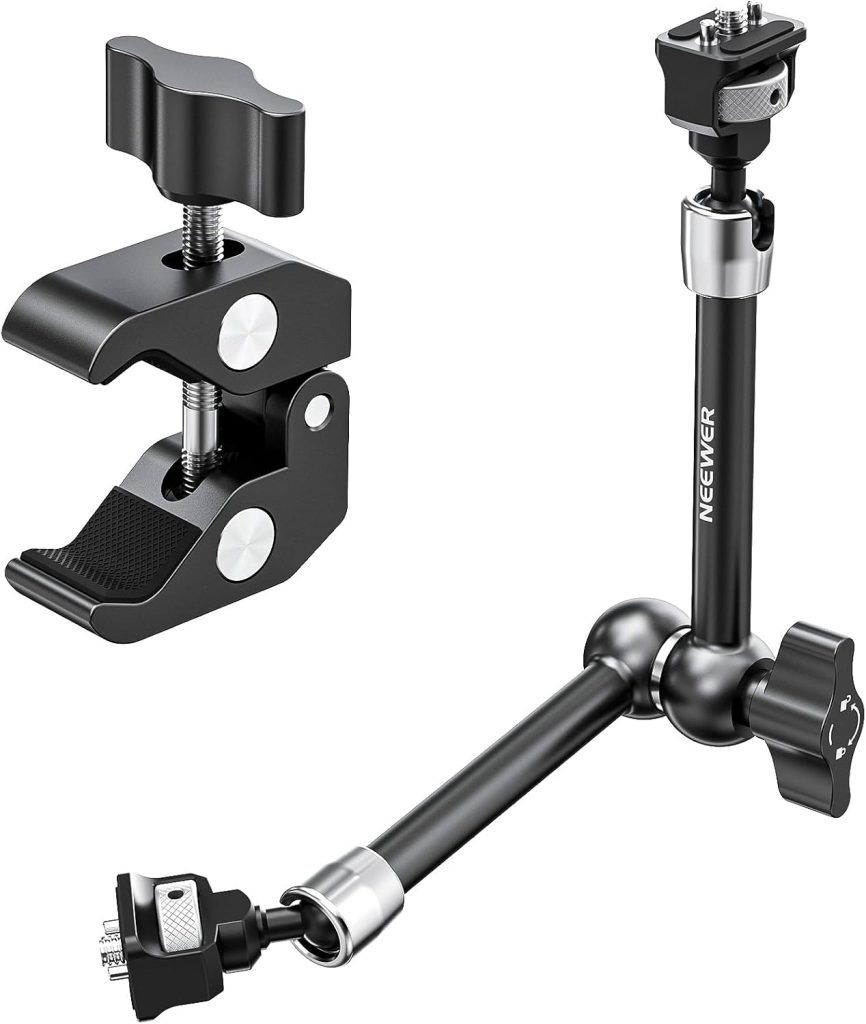
Versatile grip creates mounting points anywhere on the rig for monitors and receivers.
Ever stared at a crowded rig, wondering how to mount that last crucial accessory without a fight? The articulating arm with a claw mount solves this, gripping onto just about anywhere. It acts like a tenacious limpet, creating new mounting points. This frees up valuable space on the main setup, providing flexible deployment.
When a sound mixer needs to rapidly deploy a small monitor or receiver in a chaotic environment, every second counts. This arm securely holds vital accessories, ensuring they are precisely where needed. It transforms awkward angles into functional spots, enhancing rig adaptability and operational efficiency on diverse sets.