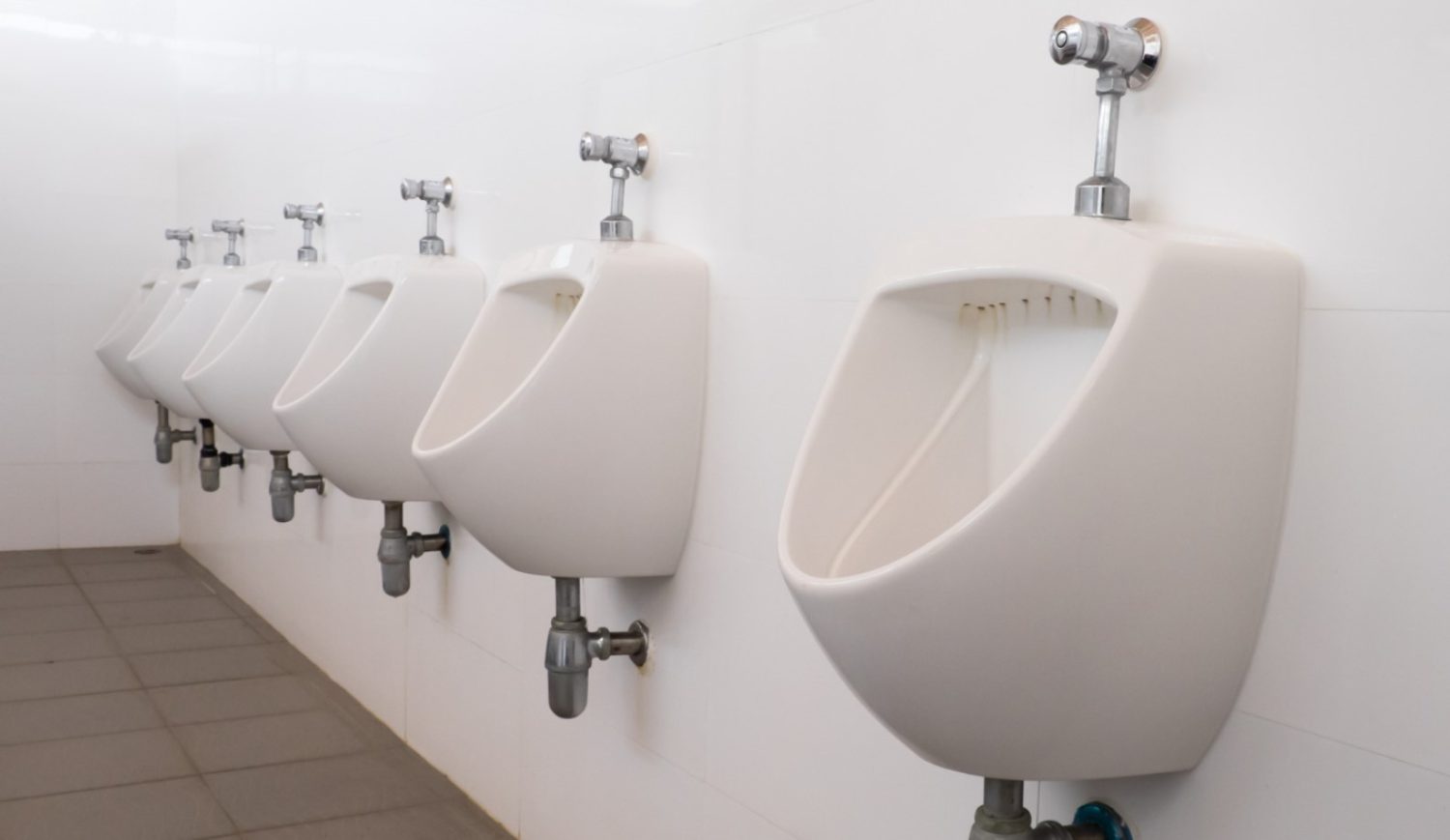
Every time an employee at Water Board Friesland uses the office urinal, that waste travels directly into a shipping-container reactor run by Wetsus, a Dutch water research centre. Bacteria process it. Phosphate and ammonia get pulled out as fertiliser precursors. Electricity flows out. The water board’s electric vehicles reportedly travel up to 50 km per day on the result. Your bathroom break has never had a better résumé.
That urine works so well here is counterintuitive. It represents less than 1% of household wastewater volume, yet carries:
- 85–90% of its nitrogen
- 50–80% of its phosphorus
- 80–90% of its potassium
according to Swiss aquatic research institute Eawag. Most treatment plants spend energy destroying that nitrogen. Fertiliser factories then burn natural gas to manufacture more. Capturing it before it hits the sewer isn’t just efficient — it’s the circular economy actually closing a loop.
How Bacteria Turn a Bathroom Break Into a Battery
Electroactive microbes do the heavy lifting — no combustion, no turbines, nothing moving.
Microbial fuel cells work like this: electroactive bacteria colonise a carbon anode and break down organic matter in the urine. With no oxygen present, electrons transfer to the anode, then flow through an external circuit to a cathode — generating current. No moving parts. No combustion. Urine is ideal feedstock because it’s salty (high electrical conductivity) and rich in urea. Wetsus researcher Philipp Kuntke demonstrated an energy surplus of 3.46 kilojoules per gram of nitrogen recovered, meaning the system produces more than the recovery process consumes.
Pablo Ledezma and co-authors put it plainly in published research: “Source-separated urine opens golden opportunities for microbial electrochemical technologies.”
Honest numbers matter here. UWE Bristol’s Glastonbury Festival urinal — 432 MFC cells serving roughly 1,000 users per day — averaged around 300 milliwatts. That powered the cubicle lights. The Wetsus shipping-container pilot operates at an entirely different scale, and the gap between festival porta-loo lighting and EV charging reflects years of engineering iteration. The same bacterial architecture, reconfigured as a microbial electrolysis cell, can produce storable hydrogen instead of direct current — a tradeoff worth watching.
The Part Nobody Talks About – The Plumbing Problem
One obstacle no press release lingers on is a century of pipe design working directly against this technology.
Every building designed to flush wastewater away as fast as possible is, by definition, destroying the resource concentration that makes this viable. Source separation requires dedicated collection toilets and parallel plumbing — essentially rewiring sanitation infrastructure the way early broadband required rewiring telephone networks, except nobody’s offering an installation subsidy. A 2020 review in ChemElectroChem confirmed that most work in this field remains at proof-of-concept or pilot stage, with significant scale-up and materials challenges unsolved.
There is a genuine near-term home for the technology: off-grid sanitation sites, refugee camps, festival venues — anywhere urine collection is already isolated by design. That’s not a consolation prize. Those are exactly the contexts where centralised wastewater infrastructure doesn’t exist and every recovered watt counts. The promise for electric vehicles running on urine-derived electricity, as demonstrated at Water Board Friesland, hints at what scaled adoption could mean.
If new construction starts treating source-separated urine as standard practice rather than research novelty, the arithmetic shifts quickly. Waste in. Fertiliser and electricity out. The loop is real — the plumbing just needs to catch up.