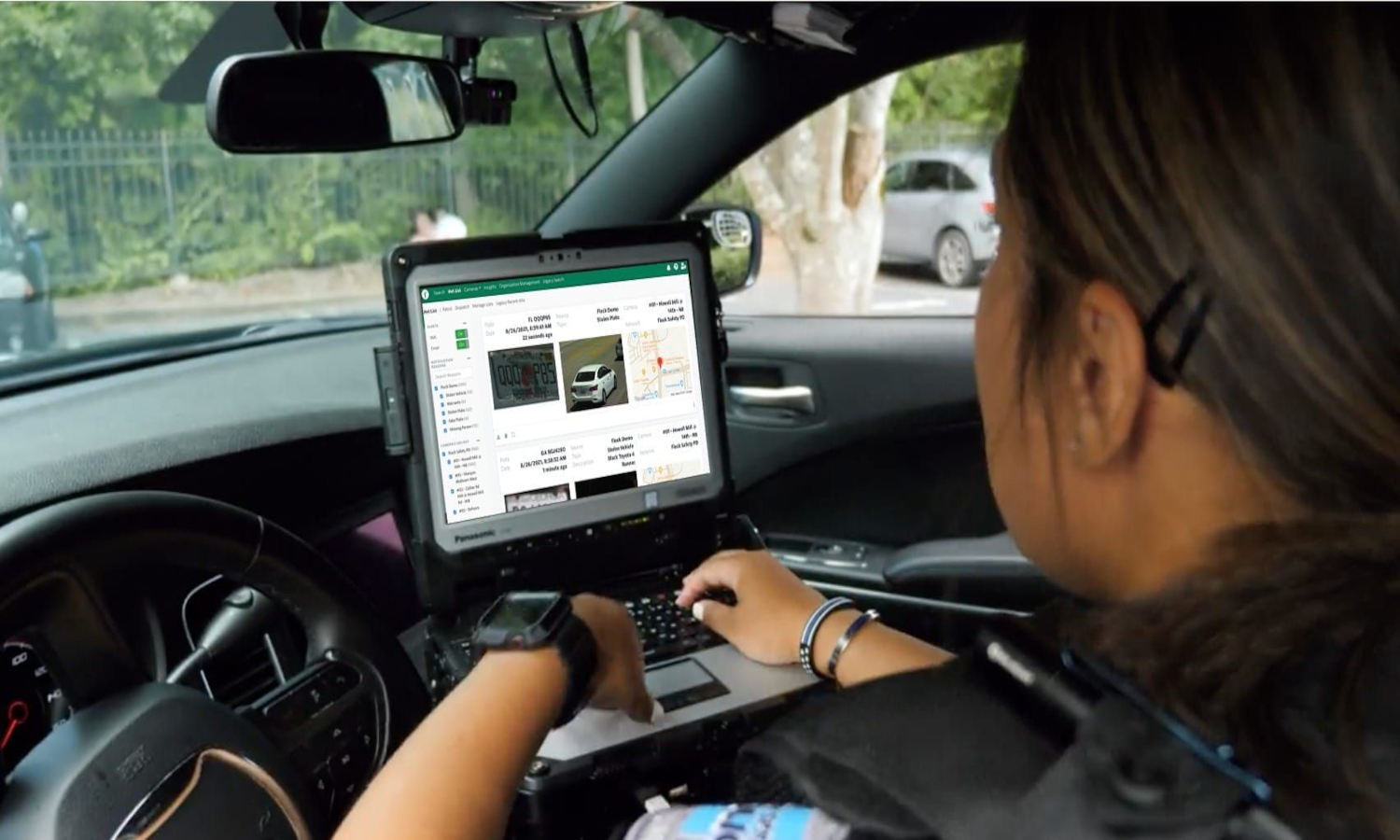
A Texas deputy typed eight words into a search log — “had an abortion, search for female” — and queried Flock Safety‘s network of more than 80,000 license-plate cameras nationwide. Then, when it came time to document what happened, Sergeant Damien Bethel used Axon’s Draft One AI tool to write the official incident report. That report now includes this line: “I acknowledge this report was generated using Draft One by Axon.” Documents obtained by 404 Media and the Electronic Frontier Foundation confirm both.
“Had an Abortion, Search for Female”: What the Records Actually Show
The paper trail from Johnson County, Texas, tells a story that doesn’t match the one Flock’s CEO has been telling.
- Deputies labeled their Flock search with the woman’s medical procedure as the stated reason
- Johnson County opened a “death investigation of a non-viable fetus” and consulted the District Attorney about charging her
- Prosecutors concluded the state “could not statutorily charge [the woman] for taking the pill”
- Sergeant Bethel’s Draft One report summarized deputies’ discussion of “legal implications” — including a possible civil lawsuit against the pharmaceutical company that supplied the pill
- The body-camera footage Draft One relied on to generate that report remains withheld by Johnson County, despite public-records requests from 404 Media and EFF
Flock CEO Garrett Langley told law-enforcement customers the search was a family-requested welfare check for a woman in danger. Court records contain zero mention of family concern. According to 404 Media and EFF, the person who reported the abortion was the woman’s abusive partner — weeks after it occurred. Flock spokesperson Paris Lewbel told 404 Media that “the case report details that authorities explicitly stated she could NOT be charged with a crime.” That’s accurate. It’s also not the whole picture.
A nationwide license-plate dragnet, labeled with a medical procedure, run at the request of an abusive partner — and a vendor CEO publicly calling it a safety check. This follows a broader pattern visible in cases involving a covert surveillance app used to target individuals for politically sensitive reasons.
When the AI Writes the Report, Who’s Responsible for What It Says?
With no audit trail and withheld footage, the gap between what happened and what’s officially documented may be impossible to close.
Draft One works like this: upload body-cam audio, get a draft in roughly five minutes, officer reviews and signs. Once that window closes, the original AI-generated text disappears — no version history, no authorship metadata. EFF calls it “designed to defy transparency.” Research summarized by the ACLU found that AI-assisted reports were “substantively and significantly worse on ACCURACY.” Axon claims approximately 300,000 hours saved, based on customer surveys, and says Draft One has helped write around 600,000 reports across roughly 600 departments. Forbes public-records investigations found officers correcting wrong names and license plates. Some departments have disabled Axon’s own safeguards entirely.
Your car’s location, your pharmacy visits, your movements through a post-Dobbs landscape — all potentially logged across 80,000 cameras, summarized by an AI tool that leaves no traceable draft, stored by a department that won’t release the footage. Concerns about systems tracking users without consent extend well beyond this single case. The official record of the surveillance exists. The source material that shaped it stays locked — and that combination is a template, not an anomaly.