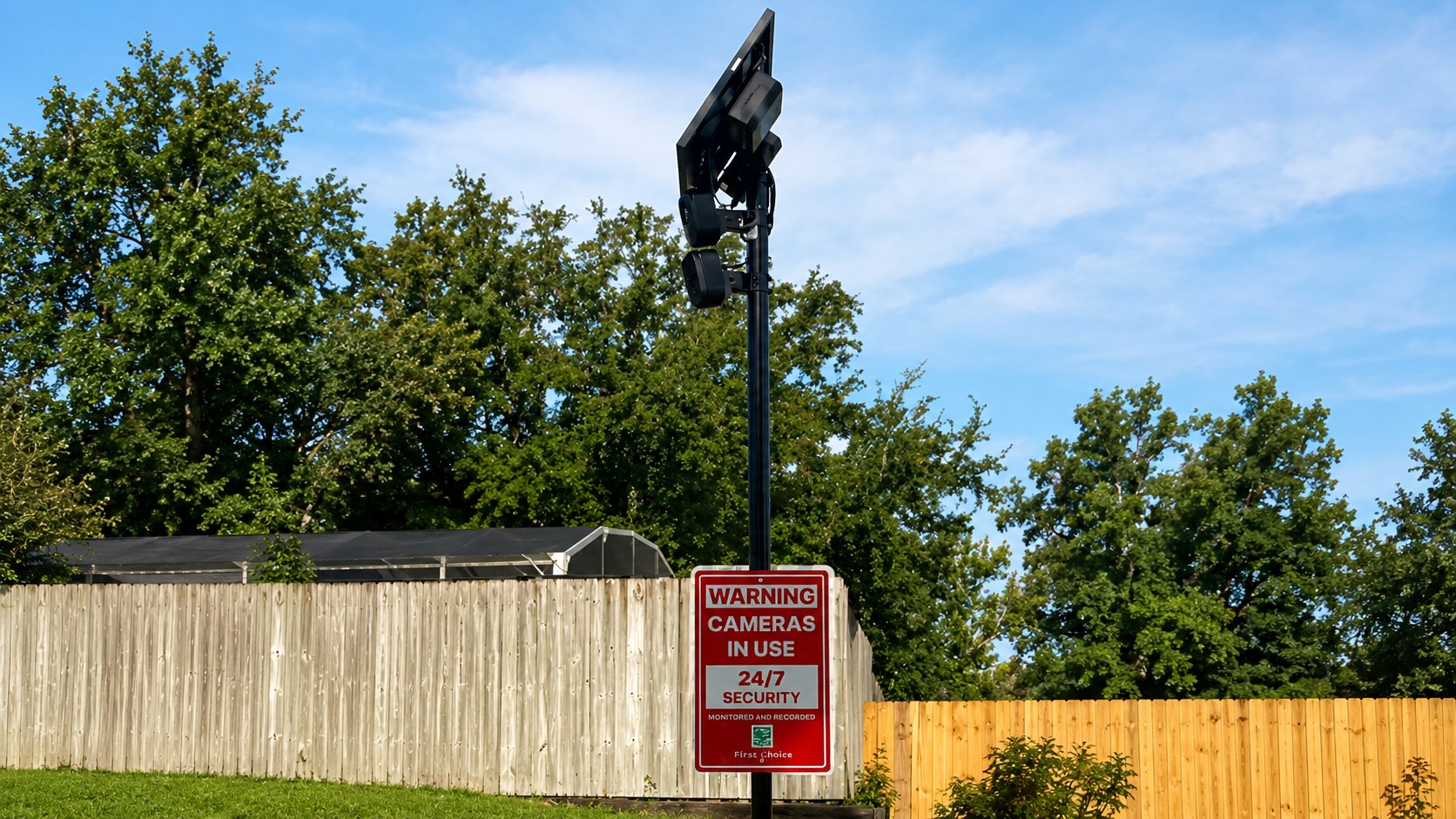
You go to bed in a quiet suburb. You wake up and there’s a camera on the pole outside your house, angled directly at your driveway. Nobody knocked. Nobody asked. This scenario — reported by homeowners in multiple communities — reflects the rapid expansion of Flock Safety’s automated license plate reader (ALPR) network across thousands of cities in more than 40 states. The specific case has not been independently confirmed, but the pattern is well-documented. And the backlash is accelerating.
How the System Works
Flock says its cameras solve crimes, not surveil neighborhoods — but critics see a dragnet hiding in plain sight.
ALPR cameras capture license plates, timestamp them, and log locations. Every car that passes becomes a data point. Flock Safety says the system targets “specific public safety investigations,” does not use facial recognition, and restricts searches to authorized users with role-based access and audit logs. The company’s default data retention period is 30 days, after which data is permanently deleted. That sounds reasonable on paper. The trouble starts when you zoom out.
The broader picture is harder to dismiss. Flock cameras now operate in thousands of cities across more than 40 U.S. states, and the company maintains that the system is not designed for “always-on” mass surveillance. Critics — including the ACLU — counter that it still creates searchable records of law-abiding drivers’ movements, regardless of intent. A growing number of municipalities have canceled or rejected Flock contracts over precisely these concerns, and some local governments have paused deployments pending privacy and oversight reviews.
“Flock says the system is for specific public safety investigations — not to monitor people.” — Flock Safety, per reporting
While Flock frames this as a crime-solving tool with guardrails, the ACLU and the Institute for Justice have mounted organized campaigns against ALPR expansion. Some local officials reportedly discovered after signing contracts that their data was accessible far more broadly than they understood — shared with hundreds of law enforcement agencies nationwide, often without the granular awareness of the officials who signed off. That gap between what was promised and what was delivered is where trust erodes fastest.
The Placement Problem
Where cameras go — and who decides — has become the sharpest point of conflict in the ALPR debate.
If you live on a street where one of these cameras landed, the questions hit close to home:
- How long is your plate data retained?
- Who can search it?
- Does driving past your own mailbox generate a record accessible to agencies you’ve never heard of?
Condensing all four into one sharper reality: the rules governing placement, access, and data scope remain largely unsettled, and the people most affected are often the last to find out. Whether warrant requirements or opt-out rules will eventually apply is still an open fight — one playing out in city council chambers, not Silicon Valley boardrooms. For now, the cameras keep going up, even as debates about home security choices versus imposed surveillance continue to divide communities.