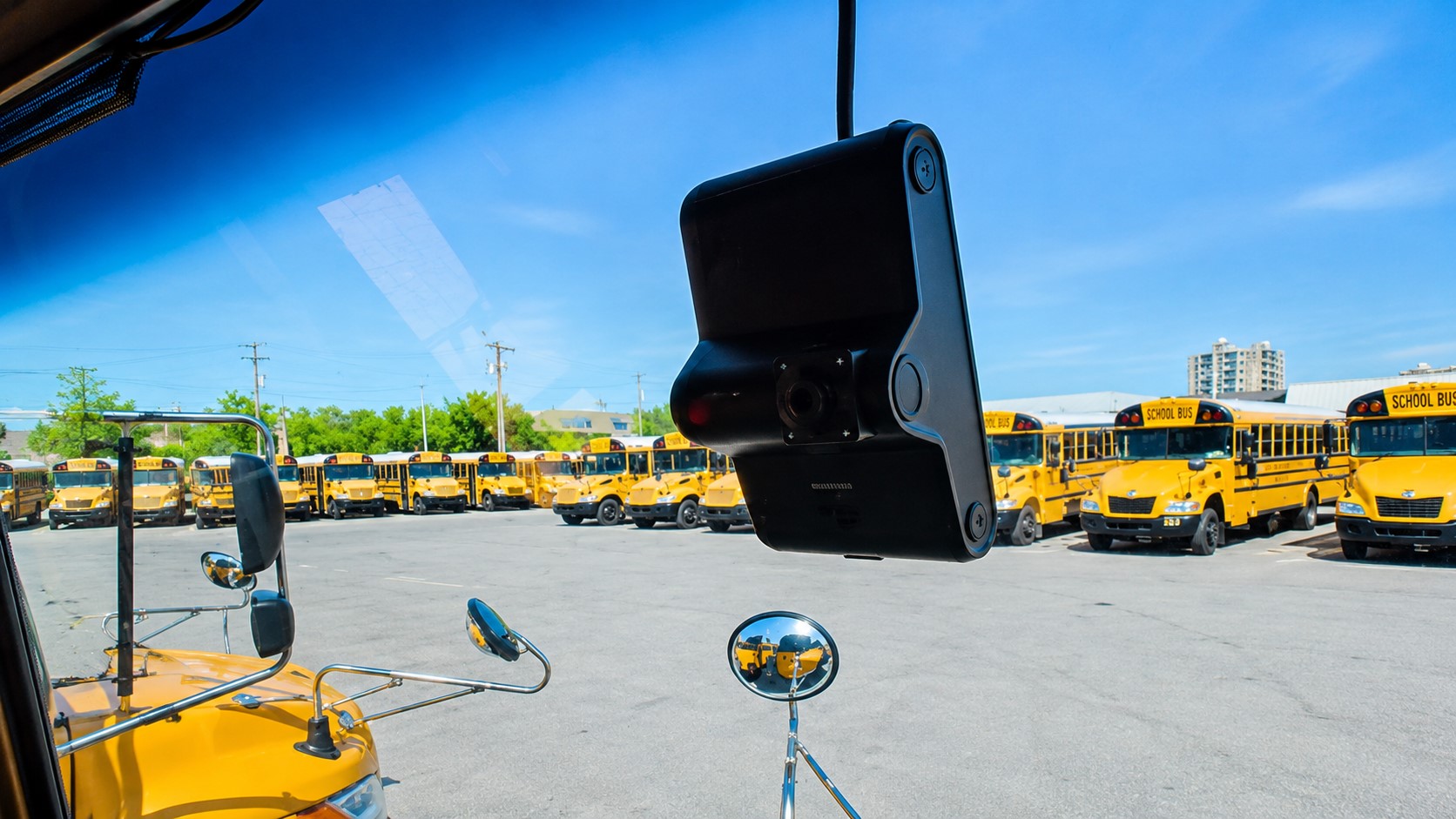
Someone blows past a surveillance app school bus stop arm doing 40 in a 25 zone. Within seconds, an alert fires. A license plate gets captured. The driver probably doesn’t even notice the camera.
Greater Clark County Schools in Indiana has installed AI-powered dash cams on 12 school buses so far, with plans to outfit all roughly 150 by year’s end. The system runs continuously while the bus operates, recording everything from a driver checking a phone to a cyclist cutting too close to the rear wheels.
What the system actually watches for:
- Hard braking, sudden acceleration, and distracted driving behavior
- Pedestrians, cyclists, or children in dangerous proximity to the bus
- Vehicles illegally passing a deployed stop arm, with license plate capture
- Motion-based events flagged and sent to district officials within seconds
Transportation director Daniel Borders told reporters that stop-arm violation capture is the primary reason the district retains specific video clips — framing this less as a surveillance play and more as an enforcement tool.
Daniel Borders described the system’s core purpose as monitoring driver behavior, vehicle dynamics, and external safety events to protect students in real time.
The Ring Doorbell on Wheels
This is where school-bus safety and everyday surveillance culture officially merge.
Anyone who has glanced at a neighbor’s Ring camera footage will recognize the logic immediately. The district says it does not use facial recognition — detection is motion-based, not identity-based. That distinction matters, though privacy advocates will reasonably ask how license plate data gets managed and who can access retained footage once it exists.
The cost structure is worth noting. Installation reportedly ran the district nothing, with an ongoing service fee of around $14 per bus per month. When safety tech costs less than a streaming subscription per unit, adoption barriers essentially disappear. Vendors like Samsara and BusPatrol already market comparable systems to districts nationwide, which means GCCS isn’t pioneering anything here — it’s joining a wave that has been building quietly for years.
As GCCS scales toward a fully equipped fleet, every stop-arm violation becomes a documented event: a timestamp, a plate number, and a video clip ready for law enforcement review. Whether that feels like protection or overreach likely depends on which side of the stop arm you happen to be standing on.