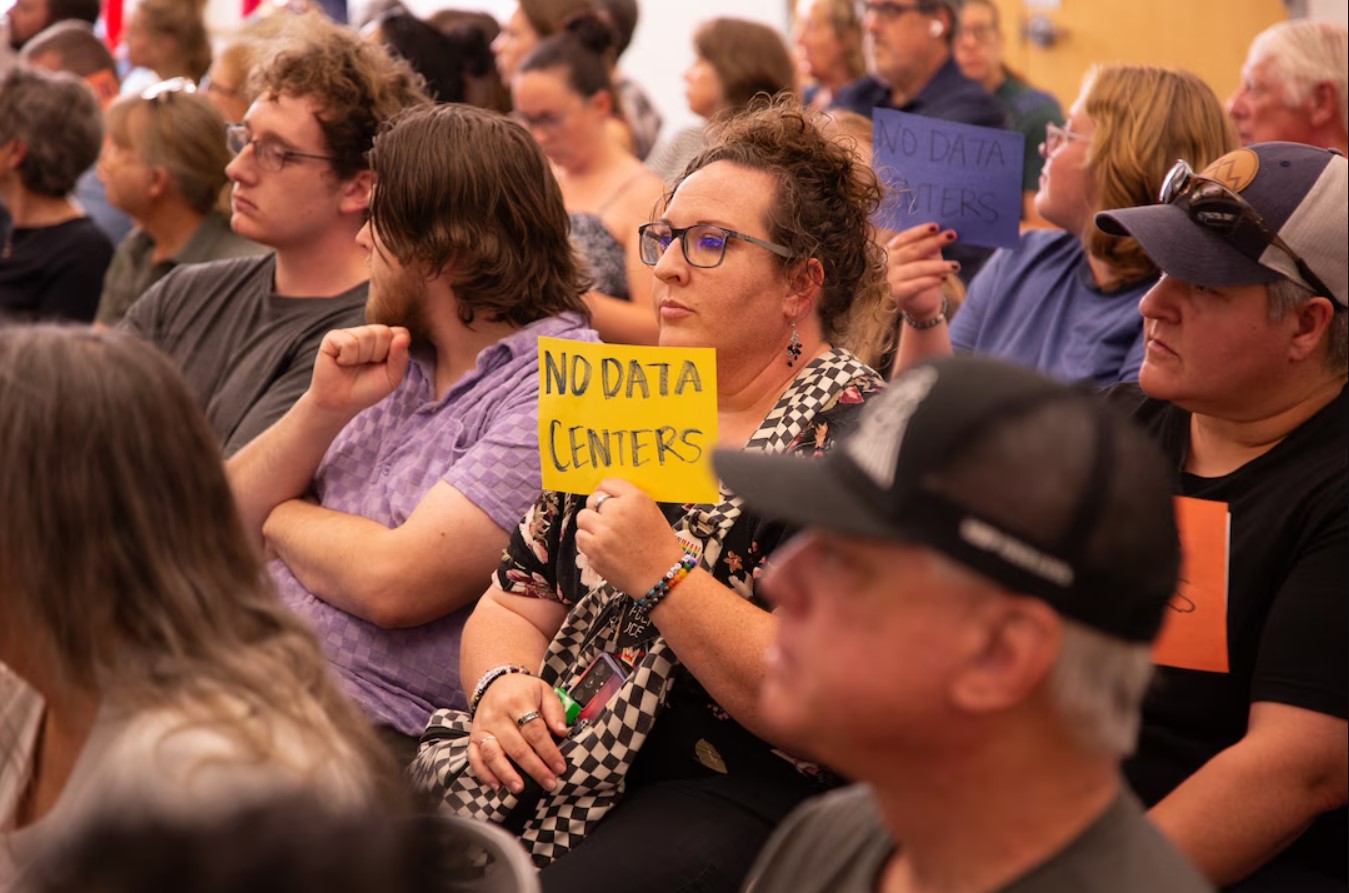
A quarter-million gallons of concentrated industrial brine, every single day, piped into wetlands feeding a lake already choking at near-record lows — its exposed lakebed sending arsenic-laced dust into the lungs of nearby communities. That’s the proposal before Utah’s Division of Water Quality following a packed public hearing on July 27. The Tooele Valley project — a 500-megawatt data center plus truck stop, hotel, and warehouses — needs a pollution discharge permit to operate. If approved, the precedent it sets could matter more than the project itself.
When “Treated Water” Becomes Somebody Else’s Problem
The reverse osmosis math works for the developer — less so for the wetlands downstream.
Buried in the permit application is a straightforward engineering problem dressed up as a solution. Local groundwater is too brackish for industrial use, so the project proposes a reverse osmosis plant to strip the salt. That process generates concentrated brine — up to 260,000 gallons daily, per the state’s own hearing notice — which would flow through a drainage channel into Class 5E transitional wetlands adjacent to Gilbert Bay. State regulatory language describes this as a situation where “toxicity is neither an existing concern nor likely to be present.” Conservation groups dispute that claim forcefully, noting no baseline water-quality data exists for the discharge area.
Developer Charles “Chuck” Akerlow of Zenith Development has acknowledged the project “would not be possible without” incentives and financing from the Utah Inland Port Authority. UIPA, meanwhile, insists it prioritizes lake protection and isn’t actively recruiting data centers. Worth noting: UIPA board members also sit on the MIDA board that backed the far larger Stratos hyperscale project on the lake’s north side — a proposal so controversial it helped unseat a state legislator in a primary.
Here’s what’s concretely at stake:
- Up to 260,000 gallons per day of brine discharged at “essentially zero dilution,” according to Utah Physicians for a Healthy Environment
- No established baseline water-quality data for the discharge area, per conservation groups
- UPDES violation fines cap at $10,000 per day — critics call this “pocket change” for a 500-megawatt operator
- The Great Salt Lake has already hit near-record lows, exposing arsenic-laden lakebed sediment
- AI data centers globally could consume over 1 trillion gallons of freshwater by 2027, per Aspen Policy Academy research
“Without a healthy lake, this valley won’t survive.” — Filmmaker Alyssa Swanzey, at the July 27 public hearing
Residents spoke for two hours at the hearing. They raised PFAS contamination fears — the kind of invisible-until-it’s-too-late threat that makes an Erin Brockovich reboot feel less like entertainment and more like prophecy. Concerns also included diesel runoff from the planned truck stop and toxic dust as lake levels continue dropping. One commenter warned that people “younger than me are going to die of arsenic poisoning.”
A Utah Physicians for a Healthy Environment representative questioned whether any meaningful environmental review had occurred before proposing brine discharge “right next to Gilbert Bay.” The Utah Division of Water Quality did not provide a public rebuttal at the hearing.
Dry cooling, immersion cooling, and closed-loop systems all exist as alternatives. None are required under the current proposal. If this permit passes, it creates a template for brine disposal into Great Salt Lake wetlands that future projects will gladly follow. Utah’s regulatory framework faces a pointed question: can it handle the volume of AI infrastructure headed its way before the lake absorbs one mistake too many?