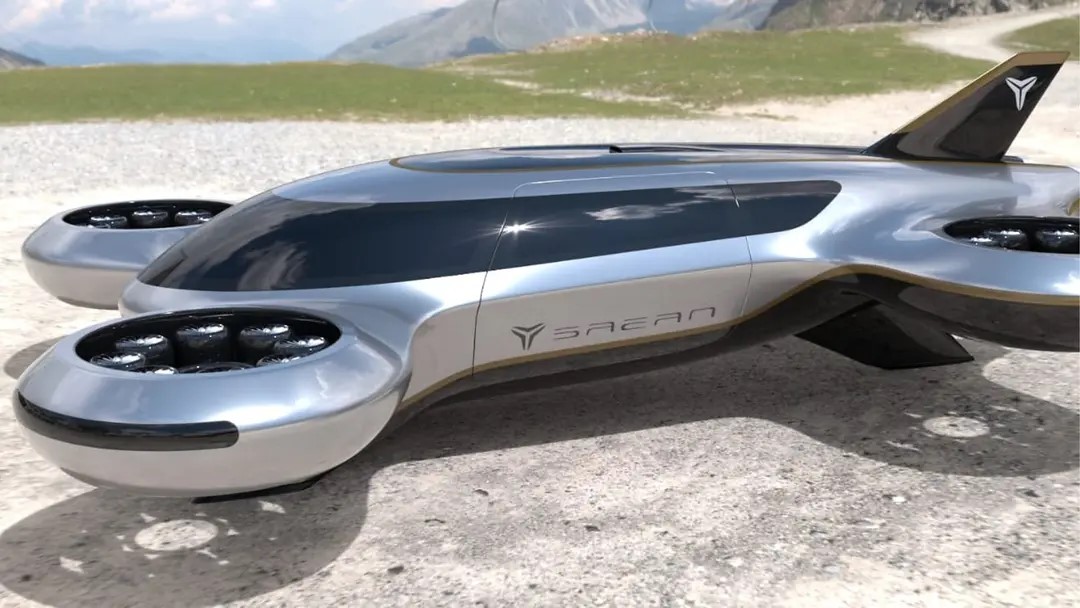
The biggest obstacle to flying taxis isn’t batteries or regulation. It’s the noise. A multicopter droning overhead at 200 km/h kills public acceptance faster than any bureaucrat could. Saean R&D Co., Ltd — a South Korean EV maker known for electric trucks and sports cars — just secured three air-jet propulsion patents from the Korean Intellectual Property Office (KIPO). Worth noting upfront: this is propulsion IP, not a flyable aircraft. Not yet.
Inside the Enclosed Jet Architecture
Saean’s system swaps exposed rotors for internally housed propulsion — think the difference between a box fan and a sealed HVAC unit.
The framework targets three persistent UAM blockers: noise, structural stability, and cruise-speed efficiency. Here’s the breakdown:
- Enclosed propulsion core — replaces open multicopter rotors with an internally housed jet system that adds acoustic shielding from blade noise
- Vortex Guiding Vanes — internal structures aligning airflow at intake and exhaust, reducing turbulence and cutting energy waste
- Micro-vortex generation — controlled airflow around the aircraft body that disperses exhaust noise and prevents aerodynamic stall during sharp maneuvers
Saean describes the portfolio as an “integrated technology platform that addresses key challenges in UAM commercialization, including structural stability, propulsion efficiency, and noise reduction,” according to PR Newswire.
Why Noise Decides Everything
Current eVTOLs are quieter than helicopters — but still loud enough to trigger the same public backlash that hit Lime scooters flooding city sidewalks.
Hyundai/Supernal’s S-A2 reportedly produces around 65 dB at 500 feet. That’s dishwasher territory. South Korea’s OPPAV test vehicle reached 200–240 km/h at roughly 61–62 dB. Hanwha Systems claims its electric propulsion cuts noise by over 15 dB compared to helicopters, according to Asia Economy. That’s progress. But it still adds a persistent drone signature over neighborhoods that never signed up for it. Saean argues enclosed jet propulsion pushes quieter — and faster — than anything rotor-based can currently deliver.
Patent Wall, Not Flying Taxi
No prototype flies yet, but the IP portfolio is structured to make competitors license the architecture rather than replicate it.
Joby Aviation sits at Stage 4 Type Inspection Authorization with the FAA. Archer has completed Phase 3 certification. Saean has neither. What it has is a coordinated patent wall around enclosed jet propulsion, positioning itself as a technology licensor eyeing Morgan Stanley’s projected $1.5 trillion UAM market by 2040.
Think Qualcomm’s early baseband chip strategy — nobody bought a Qualcomm phone, but eventually every phone ran on their IP. Saean’s existing EV portfolio, spanning electric sports cars, 30-ton electric tipper trucks, and battery systems, confirms this isn’t a blank-sheet startup chasing headlines.
These patents don’t guarantee a quieter sky. They reserve a seat at the table if enclosed jet propulsion becomes the dominant architecture post-2030. Whether Saean’s tech ends up inside South Korea’s K-UAM aircraft — targeting commercial operations around 2025–2026 — depends entirely on one thing still missing: a working demonstrator.