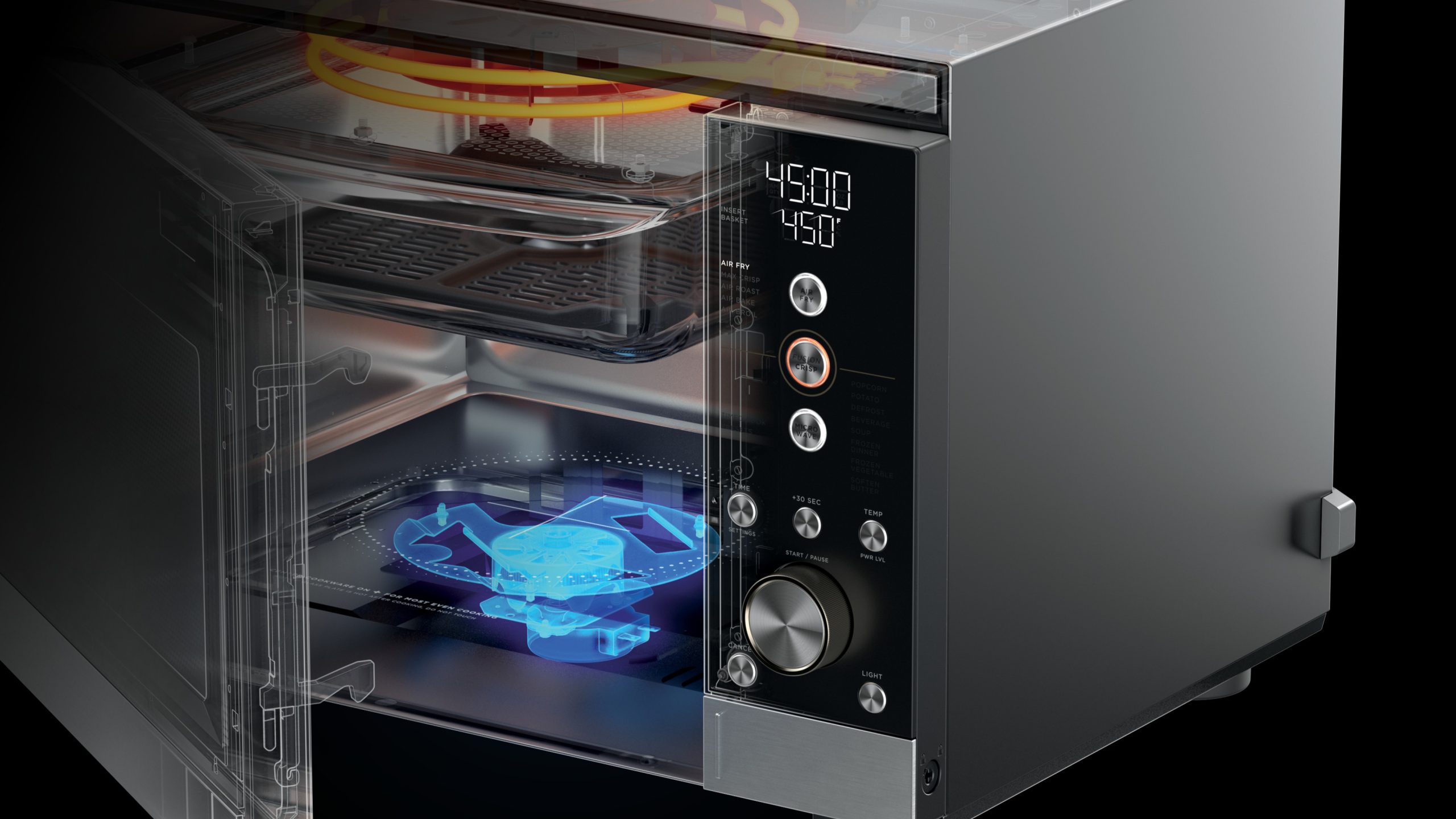
You know the drill. You microwave last night’s pizza, pull it out, and it has the structural integrity of a wet napkin. That sad, floppy triangle has been the microwave’s dirty secret for decades — speed at the cost of texture. Ninja thinks it has the fix. The Ninja CRISPi Microwave, available July 16 on SharkNinja.com for $449, is the brand’s first-ever microwave. Its pitch: a hybrid appliance combining full microwave functionality with integrated air frying, eliminating the two-appliance shuffle that quietly devours your counter space one kitchen gadget at a time.
FusionCrisp: Microwave First, Crisp Second
The automatic two-stage cooking sequence aims to deliver frozen-to-crispy results without you lifting a finger between steps.
The core trick is FusionCrisp™ Technology. The microwave heats your food first for speed, then automatically transitions to air frying for crispness. No pulling food out, no swapping appliances mid-cook. According to Ninja, the system goes frozen-to-crispy up to 60% faster than a conventional oven, with full meals finishing up to 50% faster than a wall oven. Worth noting: these are manufacturer claims, and no independent lab data is available yet.
Here’s what ships in the box:
- 14-in-1 functionality: 8 microwave presets (Popcorn, Potato, Defrost, Beverage, Soup, Frozen Dinner, Frozen Vegetable, Soften Butter), 5 air-fry presets (Max Crisp, Crisp, Air Roast, Air Bake, Air Broil), plus FusionCrisp mode
- 5.5-qt CleanCrisp™ glass basket: fits an 8-lb chicken, four pizza slices, or a 9×11 casserole — reportedly enough for 8–10 people
- PFAS-free, non-toxic glass — no forever chemicals, no coated metal surfaces
- 40% more usable cooking surface than a traditional wall oven, per Ninja
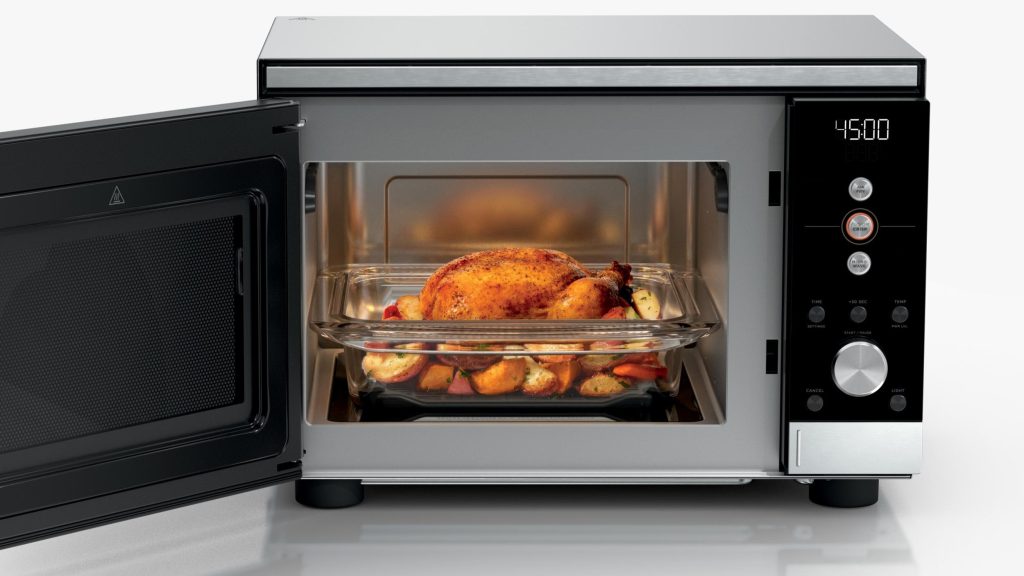
Glass Baskets and the PFAS Question
Rated for temperatures between 22°F and 450°F, the CleanCrisp™ glass handles the freezer-to-air-fryer transition without shattering — and without the nonstick coating concerns that follow many rivals.
This is the same glass architecture from Ninja’s existing CRISPi air fryer line, now scaled into a full microwave cavity. For anyone who’s been quietly Googling “PFAS in air fryer baskets” at 2 a.m., this directly addresses that anxiety — no coated metal surfaces anywhere in the cooking chain.
The Fine Print Matters Here
Premium pricing and some unanswered questions deserve honest scrutiny before you commit.
Four hundred forty-nine dollars is real money for a microwave — roughly four times what a capable standard model costs, and notably higher than rival hybrid microwaves that start around $180–$300. The unit will likely claim serious countertop real estate; cramming two cooking systems and a 5.5-qt glass basket into one appliance doesn’t produce something dainty. Previous CRISPi glass containers reached approximately 280°F on exterior surfaces during TechGearLab testing, so clearance around cabinets matters. There’s no app or Wi-Fi connectivity here, either — this is a fully manual, preset-driven experience with no smart gadgets integration.
Whether the price is justified depends entirely on how much soggy reheats genuinely bother you — and whether independent reviews confirm what Ninja is promising.