Remember blowing into an NES cartridge like it was some kind of sacred ritual? That physical act of choosing a game, slotting it in, and hearing it boot — digital libraries killed that experience years ago. Now a Linux tinkerer known as Jibril-sama has resurrected it using the least glamorous hardware imaginable: used 2.5-inch SATA SSDs bought for €7 (~$8) apiece. Each drive holds one or more Steam games alongside a script that auto-launches the title the moment you plug it into a dock. It’s beautifully pointless in exactly the right way. Much like the Disco-Era Gadgets that prefigured modern tech, this build taps deep nostalgia to reimagine how we interact with our games.
How the Cartridge System Actually Works
Each cheap SSD becomes a plug-and-play game launcher through a tidy chain of Linux automation.
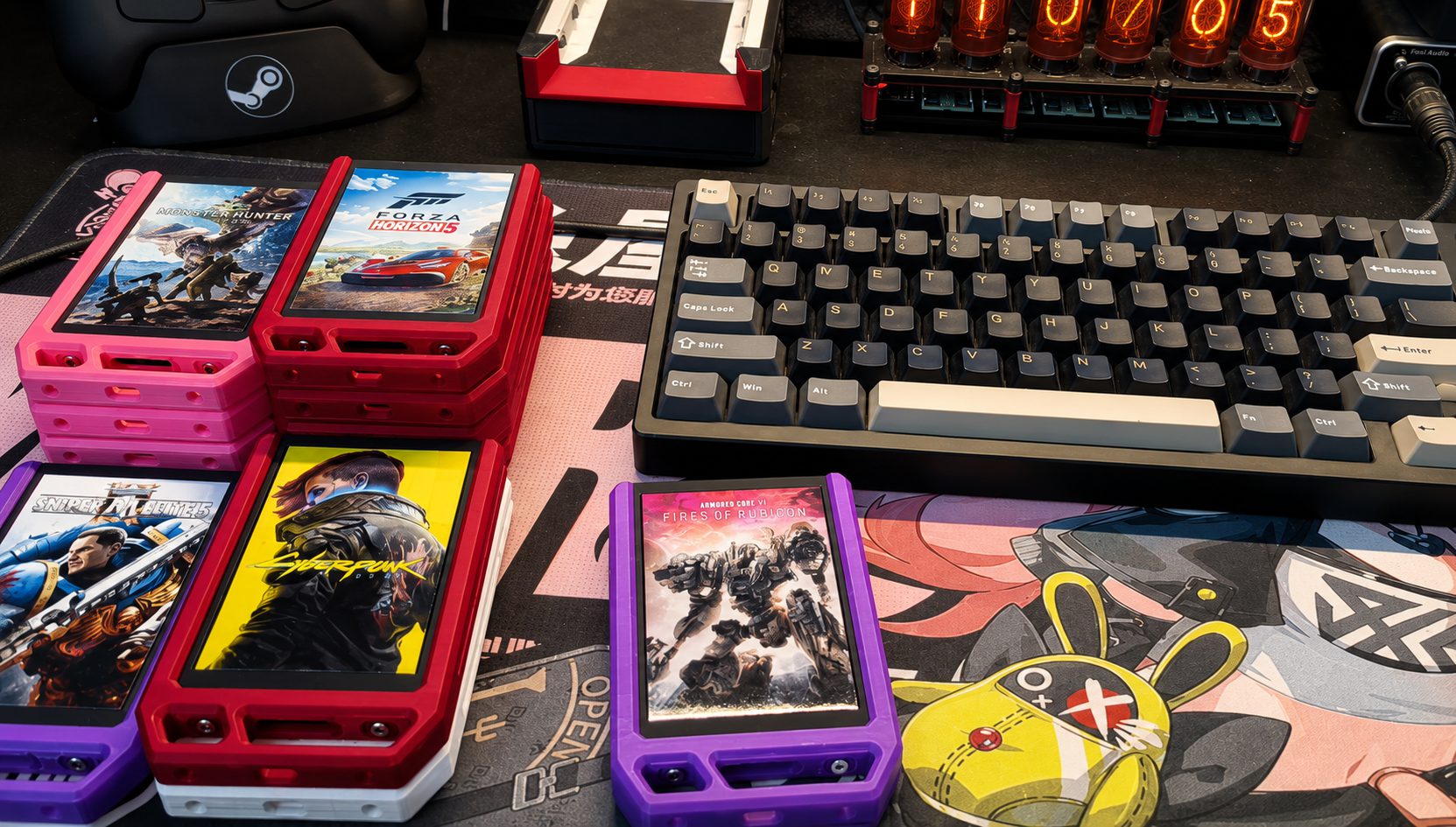
The technical chain is elegant in its simplicity. Each 128GB drive stores a full game installation plus a small script that calls Valve’s Steam URL protocol. Slot the drive into a SATA dock and Linux does the rest. As Jibril-sama explained via r/pcmasterrace, reported by Tom’s Hardware: “Plug in SSD -> udev rule sees the event -> triggers the systemd daemon -> systemd daemon looks into the SSD and finds the script -> execute the script.”
Here are the fast facts on the build:
- Each SSD is a 128GB 2.5-inch SATA drive, bought second-hand for roughly $8
- Every drive contains the full game install plus an auto-launch script using Steam’s URL protocol
- The system runs on Linux via udev rules and systemd — not a Windows AutoRun trick
- Drives sit in colorful enclosures with custom labels mimicking console cartridge art
This is the vinyl-record-revival logic applied to gaming. Scrolling through 400 Steam titles feels like browsing a Netflix queue at 11 PM — paralysis by abundance. Picking up a labeled cartridge and slotting it in? That’s a decision made with your hands. Jibril-sama reserves cartridges for games they “want to replay once in a while,” skipping live-service titles entirely.
Practically speaking, some friction exists. Steam libraries can get temperamental across removable drives. Multi-gigabyte patches on a cartridge you haven’t touched in months mean waiting before playing. Jibril-sama acknowledges this, letting Steam handle updates on the cartridge drive when needed. This is a weekend project, not enterprise architecture — and that’s perfectly fine.
Where This Idea Could Go Next
Reddit’s enthusiasm points to a gap in the games industry that nobody has officially filled.
Community reaction on r/pcmasterrace ran hot, with commenters immediately suggesting support for GOG and other platforms. Tom’s Hardware described the system as combining “old-school console convenience of cartridges with Steam’s awesome and agreeably flexible games library.” No commercial product exists yet, but the blueprint is sitting right there: branded cartridge shells, docks with integrated launch software, GUI front-ends treating external drives as physical game shelves. Whether any platform holder moves in that direction officially remains to be seen. The appetite for unusual video games stories and hardware experiments clearly runs deep in the community.
The whole project cost less than a decent sandwich per cartridge. Yet it articulates something the games industry has quietly ignored: people still want to touch their collections. Smart Gadgets that solve real human needs don’t always need to be expensive or commercially polished. Eight dollars and some Linux scripting shouldn’t be the only answer to that.