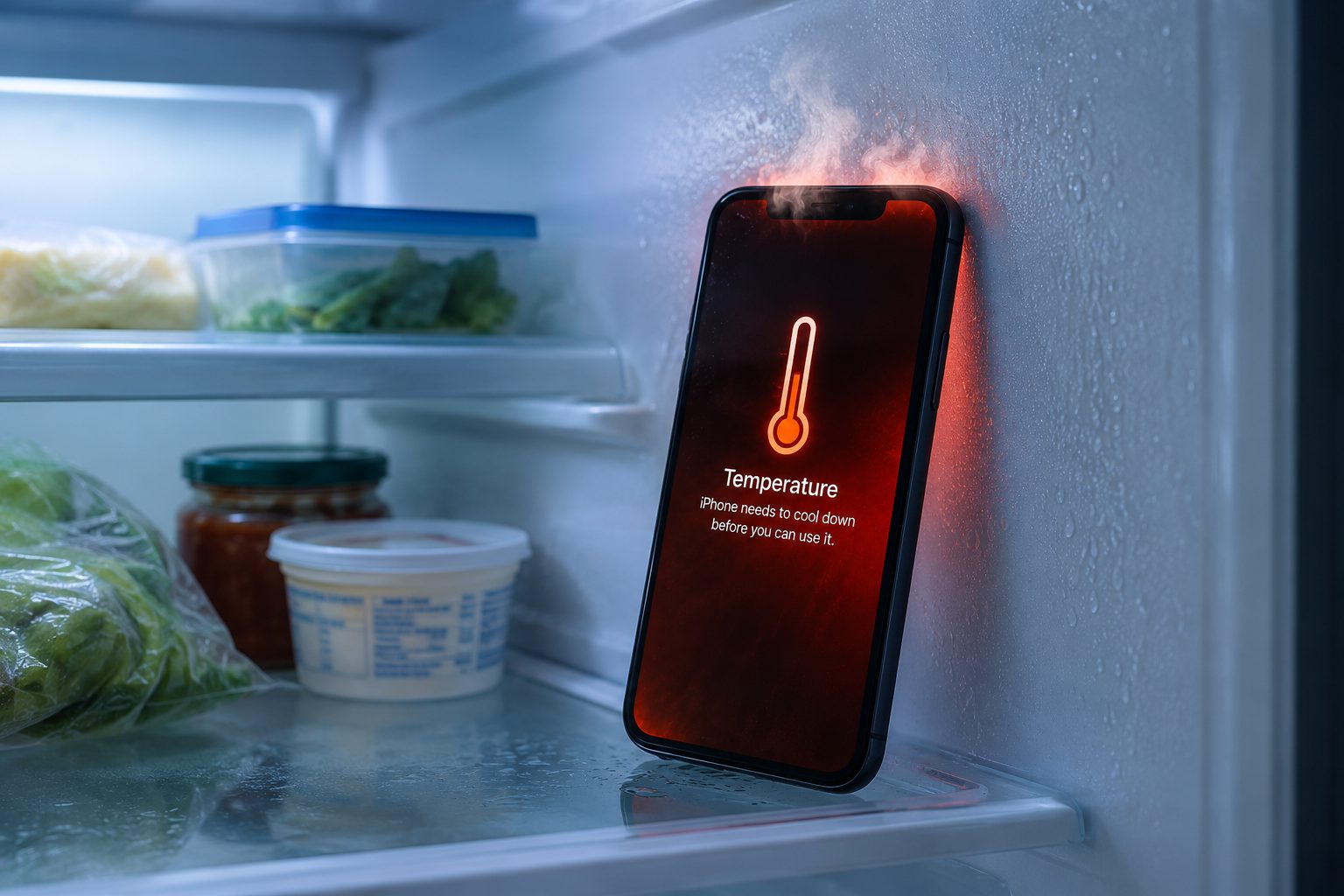
On a scorching afternoon, the temperature warning flashes and the instinct hits: tuck the overheating phone into the fridge, wedged between the yogurt and last night’s leftovers. It feels logical. It is, unfortunately, a disaster. Repair shop owner Jamie Farnell in Wem, UK, has been “flooded” with destroyed phones and tablets this summer, according to BBC reporting — and a significant share of that damage traces back to exactly that reflex. The viral fix, it turns out, is catastrophically worse than the computer problems it claims to solve.
The Fridge Is Not Your Phone’s Friend
When a hot device enters a cold fridge, the real damage begins — not from heat, but from the water that follows.
The physics are ruthless and simple. When a hot phone enters a cold fridge, warm humid air around and inside the device drops below the dew point. Water condenses on the logic board, screen, ports, and speakers — the same way moisture beads on a cold drink pulled from a cooler. Farnell told the BBC that putting devices in fridges or freezers “causes internal condensation” inside the screen and logic board, effectively destroying some phones.
It gets worse when the phone comes back out. Cold device meets warm room air, and a second wave of condensation forms on and potentially inside the casing. A Mouser electronics specialist warned that “Never put your phone in a fridge or freezer, water damage can be far more serious than the overheating itself,” according to cmotech.uk. Farnell draws a direct line between this hack and the old “phone in rice” myth — equally viral, equally wrong, and capable of introducing new problems rather than fixing the original one, per TechSpot.
The consequences are not theoretical. During the recent heatwave, a swollen iPad battery brought into Farnell’s shop actually exploded on-site, according to TechSpot. Beyond moisture, thermal shock from rapid temperature swings stresses glass, seals, adhesives, and lithium-ion cells. Both Apple and Samsung recommend natural cooling in a cool, shaded environment — not fridges or freezers.
What to Actually Do When Your Phone Overheats
While repair queues grow outside shops like Farnell’s, the actual fix requires no appointment, no freezer, and no repair bill.
Most smartphones are designed to operate safely up to around 35°C ambient, according to experts quoted by Deccan Herald. Above that threshold, your phone throttles performance and eventually shuts down — annoying, but recoverable. Power it off. Move it to a shaded spot with airflow. Wait. As one industry expert told Deccan Herald, “putting a phone in the refrigerator to cool it down can be as harmful as letting it overheat,” because sudden temperature changes cause additional damage to internal components.
Before your phone even hits critical temperature, there are practical steps worth taking:
- Remove the case — it traps heat
- Drop screen brightness
- Disable GPS, Bluetooth, and mobile data to reduce processor load
- Close streaming and navigation apps
- Never charge a hot phone; charging generates additional heat the device cannot safely shed
These are the actual hacks worth knowing, all sourced from BBC and Tom’s Guide reporting, and none of them require a trip to the kitchen. For those looking to manage their devices smarter year-round, smart gadgets can also help reduce strain on your phone in everyday use.
Farnell and shops like his will keep seeing packed waiting rooms as long as social media keeps recommending fridges as a quick fix. The truth is almost offensively simple: find shade, power down, give it time. Your phone’s logic board will recover from a hot afternoon. It is far less forgiving of a condensation bath. Shade and patience are free. A new logic board is not.