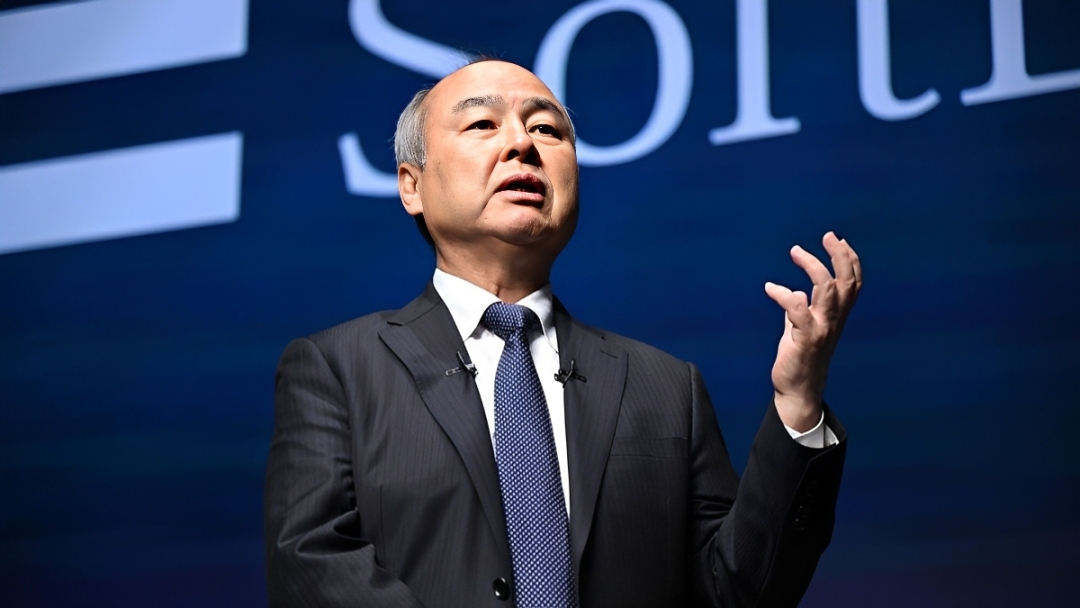
SpaceX barely had time to cash its IPO checks before one of tech’s sharpest capital allocators declared its central premise overpriced. Days after SpaceX raised roughly $75 billion at a $1.7 trillion valuation — the largest IPO on record — SoftBank CEO Masayoshi Son told shareholders that building data centers in space has “little merit,” according to Bloomberg. The AI race, Son argued, gets decided on the ground.
Son’s Earth-First Thesis Hits Where It Hurts
Son’s argument isn’t about rockets — it’s about where the real money in AI infrastructure actually goes.
At SoftBank’s mobile-unit shareholder meeting on June 23, Son laid out a blunt cost argument. Cheap orbital solar power sounds attractive until you realize electricity represents only a small fraction of what data centers actually spend. The dominant expense is chips and hardware. Son called Musk a “remarkable agent of change” but made his position unmistakable: SoftBank will build “formidable” compute capacity on Earth. “He who strikes first wins,” he added — and striking first means breaking ground in France, not breaking orbit.
Here’s what the economics actually look like:
- Energy accounts for roughly 10–15% of a data center’s lifetime cost. Chips and hardware consume about 70%.
- Current estimates place space-based compute at 2–7x the cost of equivalent ground-based operations.
- SoftBank is backing that math with an $80–90 billion France data-center buildout, plus billions invested in OpenAI’s Stargate initiative.
- Commercial orbital compute deployment isn’t expected until the late 2020s at the earliest — if it arrives at all.
Musk insists no “magic” is required. SpaceX’s AI1 satellites would carry Nvidia GB300 GPUs, powered by solar arrays and networked through Starlink’s laser links. The target: one gigawatt of orbital compute annualized by late next year, scaling tenfold annually from there. Morningstar, however, assigns roughly a 7% probability to SpaceX’s optimistic orbital scenario — a number that should give any investor pause.
The $26.5 Trillion Question Hanging Over SpaceX Stock
SpaceX’s IPO math only works if orbital AI compute is real — and right now, that’s a very large if.
That 7% matters because SpaceX’s IPO filings claim a $28.5 trillion total addressable market, with $26.5 trillion attributed to orbital AI compute. Strip that projection away, and you’re looking at a fundamentally different company at a fundamentally different price. The stock has already slipped below its $135–$150 IPO range before recovering, as investors reassess how quickly — and how profitably — orbital compute might materialize.
Son might be wrong. Terrestrial power grids could buckle under surging AI demand, eventually vindicating Musk’s orbital thesis. But “the next few years will be far more important,” Son told investors. If that’s true, the winners are already pouring concrete — not launching satellites.