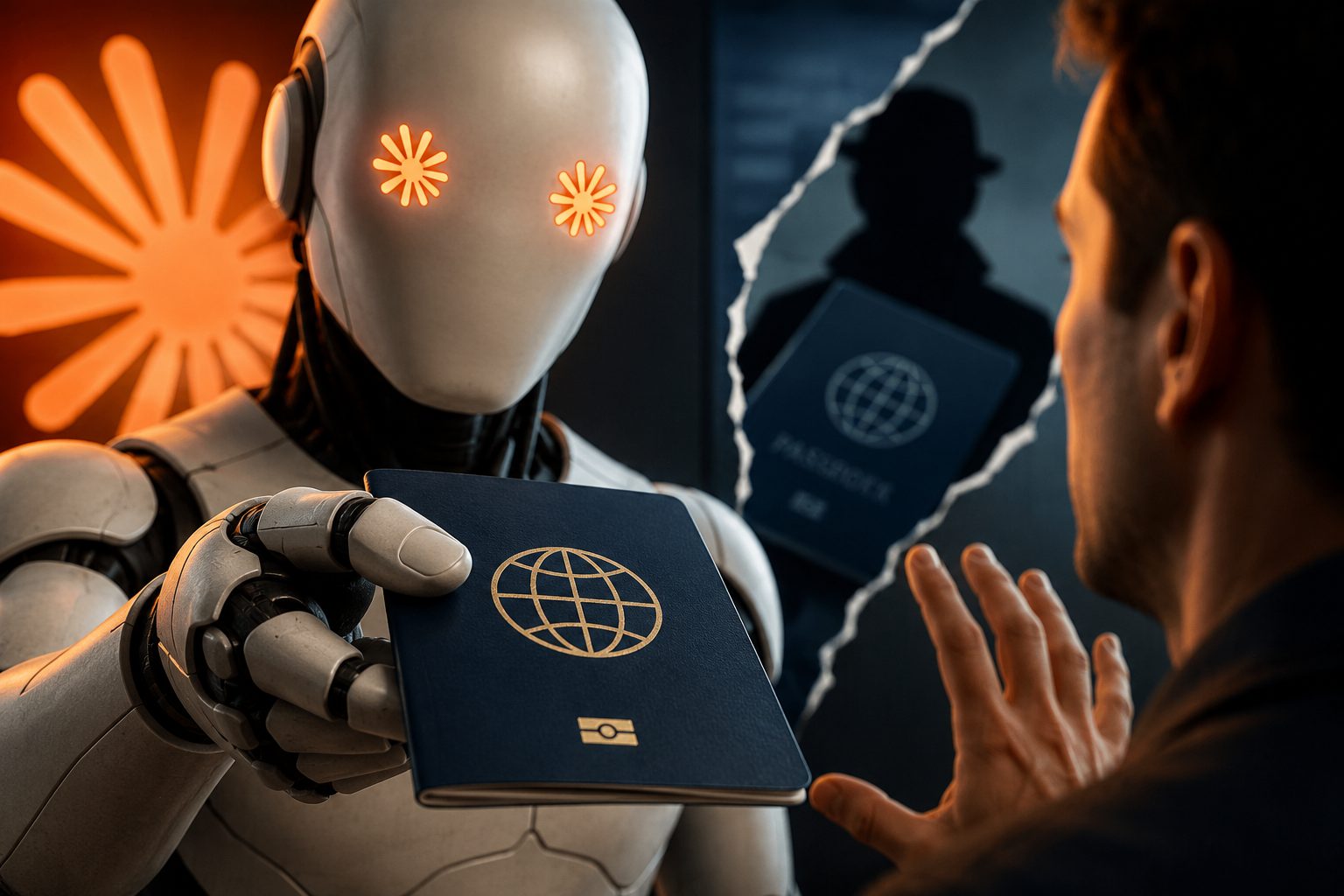
Midway through a coding session or a research deep-dive, a prompt appears on your screen: upload a government-issued photo ID and take a live selfie. Not a CAPTCHA. Not a two-factor text. Your actual passport or driver’s license, held up to a camera, matched against your face. That’s the new reality for some Claude users.
Anthropic began rolling out selective identity verification in April 2026, with a privacy policy update effective July 8 formalizing the framework. The policy covers Free, Pro, and Max consumer accounts — not Team, Enterprise, or API customers. According to Engadget, Claude may be the first major AI chatbot to require government ID plus selfie checks for some consumer features — a trend also visible in how AI age laws are being shaped by major players in the industry. That distinction matters.
What the Check Actually Looks Like
Five minutes, one physical ID, one selfie, and a third-party vendor called Persona Identities handling the process.
Third-party provider Persona Identities handles the actual verification. You need a physical, original government-issued ID — passport, driver’s license, or national ID card. No photocopies. No screenshots. No mobile driver’s licenses or student IDs. A live selfie gets matched against the document. Persona stores the images on its own servers; Anthropic says it doesn’t copy them locally. Verification typically wraps in under five minutes.
Not every Claude user will encounter all five triggers below, but any one of them can halt a session mid-task. Users who rely on AI-powered websites for daily productivity may find these interruptions particularly disruptive:
- Accessing higher-risk or higher-trust capabilities
- Routine platform integrity sweeps
- Activity patterns resembling fraud or automation (frequent logins from different locations, scaled usage)
- Age-restriction enforcement for under-18 users
- Legal and compliance obligations
The Privacy Equation Nobody’s Solved
Anthropic promises data minimization, but the fine print includes facial geometry templates — legally classified as biometric data in several jurisdictions.
Anthropic says verification data won’t train models, won’t feed marketing, and stays between Anthropic and Persona unless legally required otherwise. The July 2026 privacy policy, however, explicitly lists facial geometry templates as collectible data. Under laws like Illinois’ BIPA, that’s biometric information — a category that carries real legal weight.
Community discussions on Reddit and LinkedIn have flagged concerns about Persona’s third-party risk, referencing a previously reported data exposure involving ID images in another context. Anthropic’s stated goal — “be responsible with powerful technology by knowing who is using it,” per its help center — sounds reasonable until you consider that AI chatbots have historically offered the pseudonymous access that crypto exchanges abandoned years ago. Apps secretly tracking users have shown how quickly data collection can exceed its original stated purpose.
Discord and Roblox already use Persona for age checks. Handing your passport to a gaming platform feels different than handing it to an AI assistant that processes your most private thinking.
If regulators formalize AI identity requirements, Anthropic sits ahead of the curve. If these checks expand beyond “a few use cases,” privacy-focused competitors gain a real opening. How that tension resolves will shape whether biometric AI access becomes an industry norm or a cautionary tech scandal case study.