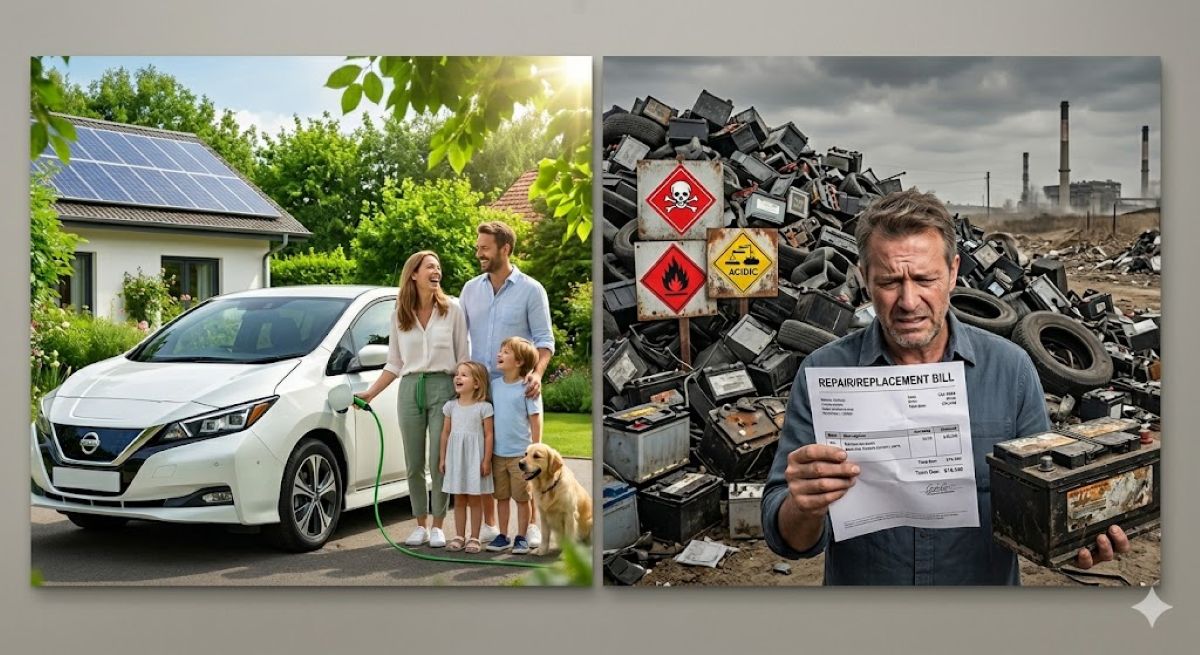
That Tesla in your driveway isn’t just transportation—it’s a rolling bet that your battery will outlast your ownership. Spoiler alert: when it doesn’t, replacement costs hit harder than a cancelled Netflix series. We’re talking $5,000 to $16,000 for a new pack, with some Tesla Model 3 owners facing $15,799 bills once warranties expire. Meanwhile, EV marketing keeps pushing the “save the planet for future generations” narrative while conveniently skipping the part about who pays when 1,000-pound battery packs hit their expiration date.
The Numbers Don’t Lie (Even If the Brochures Do)
Here’s what dealerships won’t mention during test drives: EPA data shows 97.5% of post-2016 EVs still run their original batteries, with failure rates below 0.5%. That sounds reassuring until you realize those vehicles are barely eight years old. The real test comes when federal warranties expire after eight years or 100,000 miles.
Recurrent’s database of actual replacement receipts reveals the brutal range:
- $5,500 for older Nissan Leafs
- Nearly $16,000 for premium models
Some manufacturers like VW designed modular systems where individual $2,000 modules can be swapped instead of replacing entire packs. Others glued their batteries into structural assemblies, forcing all-or-nothing replacements that would make Apple proud.
Who Really Controls Your Battery’s Destiny?
Your EV’s battery management system runs more software than a SpaceX rocket, and you control exactly none of it. These AI algorithms decide charging curves, temperature limits, and discharge parameters that directly affect longevity—all hidden behind proprietary code you can’t access or modify.
Most owners get a crude “health bar” instead of detailed state-of-health data that independent mechanics need for repairs. This isn’t just inconvenient; it’s a fundamental shift in ownership. You’re not buying a battery—you’re entering a subscription model where the manufacturer retains ultimate control over your property’s lifespan and repair options.
The Environmental Shell Game
EVs do cut lifetime emissions compared to gas cars—MIT and EPA studies confirm this repeatedly. But they also front-load environmental costs into production, with battery manufacturing generating 46% of an EV’s total lifecycle emissions. Lithium extraction alone requires roughly 2 million tons of water per ton of lithium, enough for about 100 car batteries.
When your pack eventually degrades, you’re not just facing repair bills—you’re passing along mining toxicity, water depletion, and disposal headaches to whoever inherits your “eco-friendly” ride.
Before signing any EV purchase agreement, demand answers:
- What’s the exact battery warranty coverage?
- Is the pack modular for cheaper repairs?
- Can you access detailed health diagnostics?
- Which independent shops can service this model?
Your grandkids shouldn’t inherit your good intentions wrapped in a $15,000 toxic liability.