How We Narrowed Down the Best Red Light Devices
We filtered popular red light therapy devices through spec verification, expert testing signals, buyer feedback, and real-use scoring, so you can see the strongest options without decoding every wavelength claim yourself.
The best picks stood out by matching strong irradiance, useful wavelengths, practical coverage, and fewer buyer-risk gaps.
Side-by-Side Comparison
| Metric |

🏆 Best Overall |
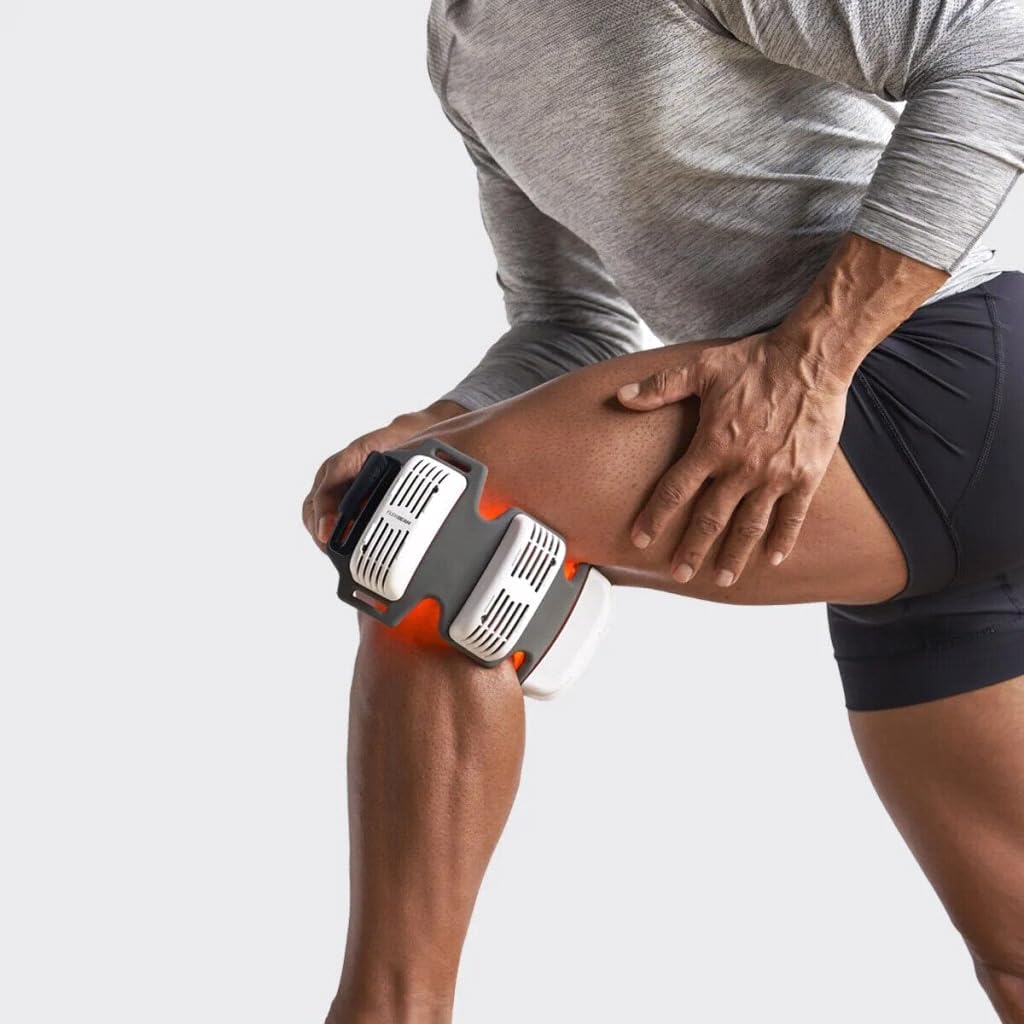
🏆 Best Flexible Recovery Device |

🏆 Best Full-Body Wellness Pad |
|---|---|---|---|
| 💰 Price | $1300 | $629 | $420 |
| 88.9 | 82.5 | 81.4 | |
| 80 | Insufficient Data | 85 | |
| 88 | 88 | 90 | |
| 90 | 90 | 90 | |
| 85 | 70 | 95 | |
| Insufficient Data | Insufficient Data | N/A | |
| 95 | Insufficient Data | 85 | |
| 📏 Irradiance | 100–180 mW/cm² at source | ~110 mW/cm² NIR at source | 130 mW/cm² at 6 in |
| 💡 Wavelengths | 660 nm Red / 810 nm NIR + optional 1050 nm | 630 nm Red / 810–850 nm NIR | 663 nm Red / 840 nm + 980 nm NIR |
| ⚡ Power Draw / Power Source | Corded: wall outlet or external power bank | Rechargeable battery | Corded: wall outlet |
| 📐 Coverage | Handheld / targeted palm-sized treatment area | 3 flexible pods for joint-wrapping treatment | Two sizes: chair-back or full table coverage |
Best Red Light Devices Ranked
Palm Ultimate
The SunPowerLED Palm Ultimate distinguishes itself with exceptional power density, claiming 100 to 180 mW/cm² at the point of contact, a figure that rivals and often surpasses many larger wall panels. Its dual-wavelength capability, 660nm and 810nm, with an optional 1050nm, targets both superficial and deep tissue, making it versatile for a range of applications from systemic effects to brain health. The device’s commitment to assembly and testing in the US and Canada using quality LEDs, as stated by SunPowerLED’s Tom, underscores its build quality and distinguishes it from many mass-produced alternatives. While its reliance on a power outlet rather than an integrated battery pack may reduce portability for some, it ensures consistent, high-power delivery without battery degradation concerns. Anecdotal evidence from users with stroke, dementia, and concussions suggests remarkable and rapid improvements, positioning the Palm Ultimate as a potent tool for targeted and systemic photobiomodulation.
Pros
Delivers very high power density, up to 180 mW/cm² at contact, enabling rapid therapeutic doses.
Offers versatile dual-wavelength therapy, 660nm and 810nm, with a premium 1050nm option for both superficial and deep tissue penetration.
Demonstrates remarkable efficacy in case studies for conditions like stroke, dementia, and concussions, promoting rapid recovery.
Cons
Not battery-packed, requiring a constant power connection or separate external power bank for operation.
High power output can generate warmth, requiring power reduction from 50 Optical Watts to 25 Optical Watts per wavelength for user comfort.
May cause overstimulation or increased energy, suggesting caution for late-night use and requiring individual schedule adjustments.
Use Case Scores
Who It’s For
✅ Who It’s Best For
- Users who want very high-output targeted red light therapy for pain relief, muscle recovery, neuro wellness, or localized treatment areas.
- People who prefer short treatment times, since the device claims 100–180 mW/cm² at contact and can deliver therapeutic doses quickly.
- Buyers who want switchable wavelengths rather than a blended-output device, with 660 nm red, 810 nm NIR, and an optional 1050 nm configuration.
- Users who value consistent corded power over battery convenience, especially for repeated high-output sessions.
- Shoppers looking for a compact handheld device rather than a wall panel, mask, or full-body setup.
⛔ Who Should Avoid
- Anyone who needs a fully cordless device, since this unit requires a wall outlet or external power bank.
- Buyers who want formal medical-device certifications clearly documented, because FDA 510(k), CE, ISO 13485, and similar certifications were not provided.
- Users who need broad full-body coverage, since this is a palm-sized targeted device rather than a large panel.
- People sensitive to stimulation or heat, especially for evening use, since the review notes possible warmth and overstimulation.
- Buyers who require clear warranty, return, water-resistance, or IP-rating details before purchase, because those details were not specified.
Product Specs
Product Specs
Wavelengths 660 nm / 810 nm / optional 1050 nm
What It Is
The emitted light wavelengths used by the device. The 660 nm wavelength is red light, while 810 nm and 1050 nm are near-infrared options intended for deeper tissue penetration.
Why It Matters
Wavelength selection affects where light is most likely to be absorbed. The review positions 660 nm as useful for superficial and systemic effects, while 810 nm and 1050 nm are framed as better suited for deeper tissue and neuro-focused use.
Irradiance 100–180 mW/cm² at contact/source
What It Is
Irradiance is the amount of light power delivered per square centimeter of treatment area.
Why It Matters
Higher irradiance can shorten treatment times, but it also raises the importance of heat management and dosing caution. The review describes this as one of the Palm Ultimate’s strongest performance advantages.
Treatment Area Handheld / targeted / palm-sized
What It Is
The physical coverage area of the device during treatment.
Why It Matters
This form factor is best for localized use on joints, muscles, the head, or specific pain points. It is less ideal for users who want large-area or full-body treatment without repositioning.
Power Source Corded
What It Is
The device does not have an integrated rechargeable battery and runs from a wall outlet or external power bank.
Why It Matters
Corded power supports consistent output and avoids battery degradation, but it limits untethered use and makes travel or casual repositioning less convenient.
Pulsing Modes Optional 10 Hz and 40 Hz
What It Is
Pulsing alternates light output on and off at a set frequency instead of delivering continuous light only.
Why It Matters
The review frames 10 Hz and 40 Hz as potentially useful for neurological applications, though it also notes that the exact benefits remain uncertain.
Battery No integrated battery
What It Is
The device must be powered externally rather than charged and used wirelessly.
Why It Matters
This removes concerns about lithium battery wear and airline restrictions, but it makes the product less convenient than fully cordless handheld devices.
Assembly / Testing US / Canada
What It Is
The device is stated to be assembled and tested in the US and Canada.
Why It Matters
Domestic assembly and testing are used in the review as evidence of stronger product integrity, though the package does not provide independent third-party lab reports for every claimed specification.
Water Resistance Not specified
What It Is
Whether the device has a moisture or IP-resistance rating.
Why It Matters
Without a stated IP rating, users should avoid assuming the device is suitable for bathrooms, humid environments, or accidental liquid exposure.
Warranty / Return Policy Not specified
What It Is
The length and coverage of the product warranty, plus any trial or return window.
Why It Matters
This is a meaningful gap for a higher-performance device because repairs, replacement terms, and return flexibility affect long-term purchase confidence.
Expert Test Scores
Expert Test Scores
Irradiance and Power Delivery Performance 8.7
Tom from SunPowerLED, interviewed by Alex Fergus
“We have a power density of 100 mW per square centimeter, more above, up to 180 mW per square centimeter.”
Alex Fergus
“The more power, the more light energy going into the body, but also the deeper it’s going to penetrate.”
This is one of the Palm Ultimate’s strongest areas. The claimed 100–180 mW/cm² output is very high for a handheld device, making it a strong fit for people who want short, concentrated treatments on targeted areas.
Dose and Energy Delivery Consistency 7.8
Tom from SunPowerLED, interviewed by Alex Fergus
“We don’t combine them at the same time because we don’t want to do only 50% of the power on one wavelength and 50 on the other. We want 100% of the power to be at one wavelength and 100% of the power on the other.”
Tom from SunPowerLED
“There’s no batteries to wear out.”
The device is designed around full-output wavelength delivery rather than splitting power between wavelengths. The corded setup also helps avoid the gradual performance drop that can come with aging rechargeable batteries.
Wavelength Accuracy and Spectral Distribution 8.2
Tom from SunPowerLED
“This is right now treating my brain with 660 nanometer and after about a minute’s time I would switch the wavelength to the 810 nanometer.”
Tom from SunPowerLED
“We do make a 1050 if somebody wants 660, 1050. There’s a premium charge because the LEDs cost us a lot more.”
The wavelength story is strong: 660 nm, 810 nm, and optional 1050 nm are clearly discussed. The score stays below perfect because the experts did not provide full spectral charts, bandwidth data, or third-party wavelength verification in the supplied material.
Safety and Compliance Parameters 5.9
Tom from SunPowerLED
“Why did we back it off? Because it was actually a bit on the warm side.”
Tom from SunPowerLED
“What we’ve done is we put these little knobs on here, and that’s to keep your skin away from the light source. It’s not that the light source is overly hot, but what it does is it traps the heat in there, and with this it allows ventilation.”
The experts did discuss heat and comfort management, which is important for a high-output device. However, they did not provide formal EMF readings, photobiological safety classification, or full electrical safety documentation in the supplied material.
Clinical Efficacy Markers and Biomarker Outcomes 9.3
Tom from SunPowerLED
“Two months earlier he had a stroke, and when he did, he spoke with a real bad slur out of his mouth… I had him do the light, and the very next day everybody noticed he spoke normal.”
Tom from SunPowerLED
“He did the light treatment and he says straight away I didn’t have any more headache… the next day he was able to read a book again.”
This is the most compelling part of the expert discussion, especially for neuro-focused use. That said, these are case reports and expert observations, not device-specific randomized clinical trial results.
Treatment Coverage and Beam Geometry 7.9
Tom from SunPowerLED
“This is actually 15 of these units in here.”
Tom from SunPowerLED
“This does the same thing as that, only that’s 15 times more area.”
The Palm Ultimate is clearly a targeted device, not a full-body panel. The expert discussion supports strong localized output, while also making clear that broader coverage requires a larger multi-unit setup.
Environmental Factors and Storage Durability N/A
Not discussed by the experts.
User Experience and Ease of Use 7.4
Tom from SunPowerLED
“You don’t lay this right on your back or wherever you’re treating. You still have it an inch or two away from the body.”
Tom from SunPowerLED
“This is not battery packed.”
The device seems simple to use, but it is not as grab-and-go as a cordless handheld or soft-shell mask. Buyers should expect a more powerful but less portable treatment experience.
Information Transparency and Specification Clarity 6.6
Alex Fergus
“I realized I need to chat to this guy. He knows his stuff and he’s got a lot of experience in this space.”
Tom from SunPowerLED
“I’ve got all the fancy equipment to do all these measurements.”
The experts provide useful technical context around wavelengths, power density, and treatment style. The score remains moderate because the supplied material does not include complete spec sheets, independent lab reports, or formal certification documents.
Market Positioning and Consumer Expectations Alignment 7.2
Alex Fergus
“The perfect panel for me may be very different to the perfect panel for you.”
Alex Fergus
“Though you need to connect it to the mains, it is easy to use and because of its high power output, it’s not only good for treating one particular area, but you can move it around and treat the whole body.”
The Palm Ultimate fits a performance-first buyer better than someone looking for maximum convenience. It makes sense for targeted therapy and high-output use, but not for someone who wants a lightweight cordless beauty device.
Device Durability and Build Quality 5.5
Tom from SunPowerLED
“There’s no batteries to wear out.”
Tom from SunPowerLED
“What it does is it traps the heat in there, and with this it allows ventilation.”
The lack of an internal battery is a durability advantage, and the ventilation design helps with heat management. The score is still modest because the experts did not discuss housing materials, drop resistance, cord durability, water resistance, or long-term wear testing.
Warranty and Customer Support N/A
Not discussed by the experts.
Regulatory Compliance and Certification Status N/A
Not discussed by the experts.
Aesthetic Design and Form Factor Integration N/A
Not discussed by the experts.
Customer Reviews
Customer Reviews
“After only 2 days, the cloudiness in his eyes decreased and he can now see enough to ride a motorcycle around his home in Colombia!”
“SunPowerLED Palm light therapy devices have relieved her migraines and given her life back to her!”
“He was walking again in only 4 weeks! Also, by using the light, he didn’t need pain medication!”
FlexBeam
The FlexBeam justifies its premium positioning, particularly with consistent daily use. Engineered in-house by Recharge Health, its flexible silicone pods, active cooling, and three-program dosing effectively surpass many generic belt competitors. Delivering approximately 110 mW/cm² at direct skin contact, its irradiance significantly exceeds comparable wearable devices, though it remains below stationary professional panels. Independent testing confirms therapeutically sound red 635 nm and near-infrared 807–810 nm peaks, though the claimed 850 nm output was inconsistently detected. Clinical data is strong, with users reporting average pain scores decreasing from 5.9 to 1.52 out of 10 over three to nine weeks, and 73% noting improvements with frequent use. While not a panacea, it excels for targeted joint and muscle recovery. The 59 dB fan noise is a notable drawback in quiet environments. Overall, the FlexBeam sets a high benchmark in the portable RLT category.
Pros
Clinical-grade irradiance in a wearable form. At 110 mW/cm² delivered at direct skin contact, the FlexBeam achieves therapeutic doses far faster than most wearable alternatives.
Battery-powered portability with hands-free wear. Up to six to eight 10-minute sessions per charge.
Five-year warranty with 60-day return window, combined with the money-back guarantee and HSA/FSA eligibility, substantially reduces purchase risk.
Cons
Limited LED count creates coverage gaps. With only nine LEDs across three pods, direct-contact application produces concentrated light spots with dead zones in between.
Fan noise is noticeable. The active cooling system measures approximately 59 dB at six inches from the device, which is higher than most red light therapy panels.
Battery degradation is a long-term cost factor. The battery is rated for approximately 600 charging cycles, or roughly 9,000 applications, which is about a three-year lifespan at three sessions per day.
Use Case Scores
Who It’s For
✅ Who It’s Best For
- Users who want targeted joint or muscle recovery rather than full-body red light therapy.
- People dealing with localized knee, shoulder, elbow, lower-back, wrist, or neck discomfort who want a wearable device that can strap onto the treatment area.
- Buyers who want a portable, battery-powered recovery device for travel, gym use, or hands-free sessions around the house.
- Red light therapy beginners who value preset programs, a 10-minute auto-shutoff, a strong manual, and guided protocols.
- Users who want a premium wearable device with a 5-year warranty and 60-day return window.
⛔ Who Should Avoid
- Anyone who needs broad full-back, full-leg, or full-body coverage, since the three-pod layout leaves gaps between treatment zones.
- Buyers who are sensitive to fan noise, since the active cooling system was measured around 59 dB at six inches.
- Users who want a device primarily for face, wrinkle, hair-growth, or broad skin rejuvenation use.
- Shoppers on a tight budget, since this is positioned as a premium wearable recovery device.
- People who want fully verified 850 nm output, since testing found strong 810 nm output but little meaningful 850 nm output.
Product Specs
Product Specs
Wavelengths 630 nm red / 810–850 nm NIR claimed
What It Is
These are the light wavelengths emitted by the device. Red light is generally used for more superficial tissue, while near-infrared light is used for deeper muscle and joint applications.
Why It Matters
The tested red and near-infrared peaks are useful ranges for recovery and pain-focused photobiomodulation. The main caveat is that the advertised 850 nm output was not meaningfully confirmed in testing.
Irradiance ~50–60 mW/cm² red / ~110 mW/cm² NIR
What It Is
Irradiance measures how much light power reaches a given area.
Why It Matters
For a wearable device, the stated NIR output is strong and supports shorter targeted sessions. Because the FlexBeam uses pulsed light, independent measurement is harder than it is with a continuous-output device.
Treatment Area Three flexible pods
What It Is
The FlexBeam uses three connected light modules that bend around body contours.
Why It Matters
This makes it useful for knees, elbows, shoulders, ankles, wrists, and smaller muscle areas. It is much less efficient for large-area treatment because there are gaps between LED zones.
LED Layout 3 pods; 2 NIR + 1 red LED per pod
What It Is
This is the physical LED arrangement inside the treatment pods.
Why It Matters
The pod layout improves flexibility and body conformity, but the total LED count is low for the device size and price. This creates concentrated treatment spots rather than smooth, panel-like coverage.
Power Source Rechargeable battery
What It Is
The FlexBeam runs without being plugged into a wall outlet during use.
Why It Matters
Battery power is one of the device’s biggest practical advantages. It supports travel, gym use, and hands-free sessions while cooking, working, or moving around the house.
Battery Life 6–8 ten-minute sessions
What It Is
This tells you how many sessions the device can run before it needs to recharge. Recharge time is about 2 hours.
Why It Matters
This is good for a portable wearable, though heavy daily users may still need to recharge frequently. Battery aging is also a long-term ownership consideration.
Treatment Programs 3 preset modes
What It Is
Mode 1 emphasizes red light for surface-level use, Mode 2 blends red and NIR for muscle and tissue treatment, and Mode 3 emphasizes NIR for deeper joint and tissue use.
Why It Matters
The presets make treatment easier for beginners and reduce guesswork. Instead of manually choosing time and intensity, users select the treatment depth and run a 10-minute session.
Session Length 10 min auto-shutoff
What It Is
This is the built-in treatment duration.
Why It Matters
The auto-shutoff helps with consistency and makes the device easier to use regularly. It also reduces the chance of accidentally running a session too long.
Noise Level ~59 dB at 6 in
What It Is
This is the sound output from the active cooling fans.
Why It Matters
The fan noise is not described as harsh, but it is noticeable in quiet spaces. This matters if you plan to use it while relaxing, watching TV quietly, or before bed.
Warranty / Return Policy 5-year warranty / 60-day return
What It Is
This is the product’s stated coverage and trial period.
Why It Matters
This is a strong warranty for a battery-powered device with vents, fans, and wearable components. The return window also reduces purchase risk for a premium-priced product.
Water Resistance No IP rating specified
What It Is
This indicates whether the device has a formal rating for water or moisture exposure.
Why It Matters
Because the FlexBeam has open vents and internal electronics, it should not be treated like a waterproof recovery pad unless Recharge Health provides a formal IP rating.
Expert Test Scores
Expert Test Scores
Irradiance and Power Delivery Performance 3.3
Alex Fergus
“Their figures have the red light coming up around 50 to 60 mW and the near infrared at about 110.”
Alex Fergus
“I tried measuring at the source of the light and I had everything from 3 mW up to 3 or 400, but a lot of numbers were coming in around 20s and 30s.”
The FlexBeam may be powerful for a wearable device, especially if Recharge Health’s time-averaged numbers are accurate. The lower score reflects measurement uncertainty: Alex Fergus could not confidently verify a single stable irradiance figure because the device uses pulsed light.
Dose and Energy Delivery Consistency N/A
Not separately scored by the experts.
Wavelength Accuracy and Spectral Distribution 6.4
Alex Fergus
“There’s a peak at about 635, 636, so that’s pretty good.”
Alex Fergus
“There is very little 850… really you’re only getting a decent amount of energy until about 820.”
The core wavelengths are still useful. The red peak is close to the claimed 630 nm, and the near-infrared peak around 807–810 nm is well suited for joint and muscle recovery. The score is held back because the advertised 850 nm output was not meaningfully detected.
Safety and Compliance Parameters 6.5
Alex Fergus
“There are fans on the back of each LED… if there is an LED that is emitting a lot of energy, a lot of light, it requires cooling.”
Light Therapy Insiders
“It comes with safety goggles too, which you should actually use since you’re dealing with active light sources close to your eyes sometimes.”
The FlexBeam has sensible safety features for direct-contact use, especially cooling fans and eye protection. The score stays moderate because EMF data, exact pulse-frequency details, and complete safety-certification documentation are not clearly established here.
Clinical Efficacy Markers and Biomarker Outcomes 8.6
MedGrade
“Clinical data shows a significant drop in average pain scores from 5.9 to 1.52 out of 10 after consistent protocol adherence.”
Brennan Mejia
“My lower back pain legitimately went from like a seven in the mornings, it’s maybe like a three.”
This is one of the FlexBeam’s stronger areas. The support is most compelling for pain relief, localized recovery, and joint or muscle treatment. It is much less compelling for collagen density, wrinkles, hair growth, or cosmetic biomarker outcomes.
Treatment Coverage and Beam Geometry 6.0
Alex Fergus
“This should be used right up against the skin.”
Alex Fergus
“You’re really getting these big concentrated spots… and then in between there’s nothing.”
The FlexBeam’s shape is excellent for wrapping around joints and treating a specific problem area. It is weaker for broad, uniform coverage. For knees, elbows, shoulders, and ankles, the design makes sense; for the full back or legs, it requires repositioning and multiple sessions.
Environmental Factors and Storage Durability 6.3
MedGrade
“Minimal; wipe the silicone strap and pod surfaces with a soft cloth; ensure fans are clear of dust.”
Alex Fergus
“That’s not the case with this where you’ve got open vents and electronics right in there.”
The silicone body and active cooling are positives, but the open vents matter. This is not a device to treat as beach-proof, poolside-proof, or bathroom-proof unless Recharge Health provides a specific IP rating.
User Experience and Ease of Use 8.7
Alex Fergus
“You literally turn it on, you select the mode and you hit start. That’s it.”
Light Therapy Insiders
“The device is also battery-powered, freeing you from the constraints of being tethered to a wall.”
This is one of the FlexBeam’s best categories. The battery, straps, preset modes, and auto-shutoff make it easy to work into a routine. The main drawbacks are fan noise, occasional strap-positioning challenges, and the need to reposition the device for larger treatment areas.
Information Transparency and Specification Clarity 6.0
Alex Fergus
“They are very informative, not just on how to use the product and how it works, but it goes into the science behind red light therapy.”
Alex Fergus
“It’s always a little bit off-putting when you see that the marketed wavelength is not actually in the product.”
The FlexBeam does a good job explaining how to use the device, and the manuals appear much stronger than average. Specification clarity takes a hit because the marketed 850 nm output was not confirmed in testing and pulse-rate details were not clearly disclosed.
Market Positioning and Consumer Expectations Alignment 7.4
Alex Fergus
“I like this as a travel device. It’s small enough and it’s battery powered and it’s going to hold its charge.”
Red Light Reviews
“It’s not about replacing panels—it’s about doing what panels can’t.”
The FlexBeam makes the most sense as a portable, targeted recovery device. It should not be positioned as a full-body panel replacement. Buyers will be happiest if they want convenience and spot treatment, not maximum coverage per dollar.
Device Durability and Build Quality 7.8
Steve from FlexBeam
“It’s made of a substance called silicone… so it’s very flexible, durable.”
MedGrade
“Constructed with ABS-PC plastics and medical-grade silicone, featuring active fan cooling to maintain LED performance and device longevity.”
The build appears thoughtfully engineered, with silicone flexibility, active cooling, and a wearable form factor that feels more premium than generic belts. The remaining concerns are long-term battery degradation and the lack of a clear water-resistance rating.
Warranty and Customer Support 7.4
Alex Fergus
“FlexBeam ships worldwide with a generous 5-year warranty and a 60-day return policy.”
MedGrade
“60-day money back guarantee; 5-year warranty; HSA/FSA eligible.”
This is a strong warranty package for a portable, battery-powered device. Heavy daily users should still understand how battery replacement or battery-related warranty support works before buying.
Regulatory Compliance and Certification Status 4.1
MedGrade
“Often eligible for HSA/FSA reimbursement as a Class II medical device; check with your provider for ‘Red Light Therapy’ eligibility.”
SkinDeep Red Light Reviews
“Not FDA Approved: Wellness device classification.”
The regulatory picture is mixed. There are references to medical-device positioning and HSA/FSA eligibility, but also a direct statement that it is not FDA approved. This category should stay conservative unless official certification documents are available.
Aesthetic Design and Form Factor Integration 8.4
Red Light Reviews
“From the robust Velcro straps to the sleek control interface, the FlexBeam feels premium in every sense.”
Alex Fergus
“Everything about the FlexBeam is just simple, straightforward, but at the same time it’s a premium, well-researched, well-designed product.”
The FlexBeam’s form factor is one of its strongest selling points. It looks and feels like a purpose-built recovery device, not a generic LED wrap. The flexible pods, straps, controls, and packaging all support the premium positioning.
Customer Reviews
Customer Reviews
“Using it consistently has really helped with joint or muscle pain. Has helped recover from surgery quickly as wound healed very well.”
“I chose the FlexBeam because they designed the unit so it easily can be used on different body parts, which is a big deal.”
“I liked their website transparency in explaining the Technical specs, the way product can be used etc.etc.”
TheraPerfect Pad
The Therasage TheraPerfect Pad distinguishes itself as an all-encompassing multi-therapy solution, going beyond typical red light therapy devices by incorporating PEMF, TENS, full-spectrum infrared, negative ions, and hot stones. Its PEMF technology offers an impressive frequency range of 3–64 Hz and intensity up to 11 Gauss, complemented by 26 levels of TENS therapy, as noted by Marco Gentile. Founder Robbie Bentner highlights the unique tri-light LED, which delivers specific red 663nm and near-infrared 840nm and 980nm wavelengths at a measured 130 mW/cm² at six inches, with 98.9% emissivity for optimal cellular absorption, alongside integrated EMF shielding. The mat’s flexible, portable design with a user-friendly controller and memory feature supports consistent, on-body treatment across various anatomical sites. While the one-year warranty is relatively short for its premium capabilities, the TheraPerfect Pad offers strong value for users seeking diverse therapeutic effects in a single, high-efficiency device.
Pros
Six integrated therapies: PEMF, TENS, full spectrum infrared, red light, negative ion, and hot stones.
Advanced PEMF technology with 3–64 Hz frequency range, 11 Gauss intensity, and sine/square waveforms.
Unique tri-light LED for targeted red 663nm and near-infrared 840nm and 980nm wavelengths with 98.9% emissivity.
Cons
Limited one-year manufacturer’s warranty is shorter than many competitors.
Does not include dedicated mat covers, requiring users to supply their own for protection.
Specific irradiance in mW/cm² at standard distances for red light and infrared components is not explicitly published.
Use Case Scores
Who It’s For
✅ Who It’s Best For
- People who want an all-in-one wellness pad rather than a dedicated red light device.
- Users focused on pain relief, muscle recovery, detox support, circulation, relaxation, and whole-body wellness.
- Buyers who want PEMF, TENS, full-spectrum infrared, red light, negative ions, and hot stone-style therapy in one product.
- People who prefer an on-body mat or pad instead of standing in front of a panel.
- Users choosing between targeted chair-back treatment and a larger table-sized format.
⛔ Who Should Avoid
- Buyers who want a pure red light therapy panel with clearly published optical testing across every wavelength.
- Shoppers who require a longer warranty, since the manufacturer warranty is listed as one year.
- People who want a device with dedicated washable covers included.
- Users who need formal FDA 510(k), CE, or ISO 13485 documentation clearly established.
- Anyone who wants a simple, single-modality device rather than a multi-therapy mat with heat, PEMF, TENS, gemstones, and light therapy.
Product Specs
Product Specs
Wavelengths 663 nm / 840 nm / 980 nm
What It Is
These are the red and near-infrared wavelengths used in the TheraPerfect Pad’s tri-light LED system.
Why It Matters
The 663 nm wavelength is aimed more at surface-level tissue and skin benefits, while 840 nm and 980 nm are near-infrared wavelengths intended for deeper tissue support. Robbie Bentner describes the system as one LED with three wavelengths rather than separate LEDs firing independently.
Irradiance 130 mW/cm² at six inches
What It Is
Irradiance measures the light power delivered over a treatment area.
Why It Matters
A 130 mW/cm² figure is strong for a pad-style system, though most users will use this as an on-body device rather than six inches away. More detailed third-party optical testing would make this spec easier to interpret.
Treatment Area Chair-back or treatment-table size
What It Is
The pad is available in a smaller format for targeted use and a larger format for broader body coverage.
Why It Matters
The smaller size makes sense for back-of-chair use or targeted body areas, while the larger size is better for people who want a more comprehensive mat-style session.
Power Source Corded wall outlet
What It Is
The TheraPerfect Pad plugs into a wall outlet rather than running from an internal battery.
Why It Matters
Corded power is less travel-friendly than a rechargeable battery, but it makes more sense for a multi-therapy pad that combines heat, PEMF, TENS, and light-based functions.
Integrated Therapies PEMF / TENS / infrared / red light
What It Is
The pad combines PEMF, TENS, full-spectrum infrared, red light, negative ions, and hot stones in one device.
Why It Matters
This is the biggest reason to consider it. The TheraPerfect Pad is positioned more like a holistic recovery and wellness mat than a narrow red light therapy device.
PEMF 3–64 Hz / up to 11 Gauss
What It Is
PEMF stands for pulsed electromagnetic field therapy. The TheraPerfect Pad uses selectable frequencies and waveforms.
Why It Matters
The wide PEMF range gives users more flexibility for relaxation, sleep, recovery, and pain-oriented use cases. This is one of the pad’s more advanced features.
TENS 90–110V / 26 intensity levels
What It Is
TENS is a microcurrent/electrical stimulation feature often used for pain relief and muscle tension.
Why It Matters
The TENS feature gives the pad a pain-relief angle that goes beyond light and heat therapy alone. It may appeal to users who already like TENS units but want it integrated into a broader recovery mat.
Maximum Heat Up to 158°F / 69°C
What It Is
This is the maximum stated temperature for the infrared heat function.
Why It Matters
The heat function is central to the pad’s detox, relaxation, and deep-warming appeal. Heat-sensitive users should start conservatively and avoid jumping straight to the highest setting.
EMF Shielding Included
What It Is
The pad is described as having shielding to reduce unwanted electromagnetic field exposure.
Why It Matters
This matters because the product combines electrical, heat, PEMF, and light functions close to the body. EMF-conscious buyers will likely see this as an important part of the design.
Warranty 1-year manufacturer’s warranty
What It Is
This is the stated warranty period for the product.
Why It Matters
A one-year warranty is not especially strong for a premium multi-therapy mat. Buyers should understand coverage terms before purchasing, especially given the number of integrated components.
Expert Test Scores
Expert Test Scores
Irradiance and Power Delivery Performance N/A
Not discussed by the experts.
Dose and Energy Delivery Consistency N/A
Not discussed by the experts.
Wavelength Accuracy and Spectral Distribution 7.0
Robbie Bentner
“There are 663 is what we use in the red light, and 840 and 980.”
Robbie Bentner
“I created one LED that’s got three wavelengths in the single LED.”
The wavelength story is fairly clear: Therasage is using a tri-light design with one red wavelength and two near-infrared wavelengths. The score stays moderate rather than excellent because there is not enough independent spectral testing here to confirm bandwidth, distribution, or wavelength stability over time.
Safety and Compliance Parameters 7.0
Robbie Bentner
“We have none of those because we shield from that.”
Michael Kummer
“I noticed a significant decrease in weighted RF readings inside the sauna.”
Therasage puts real emphasis on EMF shielding and low-toxin design, which is especially important for an on-body device. The score is not higher because formal electrical safety and medical-device certification details are not clearly established for the TheraPerfect Pad.
Clinical Efficacy Markers and Biomarker Outcomes N/A
Not discussed by the experts.
Treatment Coverage and Beam Geometry 5.0
Robbie Bentner
“One would fit on the back of a chair.”
Robbie Bentner
“The other is the size of a treatment table.”
The two-size approach gives buyers meaningful flexibility: targeted chair-back use or larger full-table coverage. The score is held back because beam angle, red light distribution, and detailed uniformity measurements are not clearly shown.
Environmental Factors and Storage Durability N/A
Not discussed by the experts.
User Experience and Ease of Use 7.8
Robbie Bentner
“We make devices that are affordable, we make devices that are portable, we make devices that are easy to use.”
Robbie Bentner
“It rolls up; you can travel with it in your overnight bag.”
The TheraPerfect Pad looks approachable for a multi-therapy device. The flexible pad format, controller memory, and portable roll-up design help usability. The complexity comes from having multiple therapies in one product, so users who want one-button simplicity may prefer a simpler pad or panel.
Information Transparency and Specification Clarity 3.4
Robbie Bentner
“We have about a 98.9% emissivity.”
FarInfraredPEMFMatReviews
“Not a lot of information on site explaining the therapies clearly.”
Therasage communicates some standout specs, especially wavelength choices and emissivity, but the lower score reflects gaps around independent testing, red light irradiance details, formal certification status, and complete technical documentation.
Market Positioning and Consumer Expectations Alignment 5.9
Nanaka
“Most devices offer one or the other. The TheraPro delivers both, along with red light therapy.”
Nanaka
“For most people, the TheraPro PEMF Pad Large is the best starting point.”
This product is best understood as a multi-therapy wellness and recovery pad, not a dedicated red light panel. It fits buyers who want the broadest stack of therapies in one device, but expectations should be managed around red light-specific testing and warranty length.
Device Durability and Build Quality 5.3
Robbie Bentner
“It rolls up; you can travel with it in your overnight bag.”
TheraPerfect Pad summary
“Does not include dedicated mat covers, requiring users to supply their own for protection.”
The flexible, roll-up design is convenient, but long-term durability is harder to judge. A multi-therapy mat has more components that can wear over time, and the lack of dedicated covers means users should protect it from sweat, oils, and dirt during regular use.
Warranty and Customer Support 6.6
TheraPerfect Pad summary
“Limited one-year manufacturer’s warranty is shorter than many competitors.”
Nanaka
“Therasage offers lifetime customer support, transparent warranties, and repair services.”
Customer support appears to be a brand strength, but the one-year warranty is short for a premium wellness mat. This is worth checking carefully before buying, especially if the product will be used daily.
Regulatory Compliance and Certification Status 4.7
FarInfraredPEMFMatReviews
“UTK Infrared Heating Pad: FDA approved Class IIa medical device status.”
TheraPerfect Pad summary
“Specific regulatory compliance statuses such as FDA 510(k) clearance, CE marking… are not explicitly documented.”
The regulatory documentation is not strong enough to treat this like a clearly certified medical device. Buyers who care about FDA, CE, ISO, or other compliance documentation should verify those details directly before purchase.
Aesthetic Design and Form Factor Integration 6.4
Robbie Bentner
“It’s all in one pad.”
Nanaka
“It combines four therapeutic technologies in a single device.”
The form factor is practical: a flexible pad is easier to use on the body than a rigid panel, and the all-in-one approach keeps multiple therapies in one footprint. The score is moderate because the design is functional more than sleek, and users still need to manage cords, covers, controller settings, and cleaning.
Customer Reviews
Customer Reviews
“I’ve used it on an old knee injury and it has made a difference in the discomfort when walking and sitting.”
“Purchased this for our family but specifically for a DIL suffering with fibromyalgia. She believes it is helpful.”
IronForge

The Chroma IronForge is a powerful and distinct consumer-grade red light therapy device. Independent spectrometer testing confirms peak wavelengths at 853 nm and 675 nm, according to a Chroma IronForge YouTube review. The average irradiance across nine measurement points at six inches was 148 mW/cm², close to the 158 mW/cm² peak, indicating consistent beam uniformity, as noted in the same review. At one inch, a distance suitable for targeted joint treatment, the irradiance measures over 500 mW/cm², a photon flux density previously associated with clinical laser systems costing significantly more, based on Light Therapy Insiders’ testing. Such power demands careful handling. The device must be kept moving across the skin; stationary application for more than 10 to 20 seconds risks uncomfortable heat buildup, with tests showing it can melt plastics with prolonged dwell times, as demonstrated in videos by Alex Fergus. The recommended technique involves a slow, sweeping motion, ensuring therapeutic photon delivery without excessive thermal accumulation. This is not a device for passive, hands-free use.
Pros
Exceptional irradiance for a consumer LED device, delivering over 500 mW/cm² at one inch for unusually high photonic energy delivery.
High near-infrared LED ratio, with 80% of LEDs emitting at 850 nm NIR for deeper muscle, connective tissue, synovial fluid, and bone targeting.
Consistent beam uniformity across the treatment face, with nine-point testing showing 148 mW/cm² average irradiance at six inches against a 158 mW/cm² peak.
Cons
Lacks an integrated timer and convenient power switch, making precise, time-managed application harder given the rapid heat buildup.
Subpar warranty and return window, with a one-year warranty and 30-day return policy that trail many comparable premium devices.
Not ideal for aesthetic, quiet, or cordless use due to its 80% NIR wavelength distribution, 71-decibel fan noise, and wall-outlet requirement.
Use Case Scores
Who It’s For
✅ Who It’s Best For
- Users who want maximum power in a handheld device for deep tissue, joint, tendon, or muscle recovery.
- Athletes and active users who want short, intense treatment sessions instead of long panel sessions.
- People dealing with localized joint pain, sore muscles, sprains, or hard-to-reach internal discomfort.
- Buyers who want a compact device that can act as a travel-friendly substitute for a full-size panel, as long as they have access to a wall outlet.
- Users who understand that this is a high-output tool and are comfortable keeping it moving during treatment.
⛔ Who Should Avoid
- Anyone who wants a quiet, relaxing, spa-like red light session, since the fan noise is around 71 dB.
- Buyers who need a cordless or battery-powered device.
- People primarily focused on facial aesthetics, wrinkles, or gentle skin rejuvenation.
- Users who want a device they can strap on and leave in place, since stationary use can create uncomfortable heat buildup.
- Shoppers who want a longer warranty, built-in timer, or on-device power switch.
Product Specs
Product Specs
Wavelengths 850 nm NIR / 670 nm red
What It Is
The IronForge is built around a near-infrared-heavy wavelength profile, with most LEDs emitting at 850 nm and a smaller portion emitting deep red light around 670 nm.
Why It Matters
This wavelength mix is clearly aimed at deeper tissue work, not beauty-first surface treatment. The high NIR ratio makes the device better suited for muscles, connective tissue, joints, and athletic recovery than for casual skin-care use.
Tested Wavelength Peaks ~853 nm NIR / 675 nm red
What It Is
These are the measured wavelength peaks found during independent spectrometer testing.
Why It Matters
The tested peaks are close to the advertised wavelength targets, which gives more confidence that the device is delivering the type of light it claims to deliver.
Treatment Area 3.5 × 3.5 in treatment face
What It Is
This is the illuminated face of the handheld device.
Why It Matters
The treatment face is larger than most torch-style devices but much smaller than a panel. It works best when swept across the body or used on targeted areas like knees, shoulders, wrists, elbows, or sore muscles.
LED Count 150 LEDs
What It Is
This is the number of LED emitters packed into the treatment face.
Why It Matters
A dense LED layout helps the IronForge deliver unusually high output from a compact device. It also supports more even coverage across the treatment face than smaller cluster-style handhelds.
Irradiance 148 mW/cm² avg at 6 in
What It Is
Irradiance measures how much light power reaches the treatment area. The IronForge measured 148 mW/cm² average at six inches and over 500 mW/cm² at one inch.
Why It Matters
This is the IronForge’s defining spec. The output is extremely high for a consumer LED device, which means users can reach therapeutic doses quickly. It also means heat management and proper movement are essential.
Power Source Corded wall outlet
What It Is
The IronForge must be plugged into an outlet during use.
Why It Matters
Corded power supports the device’s high output, but it limits convenience. This is not a device for walking around, using in the car, or treating yourself away from an outlet.
Noise Level Approximately 71 dB
What It Is
This is the fan noise created by the active cooling system.
Why It Matters
The fan noise is a trade-off for the power. It helps keep the device cool enough to operate, but it makes the IronForge less appealing for quiet evening routines, meditation, or shared spaces.
Cooling System Aluminum heat sinks with active fans
What It Is
The IronForge uses metal heat dissipation and high-flow fans to manage LED heat.
Why It Matters
This cooling system is central to the device’s performance and durability. Without it, the high output would be much harder to sustain safely.
Timer No built-in timer
What It Is
The device does not include an automatic session timer or interval function.
Why It Matters
Because the IronForge can deliver a strong dose quickly, users need to track treatment time themselves. This is especially important when treating close to the skin.
Warranty / Return Policy 1-year / 30-day guarantee
What It Is
This is the stated protection window for defects and returns.
Why It Matters
The warranty is one of the weaker parts of the value proposition. For a high-powered device near this price range, some buyers may expect longer coverage.
Water Resistance No water-resistance rating
What It Is
The IronForge is not marketed as waterproof or water-resistant.
Why It Matters
Because it is corded and actively cooled with fans, it should be kept away from water, wet environments, bathrooms, pools, and outdoor conditions where moisture could reach the electronics.
Expert Test Scores
Expert Test Scores
Irradiance and Power Delivery Performance 7.4
Light Therapy Insiders
“The IronForge delivers over 500 mW/cm² at one inch, providing more photonic energy per second to a target area than other consumer-grade LED devices.”
Light Therapy Insiders
“Spectrometer measurements across nine grid points showed an average irradiance of 148 mW/cm² at six inches against a peak of 158 mW/cm².”
This is the IronForge’s biggest strength. It delivers unusually high output from a compact handheld device, making it especially compelling for deep joint and muscle work. The trade-off is that the power has to be managed carefully with short sessions and a sweeping motion.
Dose and Energy Delivery Consistency 8.4
Light Therapy Insiders
“The device’s high power output enables you to achieve therapeutic doses in significantly shorter times compared to lower-powered devices.”
Michael Shapiro
“The LEDs have what is like a 30,000 hour lifespan.”
The IronForge can deliver meaningful doses very quickly, which is helpful for busy users or athletes treating several areas. The active cooling and long LED lifespan also support repeatable performance, though users still need to manage timing manually because there is no built-in timer.
Wavelength Accuracy and Spectral Distribution 7.0
Light Therapy Insiders
“Independent spectrometer testing confirmed two distinct emission peaks: 675 nm in the deep-red channel and 853 nm in the near-infrared channel.”
Light Therapy Insiders
“The IronForge’s 80/20 split between 850 nm near-infrared and 670 nm deep red is an intentional engineering decision.”
The wavelength profile is well aligned with deep tissue use. The NIR-heavy design is a smart fit for joint, tendon, and muscle recovery, while the red component adds some surface-level support. Users looking for a broader wavelength blend or more skin-focused red light may prefer a different device.
Safety and Compliance Parameters 4.2
Light Therapy Insiders
“Chroma recommends moving the Ironforge slowly and brushing it across the body to use it effectively.”
Light Therapy Insiders
“The Ironforge showed no electric field readings, which is excellent—a small magnetic field at 6 inches (0.23 microtesla).”
The IronForge is powerful enough that safe technique matters more than it does with many lower-output devices. EMF readings appear reasonable, but thermal buildup is the real safety concern. This is not a device to hold still against the skin.
Clinical Efficacy Markers and Biomarker Outcomes 7.8
Alex Fergus
“Straight away the pain was gone.”
Alex Fergus
“I can hit those internal injuries and get plenty of therapeutic red light into the area I need to treat.”
The strongest real-world support is for pain relief, acute discomfort, joint treatment, and muscle recovery. This is not a clinical-trial-backed cosmetic device, and it is not positioned as a hair-growth or wrinkle-reduction tool.
Treatment Coverage and Beam Geometry 7.7
Light Therapy Insiders
“The IronForge’s 3.5 × 3.5 × 6-inch form factor and 150-LED face provide a treatment area substantially larger than most handheld or torch-style devices.”
Light Therapy Insiders
“The IronForge’s beam profile, as confirmed by the nine-point spectrometer grid, is broad and uniform rather than narrowly collimated.”
For a handheld device, the treatment face is impressively useful. It is large enough for meaningful sweeping coverage, but still compact enough for targeted joints and smaller muscle areas. It does not replace the effortless coverage of a full panel, but it comes closer than most handhelds.
Environmental Factors and Storage Durability 5.6
Light Therapy Insiders
“The Chroma IronForge does not possess a water resistance rating, as it is a corded electrical device with active cooling fans.”
Light Therapy Insiders
“Regular cleaning with a soft, dry cloth is recommended for maintenance.”
The IronForge appears durable in normal indoor use, but it is not built for wet or dirty environments. Keep it dry, clean the optical surface carefully, and avoid using it anywhere moisture could reach the fans, cable, or electronics.
User Experience and Ease of Use 6.7
Light Therapy Insiders
“There are no mode selections, wavelength toggles, or built-in treatment timer functions.”
Light Therapy Insiders
“During operation, the IronForge emits approximately 71 decibels (dB) of fan noise.”
The IronForge is simple, but not effortless. There are no confusing menus, but there is also no timer, no cordless operation, and no quiet-use experience. It is best for users who want raw performance and are willing to manage technique themselves.
Information Transparency and Specification Clarity 6.1
Light Therapy Insiders
“Independent testing by Alex Fergus demonstrated exceptional accuracy and even exceeded manufacturer claims in some aspects.”
Light Therapy Insiders
“The absence of certain regulatory certifications or detailed flicker metrics in manufacturer documentation limits overall completeness.”
Chroma gives buyers more technical clarity than many brands, especially around power and wavelengths. Independent testing also supports the core performance claims. The remaining gaps are mainly around formal certifications, flicker documentation, and medical-device status.
Market Positioning and Consumer Expectations Alignment 6.8
Light Therapy Insiders
“The Chroma Ironforge is an excellent choice for deep-tissue and joint-focused treatment where high power and short session times are advantageous.”
Alex Fergus
“Are you someone that’s got say arthritis or some really deep joint issues then maybe the extra power in the chroma Iron Forge is what you need.”
The IronForge is positioned well for serious targeted recovery. It is not a broad lifestyle device, beauty device, or relaxation device. Buyers will be happiest if they want a powerful recovery tool and understand its limitations before purchasing.
Device Durability and Build Quality 5.9
Light Therapy Insiders
“Featuring an aluminum housing, active heat-sink cooling, and military-specification (mil-spec) cabling, the device addresses common failure points.”
Michael Shapiro
“We just went straight to mil-spec… this really hard slippery plastic casing.”
The build is clearly performance-first, with metal construction, active cooling, and an upgraded cable. The score stays moderate because the device still relies on fans, a power supply, and a corded setup, and it does not carry a water-resistance rating.
Warranty and Customer Support 3.9
Light Therapy Insiders
“The IronForge includes a one-year warranty against defects or LED failure and a 30-day 100% satisfaction guarantee.”
Light Therapy Insiders
“This warranty duration is shorter than the industry standard for premium devices in the $800 to $1,100 range.”
The warranty is one of the weaker parts of the product. A one-year warranty is usable, but it feels short for a premium, high-powered device with fans, cables, and a separate driver. Buyers should be comfortable with the warranty terms before purchasing.
Regulatory Compliance and Certification Status 3.6
Light Therapy Insiders
“The Chroma IronForge is not currently FDA 510(k) cleared as a medical device.”
Light Therapy Insiders
“Available documentation and reviews do not reference CE Marking under EU Medical Device Regulation for the Chroma IronForge.”
The IronForge should be treated as a consumer wellness device, not a formally cleared medical device. Its performance may be compelling, but buyers who require FDA, CE, ISO, or clinical procurement documentation should verify status directly before purchasing.
Aesthetic Design and Form Factor Integration 6.4
Light Therapy Insiders
“The IronForge features a robust, industrial-grade aesthetic.”
Light Therapy Insiders
“The IronForge includes a ‘neat heavy-duty carry case’ that is well-secured and compact.”
The IronForge looks and feels more like a serious tool than a polished wellness gadget. That will appeal to some buyers and turn others away. Its size, case, and rugged design support travel and performance use, but it is not sleek, quiet, or especially elegant for home-display aesthetics.
Customer Reviews
Customer Reviews
“It covers all the science backed beneficial wavelengths and does so in a form and functionality that is second to none.”
“With this Ironforge, I only need to use it 3-4 minutes in the morning and it makes a big difference in my hips.”
“Extremely well made, excellent power intensity, versatile wavelengths, effective form-factor for both targeted treatments and full body coverage.”
MOVE+ Pro
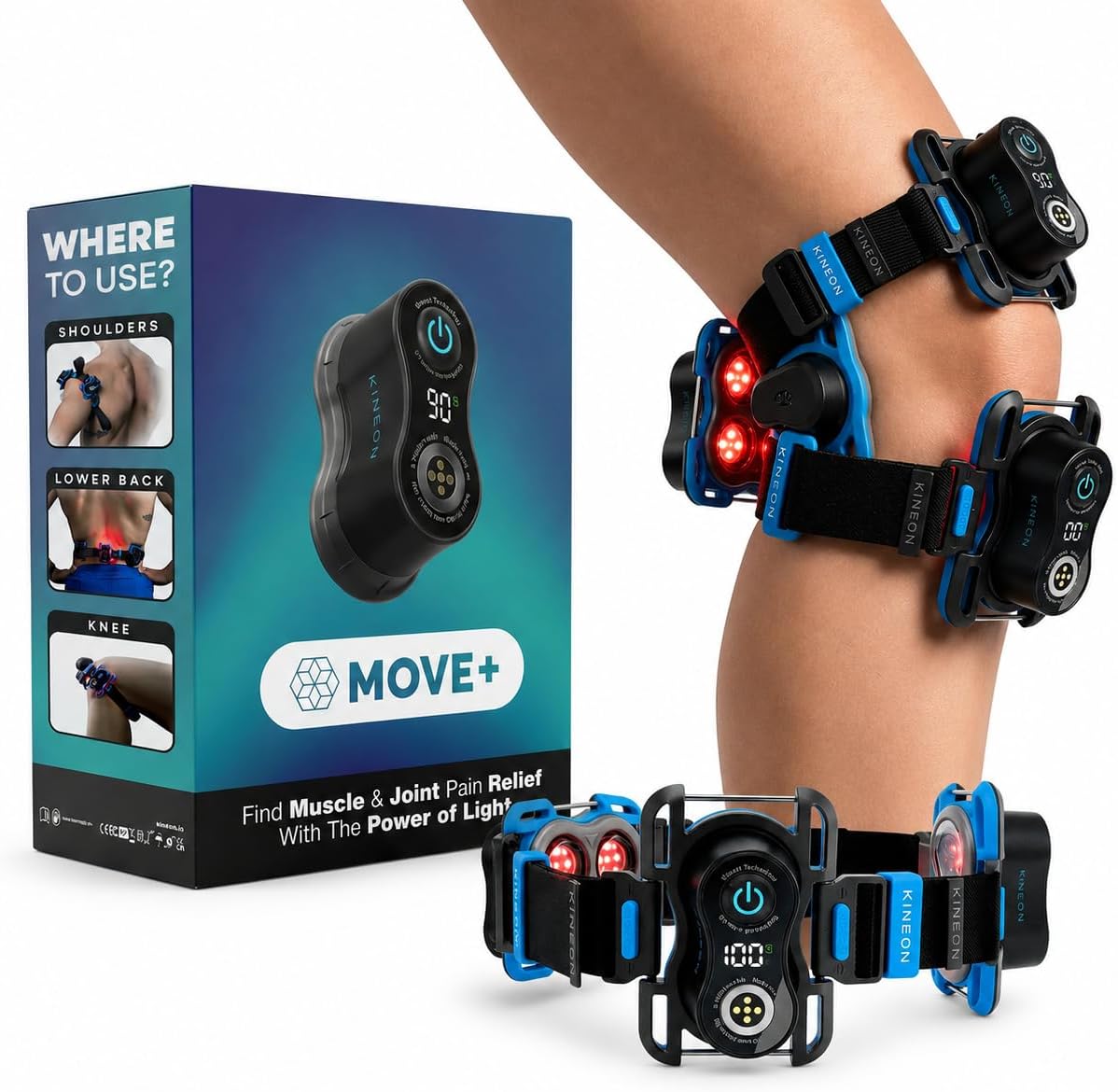
The Kineon MOVE+ Pro stands out with medical-grade lasers delivering direct, deep tissue penetration, unlike many light therapy devices. Independent testing confirms an irradiance of 45 mW/cm² at the source, coupled with optimal 805nm near-infrared and 660nm red light wavelengths, making it highly effective for joint and muscle recovery. Its portable, hands-free design enables consistent, active use, with reviewers noting relief for acute issues within days and chronic conditions responding in two to four weeks. While the strap system and lack of a companion app are recurring frustrations, and battery life can be a minor constraint for heavy use, these do not undermine its core therapeutic value as an FDA-cleared device.
Pros
Laser-plus-LED dual technology delivers deeper penetration, reaching 5–6cm for targeted relief.
Worn flush against skin, maximizing energy delivery and ensuring zero detectable EMF emissions.
FDA-cleared with international certifications, offering strong regulatory validation.
Cons
Strap system remains a persistent frustration due to buckle fragility, slippage, and awkward positioning for some treatment areas.
Absence of a companion app limits guided use, personalized programs, and detailed tracking at this price point.
Battery life and initial price point create friction for multi-user households or extensive multi-area daily treatment protocols.
Use Case Scores
Who It’s For
✅ Who It’s Best For
- People who want targeted joint pain relief for knees, elbows, shoulders, ankles, wrists, or similar problem areas.
- Users managing chronic injuries, tendon irritation, inflammation, or recurring aches who can commit to consistent sessions.
- Athletes and active users who want a portable recovery tool for training, travel, or post-workout soreness.
- Buyers who want laser-assisted near-infrared therapy rather than LED-only red light.
- People who want a hands-free, battery-powered device they can use while sitting, working, walking around, or traveling.
⛔ Who Should Avoid
- Anyone who wants large-area or full-body treatment, since the three-pod design is best for targeted zones.
- Buyers who want a simple broad-coverage panel for general wellness, skin, or whole-body exposure.
- People who dislike strap-based wearables, since positioning and strap fit are common friction points.
- Users who want a device primarily for hair growth, facial rejuvenation, or wrinkle treatment.
- Shoppers who expect extensive guided programs, because the device does not rely on a robust companion-app experience in the same way many smart wellness devices do.
Product Specs
Product Specs
Wavelengths 660 nm red LED / 808 nm NIR laser
What It Is
The MOVE+ Pro combines visible red LEDs with near-infrared laser diodes.
Why It Matters
The red LEDs are better suited to surface-level tissue support, while the 808 nm laser component is aimed at deeper joint, tendon, and muscle structures. This laser-plus-LED design is the biggest technical distinction between the MOVE+ Pro and many LED-only wearable devices.
Treatment Area 3 modular pods
What It Is
The device uses three separate light modules that fit into a wearable strap.
Why It Matters
This modular setup lets users place the pods around knees, elbows, shoulders, ankles, wrists, or smaller muscle areas. It works well for targeted treatment but is not designed to cover large areas evenly.
Irradiance ~45 mW/cm² at source
What It Is
Irradiance measures how much light power reaches the treatment area.
Why It Matters
Because the MOVE+ Pro is designed to sit directly against the skin, the at-source measurement is more relevant than a six-inch panel-style measurement. The 45 mW/cm² figure is solid for a small, battery-powered wearable.
Power Source Rechargeable battery
What It Is
The MOVE+ Pro runs without being plugged into a wall outlet during treatment.
Why It Matters
Battery power is a major usability advantage. It allows hands-free sessions during daily routines, travel, workouts, or recovery periods away from home.
Session Length 5, 10, or 15 minutes
What It Is
Users can select preset session durations.
Why It Matters
The adjustable session length makes the device easier to use for different treatment goals. The 15-minute option is especially useful because several reviewers describe it as a common practical treatment duration.
Charging Setup Dock in travel case / USB-C
What It Is
The three modules charge in a dedicated dock that fits inside the carrying case.
Why It Matters
This makes the device easier to store and travel with. The case also helps protect the modules and keeps the strap, pods, and charging cable together.
Battery Life Approximately 4 hours
What It Is
This is the approximate runtime before the modules need to be recharged.
Why It Matters
Four hours is strong for a small wearable device and should be enough for many targeted sessions. Heavy users treating multiple areas daily will still need to monitor battery status.
EMF Zero detectable EMF reported
What It Is
This refers to electromagnetic field output during use.
Why It Matters
Because the device is battery-powered and worn directly against the body, low EMF output is a meaningful safety and comfort point for EMF-conscious users.
Warranty / Return Policy 1-year / 30-day return
What It Is
This is the basic protection period for defects and returns.
Why It Matters
The return window helps reduce purchase risk, but the one-year warranty is modest for a $499 premium recovery device.
Expert Test Scores
Expert Test Scores
Irradiance and Power Delivery Performance 7.6
Light Therapy Insiders
“Independent testing by Light Therapy Insiders measured approximately 45 mW/cm² directly at the source.”
Precision Wellbeing
“These two frequencies or these two ranges of light are very well researched when it comes to reducing pain, inflammation and improving cellular repair.”
The MOVE+ Pro is not trying to compete with high-output panels on total body coverage. Its strength is delivering a useful amount of light directly into a small treatment zone, with laser-assisted near-infrared output for deeper joint and tissue targets.
Dose and Energy Delivery Consistency 8.3
Michael Kummer
“You can cycle between five, 10, and 15 minutes, and that’s really cool because most treatment protocols call for a 15-minute session.”
Precision Wellbeing
“If you are going to use it, use it for a maximum of 15 minutes per area and you can do this twice a day.”
The selectable session lengths make dosing easier than it was on earlier versions. A user can strap it on, choose a 5-, 10-, or 15-minute session, and get a repeatable treatment without manually watching a timer.
Wavelength Accuracy and Spectral Distribution 8.1
Light Therapy Insiders
“Independent spectrometer testing confirmed a peak around 665nm for red light and a sharp peak at 805nm for near-infrared lasers.”
Alex Fergus
“The lasers in here are putting out a very precise 805 nanometer near infrared light.”
This is one of the MOVE+ Pro’s clearest strengths. The red and near-infrared outputs are close to the marketed wavelengths, and the laser component gives the device a more concentrated NIR profile than LED-only wearables.
Safety and Compliance Parameters 5.6
Light Therapy Insiders
“Independent EMF testing confirmed zero detectable electromagnetic field emissions.”
Precision Wellbeing
“It doesn’t hurt at all; you can put it anywhere on your body, you won’t feel a thing.”
The MOVE+ Pro appears comfortable and low-EMF in normal use. The moderate score reflects missing technical detail around exact laser safety classification, pulse parameters, and full electrical safety documentation.
Clinical Efficacy Markers and Biomarker Outcomes 8.0
Precision Wellbeing
“When I woke up this morning, 15 minutes, and now it seems to be absolutely fine.”
Active Gear Review
“It does so in a manner that might not feel like it’s working right away, but it definitely does.”
The strongest support is for pain relief, inflammation reduction, acute irritation, and joint or tendon recovery. It is much weaker for cosmetic outcomes like wrinkles, hair regrowth, or broad skin rejuvenation.
Treatment Coverage and Beam Geometry 7.0
Light Therapy Insiders
“The modular design with three pods allows for strategic placement around joints like the knee to provide comprehensive coverage of the affected area.”
Alex Fergus
“It’s not going to provide the full body benefits that a large panel will do, but when it comes to targeted treatments, especially on the joints, the Kineon MOVE+ Pro is quite effective.”
The three-pod geometry is a good fit for joints, especially knees, elbows, and shoulders. It is not efficient for large muscles, the full back, or full-body treatment unless users are willing to reposition it repeatedly.
Environmental Factors and Storage Durability 6.0
Men’s Fitness
“The device arrives in a compact and protective travel case.”
Men’s Fitness
“The case also means it’s easy to transport the device from A to B, making it perfect for those who travel frequently or need a portable recovery solution.”
The travel case is a practical durability advantage, especially for athletes and frequent travelers. The score stays moderate because water resistance, humidity resistance, and dust protection are not clearly established.
User Experience and Ease of Use 8.6
Michael Kummer
“I can set it and forget it basically.”
Lover Of Tech
“You really don’t have to think much about how to use the MOVE+ Pro and how it works when you have it.”
This is one of the MOVE+ Pro’s strongest categories. It is small, wearable, battery-powered, and simple once the straps are set up. The main downside is that positioning the pods and strap can take some practice.
Information Transparency and Specification Clarity 3.9
Precision Wellbeing
“Go to their website, they’ve got loads of reviews, they’ve got a lot of science on there, so you can learn a lot on their website alone.”
Light Therapy Insiders
“Specific flicker frequencies are not detailed.”
Kineon gives consumers useful education around red light therapy and the device’s intended use. The lower score reflects gaps in technical transparency, especially around pulsing details, power supply regulation, wavelength stability, and full long-term performance data.
Market Positioning and Consumer Expectations Alignment 7.4
Alex Fergus
“If you’re an older person and you do have some severe knee or joint pains then the Kineon MOVE may actually be a better choice for you.”
David Maus Jr.
“If you know anybody who’s experiencing joint pain or they’re constantly talking about neck pain or headaches… this might be something that they want to try.”
The MOVE+ Pro is well positioned as a targeted pain and recovery device. It is less appropriate as an all-purpose red light solution. People looking for full-body wellness or skin-focused treatments may be happier with a panel, but users with specific joint problems are more likely to appreciate what it does.
Device Durability and Build Quality 6.5
Lover Of Tech
“The charging base for the three modules feels like it’s made from a very nice soft touch rubberized but hard shell feeling polycarbonate material.”
Precision Wellbeing
“I’ve dropped these several times and they actually still work just absolutely fine, so they feel pretty robust.”
The pods, charging case, and dock feel premium and travel-ready. The strap system is the weak link, with reviewers pointing to buckle fragility, slippage, or awkward fit in some positions.
Warranty and Customer Support 4.2
SkinDeep Red Light Reviews
“Kineon offers a 30-day return window and a 1-year warranty, which is helpful given the price.”
Michael Kummer
“I really like that they listen to their customer base and listen to feedback.”
The 30-day return window helps, and Kineon appears responsive to product feedback. Still, a one-year warranty is not especially strong for a premium recovery device with multiple battery-powered modules.
Regulatory Compliance and Certification Status 4.0
Light Therapy Insiders
“The Kineon MOVE+ Pro is FDA-cleared as a Class I non-invasive recovery device and holds CE and RoHS certifications.”
Light Therapy Insiders
“ISO 13485 status is not explicitly mentioned.”
The MOVE+ Pro has stronger regulatory positioning than many consumer red light devices, especially with FDA clearance and CE/RoHS references. The score remains conservative because the available information does not establish a full medical-device quality-management picture.
Aesthetic Design and Form Factor Integration 7.8
Men’s Fitness
“At first glance, the MOVE+ Pro might seem like something from a sci-fi film.”
Lover Of Tech
“The packaging is clean and shows a high quality render of the MOVE+ Pro module at the front.”
The MOVE+ Pro feels like a modern recovery gadget, with modular pods, a compact charging case, and a clean travel-friendly design. The form factor is highly practical for targeted use, though it may feel more technical than inviting for buyers who prefer softer wellness products.
Customer Reviews
Customer Reviews
“The aches, pains and inflammation in my back and achilles are hardly noticeable. It’s easy to use and spot treat, the charge lasts longer than I’d expect.”
“The three units give ultimate flexibility and adjustability to target any area of the body. They are extremely comfortable and easy to use.”
“It turned out it no impact on my patella tendon issues. I use this according to instructions for almost 30 days.”
Knee Ultra

The NovaaLab Knee Ultra is a focused wearable red light therapy pad built for joint pain, soft tissue recovery, and targeted spot treatment. Its 450-LED array delivers up to 150 mW/cm² at direct skin contact, giving it stronger raw output than many belt-style competitors while still staying compact enough to wrap around the knee or other localized treatment areas. The 660 nm red and 850 nm near-infrared wavelength pairing is well suited for superficial tissue support and deeper joint or muscle treatment, and Dr. Michael Russo specifically highlighted it as a top recommendation for joint pain spot treatment. The main tradeoff is convenience: this is a corded device, so users who want unrestricted movement will need a power bank. It is also best suited to knees and lower-limb use, while shoulders, lower back, or neck treatment may require more careful positioning. For buyers dealing with chronic joint pain, soft tissue recovery, or active-lifestyle aches, the Knee Ultra is a focused, FDA-cleared tool with strong practical utility.
Pros
FDA-cleared Class II medical device with transparent, clinically relevant specifications.
High irradiance of up to 150 mW/cm² at contact for efficient therapeutic dose delivery.
Dual-wavelength design, 660 nm red and 850 nm near-infrared, addresses both surface and deep tissue.
Cons
Corded operation with no built-in battery limits unrestricted portability without an external power bank.
Coverage footprint is limited to a single treatment zone per session.
Device-specific clinical trial evidence is absent, and regulatory clearance is not full FDA approval for efficacy.
Use Case Scores
Who It’s For
✅ Who It’s Best For
- People who want targeted knee, joint, or soft-tissue relief without buying a full-size panel.
- Users dealing with minor aches, stiffness, post-workout soreness, or age-related joint discomfort.
- Buyers who prefer a wrap-style pad that can sit directly on the treatment area.
- People who want 660 nm red light and 850 nm near-infrared light in a simple, flexible device.
- Users who can commit to consistent use several times per week, rather than expecting instant results.
⛔ Who Should Avoid
- Anyone who wants a fully cordless device, since the pad needs wall power or an external power bank.
- Users who need full-body treatment or simultaneous multi-zone coverage.
- People looking for a dedicated hair-growth, face-mask, or brain-focused red light device.
- Buyers who need immediate pain relief from a serious injury.
- Anyone who wants the most polished, premium-looking wellness device; this is more practical than luxurious.
Product Specs
Product Specs
Wavelengths 660 nm red / 850 nm NIR
What It Is
These are the two light wavelengths used by the Knee Ultra.
Why It Matters
The 660 nm red light is better suited to surface-level tissue, while 850 nm near-infrared is aimed at deeper muscle and joint areas. That pairing makes sense for a wrap designed around knee pain, stiffness, and soft-tissue recovery.
LED Layout 450 chips: 300 infrared / 150 red
What It Is
The device uses a 2:1 near-infrared-dominant chip layout.
Why It Matters
The NIR-heavy layout fits the product’s joint-recovery positioning. It puts more emphasis on deeper tissue support than a red-dominant pad would.
Treatment Area 16.3 × 7.9 in pad
What It Is
This is the physical treatment surface of the pad.
Why It Matters
The size is large enough to wrap around a knee or cover areas like the lower back, shoulder, or thigh, but it is still a single-zone device. Users treating multiple areas will need separate sessions.
Irradiance Up to 150 mW/cm² at contact
What It Is
Irradiance measures the light power delivered to the treatment area.
Why It Matters
For a contact-use pad, 150 mW/cm² is a strong output. It supports efficient dosing for targeted joint and muscle treatment, especially when the pad is wrapped directly around the body.
Power Source Corded / wall adapter or power bank
What It Is
The pad does not have a built-in rechargeable battery.
Why It Matters
This keeps the device lighter and simpler, but it limits true cordless mobility. A power bank helps, but it is still not the same as a fully wireless wearable.
Controls Remote with intensity and modes
What It Is
The included remote lets users adjust intensity and choose steady or pulsing light.
Why It Matters
The setup is straightforward: place the pad, secure the strap, plug it in, and choose the setting. That makes it easier to use consistently.
Session Guidance 10 min / 3–5 times weekly
What It Is
This is the general use cadence discussed across the expert commentary.
Why It Matters
Red light therapy is not always better with more use. A consistent, moderate schedule is more sensible than long daily sessions, especially for people prone to overdoing recovery tools.
Warranty / Return Policy 60-day trial / warranty varies
What It Is
This is the purchase protection window reported for the device.
Why It Matters
A 60-day trial lowers purchase risk, but warranty length should be verified before buying. Cybernews cites a 1-year warranty, while the Knee Ultra summary references a 2-year warranty through Wellness Pulse.
Expert Test Scores
Expert Test Scores
Irradiance and Power Delivery Performance 8.8
Cybernews
“The NovaaLab Knee Ultra’s 450-LED array achieves up to 150 mW/cm² at direct skin contact.”
Cybernews
“For a targeted spot-treatment device, this irradiance level is meaningfully strong.”
The Knee Ultra delivers strong contact-level output for a flexible wrap. It is not a full-body panel, but for a knee, shoulder, lower back, or smaller muscle area, the power level is one of its clearer strengths.
Dose and Energy Delivery Consistency 7.0
Cybernews
“At 150 mW/cm² of contact irradiance, the Knee Ultra can deliver the commonly cited therapeutic dose floor of 4 J/cm² in approximately 27 seconds.”
Cybernews
“The device includes an auto-shutoff timer that prevents unintended extended sessions.”
The pad has enough output to deliver a meaningful dose quickly, and the auto-shutoff helps reduce accidental overuse. The score is moderate rather than excellent because dose consistency still depends on how well the pad is positioned and how regularly the user follows a sensible routine.
Wavelength Accuracy and Spectral Distribution 8.7
Cybernews
“You’re getting 450 light chips total, 300 infrared chips with 850 nm wavelengths and 150 red chips with 660 nm.”
Cybernews
“The Knee Ultra operates at 660 nm for red light and 850 nm for near-infrared.”
The wavelength selection is clear and appropriate for a joint-focused pad. The 850 nm emphasis makes sense for deeper tissue support, while 660 nm adds a surface-level red light component.
Safety and Compliance Parameters 7.0
Cybernews
“Novalab markets the light pad as an FDA cleared class 2 medical device.”
Ryan Mercer
“Just be mindful of the eyes.”
The FDA-cleared Class II positioning is reassuring for temporary pain-relief use, and the safety guidance is straightforward. The main caution is eye exposure, especially because 850 nm near-infrared light is not visible in the same way red LEDs are.
Clinical Efficacy Markers and Biomarker Outcomes 8.6
Ryan Mercer
“My knee has not hurt since I started using this.”
Cybernews
“After about 3 weeks of consistent use, my lower back felt noticeably less stiff.”
The strongest support is for stiffness reduction, pain relief, and recovery from everyday aches or minor injuries. It should not be framed as a guaranteed fix for serious injuries, and it is not primarily built around cosmetic biomarkers like wrinkles, hair growth, or collagen density.
Treatment Coverage and Beam Geometry 7.2
Dr. Michael Ruscio
“What’s nice about this is the pad allows you to get 360 around a joint.”
Cybernews
“Size-wise, it’s 16.3 x 7.9 in, which feels like a good middle ground.”
The wraparound design is a major advantage for knees and similar joints. It gives better circumferential contact than a small handheld device, though it still treats one zone at a time rather than the whole body.
Environmental Factors and Storage Durability N/A
Not discussed by the experts.
User Experience and Ease of Use 8.2
Cybernews
“You plug it in, strap it on, and the setup is basically effortless.”
Cybernews
“The remote is super straightforward.”
The Knee Ultra is easy to understand and easy to make part of a routine. The main usability limitation is that it is corded, so it is portable in the “throw it in a bag” sense, not in the fully wireless wearable sense.
Information Transparency and Specification Clarity 5.3
Cybernews
“NovaaLab markets the device using specific nanometer wavelength designations rather than vague ‘red light’ or ‘infrared’ terminology.”
Dr. Michael Ruscio
“Some companies don’t tell you what the wavelength of their devices are.”
NovaaLab does better than many brands by publishing core wavelength and irradiance claims. The score stays moderate because there is still limited device-specific clinical data, limited independent optical testing, and some inconsistency around warranty language.
Market Positioning and Consumer Expectations Alignment 8.1
Cybernews
“It’s good if you want a non-invasive drug-free option for minor aches.”
Cybernews
“If you need instant results or you’re dealing with a serious injury, this is not the answer.”
The Knee Ultra is positioned well as a practical recovery pad for everyday pain, stiffness, and joint support. It should not be sold as a miracle fix, a serious-injury solution, or a replacement for medical care.
Device Durability and Build Quality 6.6
Cybernews
“They also claim a 50,000 plus hour LED lifetime for the product.”
Ryan Mercer
“If that is the case this is going to hold up for a really long time.”
The flexible pad design appears practical and the claimed LED lifespan is strong. Durability confidence is tempered by the corded setup, fabric/neoprene-like materials, and limited detail around sweat, dust, and moisture resistance.
Warranty and Customer Support 5.0
Cybernews
“Novalab offers a 60-day trial and a 1-year warranty, so you’re not locked in forever if it’s not for you.”
Knee Ultra summary
“60-day money-back guarantee and two-year warranty provide low purchase risk.”
The trial window is useful, but the warranty details are inconsistent across the materials. Buyers should confirm the current warranty directly before purchasing, especially if choosing between the Knee Ultra and competing wraps with longer coverage.
Regulatory Compliance and Certification Status 4.5
Cybernews
“Novalab markets the light pad as an FDA cleared class 2 medical device.”
Cybernews
“This indicates that the device is actually cleared through the FDA’s 510K pathway.”
FDA-cleared Class II positioning is a meaningful plus for a pain-relief device. The score remains conservative because clearance for temporary pain relief is not the same as broad clinical proof for every recovery, chronic pain, or tissue-healing claim.
Aesthetic Design and Form Factor Integration 6.9
Cybernews
“The pad is way more flexible than I expected, too.”
Cybernews
“It’s almost like a piece of clothing, which makes it easy to wrap around different body parts without having to fight it.”
The form factor is practical and body-friendly, especially for knees and curved areas. It is not a sleek luxury product, but the flexible wrap design is exactly what makes it useful for joint-focused treatment.
Customer Reviews
Customer Reviews
“This product has significantly reduced my pain from osteoarthritis in both knees and has helped to restore my mobility.”
“I used it twice a day for two weeks with good results. Using it daily now and my knee continues to improve.”
“It works well, provides some relief, but it does not fit me.”
Elite

The iRestore Elite justifies its premium price point through advanced LumiTech technology, which strategically combines directional lasers for deep follicle penetration with broad-coverage LEDs, effectively filling the gaps between laser beams. This dual approach, featuring 500 total diodes, distinguishes it from laser-only competitors such as the Theradome Pro LH80, which uses 80 lasers, and the Capillus Spectrum, which includes 312 laser diodes but no LEDs. Despite these technological advancements, the Elite is not a rapid solution, as reviewers indicate visible results typically appear between three and six months, with significant regrowth often requiring six to twelve months. Discontinued treatment can lead to a reversal of progress within weeks. Practical considerations include the optional cordless battery pack, which is a separate $99 add-on, and reliance on free foam comfort pad swaps for fit adjustments. Furthermore, for individuals with scarring alopecia or completely bald areas, scientific evidence does not support expectations of regrowth. For those experiencing early hair thinning due to genetics, perimenopause, postpartum hormonal shifts, or stress, who are prepared to integrate a 12-minute daily habit and commit to a long-term regimen, the iRestore Elite represents a highly effective non-invasive treatment option outside of a clinical setting.
Pros
Features 500 medical-grade diodes, including 300 lasers and 200 LEDs, with 2,500 mW total power output for full-scalp coverage from hairline to crown and back.
Uses three distinct wavelengths, 625 nm, 655 nm, and 680 nm, to stimulate hair follicles at varying depths concurrently.
Holds FDA clearance for both male and female pattern hair loss, with a double-blind clinical study showing 100% of participants improved hair growth, averaging a 43.2% increase in hair count within four months.
Cons
Total cost for a truly cordless experience reaches $1,998 or more because the battery pack is sold separately.
Visible results appear only after months of consistent use, and progress can halt or reverse if treatment is discontinued.
Not effective for areas of complete baldness or advanced hair loss, which limits its target audience and can create misaligned expectations.
Use Case Scores
Who It’s For
✅ Who It’s Best For
- People with early to moderate hair thinning who still have active follicles to stimulate.
- Users dealing with male or female pattern hair loss, including androgenetic alopecia.
- Buyers who want a hands-free at-home LLLT helmet rather than a comb, wand, or clinic-based treatment.
- People who can commit to daily 12-minute sessions for months, not days or weeks.
- Users who want a premium hair-growth device with FDA clearance, a 12-month money-back growth guarantee, and a 3-year warranty.
⛔ Who Should Avoid
- Anyone with completely bald areas or advanced follicle loss, since low-level laser therapy works best when follicles are still viable.
- People expecting visible regrowth in a few weeks.
- Buyers who want a low-cost hair-loss device.
- Users who will not realistically keep up with consistent long-term treatment.
- Anyone who wants a fully cordless setup included by default, since the battery pack is sold separately.
Product Specs
Product Specs
Wavelengths 625 nm / 655 nm / 680 nm red
What It Is
The iRestore Elite uses a triple-wavelength red light system designed for hair follicle stimulation.
Why It Matters
Different red wavelengths may reach slightly different scalp and follicle depths. The Elite’s triple-wavelength setup gives it broader scalp-targeting potential than single-wavelength hair-growth helmets.
Light Sources 300 lasers + 200 LEDs
What It Is
The helmet combines laser diodes with LED light sources.
Why It Matters
Lasers provide more directional light for deeper scalp penetration, while LEDs help spread light more broadly across the scalp. This combination is meant to reduce gaps between beams and improve overall coverage.
Total Diodes 500 total diodes
What It Is
This is the total number of lasers and LEDs built into the helmet.
Why It Matters
A higher diode count can improve scalp coverage, especially for users with diffuse thinning across the hairline, crown, temples, and back of the scalp.
Total Output 2,500 mW total output
What It Is
This is the total optical output delivered across the helmet’s laser and LED system.
Why It Matters
The higher output supports the Elite’s shorter 12-minute daily treatment time compared with older or lower-output devices that require longer sessions.
Treatment Area Full scalp coverage
What It Is
The helmet is designed to cover the entire scalp, including the hairline, crown, temples, sides, and back.
Why It Matters
Full-scalp coverage is especially useful for people with diffuse thinning, temple recession, or broader pattern hair loss.
Session Length 12 minutes daily
What It Is
This is the standard treatment duration built into the device.
Why It Matters
Hair regrowth depends heavily on compliance. A 12-minute hands-free session is easier to maintain than longer, more tedious protocols.
Power Source Corded default / optional battery
What It Is
The helmet can be used while plugged in, or with a separate battery pack for cordless use.
Why It Matters
Corded use works fine at home, but the battery pack makes daily use much easier because users can move around during treatment.
Safety System Pressure sensor / auto-pause
What It Is
The lasers do not activate unless the helmet detects that it is properly positioned on the head.
Why It Matters
This matters because laser light should not be directed into the eyes. The automatic pause feature adds important protection during normal use.
Warranty / Return Policy 12-month guarantee / 3-year warranty
What It Is
This is the purchase protection and long-term coverage offered with the device. An optional 5-year warranty extension is also available.
Why It Matters
Hair regrowth takes months, so a short return window would not be very useful. A 12-month guarantee gives users enough time to judge whether the device is actually helping.
Expert Test Scores
Expert Test Scores
Irradiance and Power Delivery Performance 9.5
iRestore Elite summary
“The iRestore Elite delivers a substantial total power output of 2,500 mW across its 500-diode array.”
David Maus Jr.
“It uses iRestore patented LumiTech technology which utilizes both lasers and LEDs to truly optimize hair growth.”
This is one of the Elite’s strongest categories. The helmet combines a high diode count with strong total output, which helps explain how it can cover the full scalp in a relatively short 12-minute session.
Dose and Energy Delivery Consistency 9.5
David Maus Jr.
“It’s intended for the user to use the iRestore Elite for 12 minutes every day.”
SidsTips
“It does have a 12-minute daily use that you would use it, and I do this first thing in the morning when I get up.”
The dosing routine is simple: one automatic 12-minute session per day. That matters because hair-growth devices only work when people actually use them consistently for months.
Wavelength Accuracy and Spectral Distribution N/A
iRestore Elite summary
“The Elite employs three distinct wavelengths: 625 nm via medical-grade LEDs and 655 nm and 680 nm via proprietary VIXO lasers.”
SidsTips
“On the Elite, it’s triple wavelength red light and it has the advanced VCSEL lasers which uses three different wavelengths to enhance hair follicle stimulation.”
The triple-wavelength design is a clear product advantage, especially compared with single-wavelength helmets. A score is not shown here because this category was not separately rated in the available expert scoring.
Safety and Compliance Parameters 9.0
iRestore Elite summary
“If the device is lifted mid-session, it automatically pauses and disengages the lasers.”
David Maus Jr.
“Unless the device is positioned on the user’s head, it will not begin a session.”
The safety design is stronger than average because the helmet actively prevents accidental laser activation away from the scalp. That is especially important for a device using laser diodes near the eyes.
Clinical Efficacy Markers and Biomarker Outcomes 7.8
iRestore Elite summary
“This study reported that 100% of users showed improved hair growth, with an average increase of 43.2% in hair count at four months.”
Dr. Davin Lim
“In scientific studies, low level laser therapy has a response rate of up to 80.”
The strongest support is for androgenetic hair loss and early-to-moderate thinning. This is not a device for restoring hair where follicles are permanently inactive, but it has meaningful support for improving density and reducing shedding when used consistently.
Treatment Coverage and Beam Geometry 7.5
iRestore Elite summary
“This comprehensive design guarantees the entire scalp surface—from hairline to temples, crown, and back—receives therapeutic exposure.”
BrunoTraductor Official
“The Elite is going to deliver better scalp coverage as well as better penetration with the laser.”
The Elite is built for full-scalp coverage, not spot treatment. That makes it a better fit for diffuse thinning than combs, bands, or smaller laser devices that require repeated repositioning.
Environmental Factors and Storage Durability 7.5
iRestore Elite summary
“The included hard-shell protective carry case is designed to accommodate the helmet, controller, charging cable, and battery pack.”
SidsTips
“You get this protective case, so you know it’s an expensive device, want to keep protected.”
The carry case is a meaningful durability feature because the helmet is expensive and rigid. It should still be handled carefully, but the case makes travel and storage more practical.
User Experience and Ease of Use 7.8
Dr. Davin Lim
“iRestore is super easy to use. It’s a plug and play device.”
David Maus Jr.
“You turn it on and it already has a 12-minute timer.”
The Elite is easy to use once it becomes part of a routine. It is hands-free, timed, and straightforward. The main drawback is that true cordless use requires buying the battery pack separately.
Information Transparency and Specification Clarity 4.1
Dr. Davin Lim
“Not all devices are created equally.”
David Maus Jr.
“It uses 500 LEDs and lasers, so that gives you enhanced scalp coverage.”
iRestore provides more concrete specs than many hair-growth devices, including diode count, session length, wavelengths, and warranty terms. The score stays moderate because the available expert discussion does not provide independent irradiance mapping or detailed wavelength verification.
Market Positioning and Consumer Expectations Alignment 7.7
Dr. Davin Lim
“The earlier you treat hair loss the better the results.”
David Maus Jr.
“From 6 to 12 months hair shedding should have stopped or slowed by now; expect accelerated visible growth of fuller hair.”
The Elite is well positioned for people who want a premium, non-invasive hair-growth device and understand the timeline. It should be framed as a long-term hair-regrowth tool, not a fast fix for advanced baldness.
Device Durability and Build Quality 6.0
SidsTips
“It comes with this carrying case. How nice is that?”
David Maus Jr.
“It’s lightweight, like literally is super light.”
The helmet feels more polished and travel-ready than many cheaper devices, especially with the included case. The score is moderate because rigid helmet devices can scratch, need careful storage, and are less physically forgiving than soft caps.
Warranty and Customer Support 5.4
Dr. Davin Lim
“It comes with a 12-month money-back guarantee.”
iRestore Elite summary
“The investment is de-risked by a 12-month money-back growth guarantee, a three-year warranty, and eligibility for HSA/FSA payments.”
The 12-month growth guarantee is a major advantage because hair regrowth takes time. The warranty terms are also stronger than many wellness devices, though buyers should still understand the exact requirements for claiming the growth guarantee.
Regulatory Compliance and Certification Status 5.0
iRestore Elite summary
“The iRestore Elite holds FDA 510(k) clearance, a key distinction from FDA approval.”
iRestore Elite summary
“The Elite possesses Intertek safety certification, ISO 13485 quality management compliance, and adherence to IEC 60601-1, IEC 60601-1-2, IEC 60825, and ISO 10993 standards.”
The Elite has a stronger certification profile than many consumer wellness devices. The score stays measured because FDA clearance is not the same as FDA approval, and buyers should understand that distinction.
Aesthetic Design and Form Factor Integration 7.0
David Maus Jr.
“Definitely not like the most stylish thing, but it’s not the worst either.”
SidsTips
“The padding to me is a nice upgrade with the Elite versus the Professional.”
The Elite looks like a serious at-home hair-growth helmet, not a fashion accessory. It is comfortable, functional, and well integrated for hands-free use, but it is still a large rigid helmet that most people will use privately at home.
Customer Reviews
Customer Reviews
“I’m using the Elite since Dec 2023. I went through a shedding phase but it’s since stabilized. It’s definitely helping me regrow on sparse areas.”
“It’s been almost 2 months and oh yeah! it’s definitely working.”
“I can confidently tell you it has had little to no impact on my hair loss let alone regrowth of any hair.”
Neuro Duo 4
The Vielight Neuro Duo 4 earns its premium positioning through a rare combination in the photobiomodulation space: genuine clinical evidence, an innovative dual-delivery approach, and measurable biological effects documented through third-party instrumentation. Its five transcranial LEDs and single intranasal cannula work together to saturate the brain, targeting the default mode network, a large-scale brain network whose dysfunction is implicated in conditions like Alzheimer’s, Parkinson’s, and traumatic brain injury. Independent testing on human cadaver skulls confirmed that Vielight’s focused LED casings transmit biologically relevant irradiance through the skull, a claim many competitors struggle to substantiate. Quantitative EEG measurements and real-time fNIRS blood flow tracking showed clear increases in brain activity and localized frontal lobe perfusion. With Alpha and Gamma modes offering distinct neurological benefits, the Neuro Duo 4 is a powerful tool for performance priming, recovery, and sleep. Its primary weaknesses are its price and current regulatory status as a wellness device rather than an FDA-cleared medical device, with benefits most pronounced for those with underlying neurological needs.
Pros
Unmatched research depth for a consumer device, with over 35 published peer-reviewed studies conducted with institutions like Harvard and the University of Utah.
Dual-delivery architecture maximizes brain coverage, combining five transcranial LEDs and one intranasal cannula, with fMRI studies confirming improved brain network connectivity.
Verified skull penetration and biologically relevant irradiance, with independent spectrometer testing on human cadaver skulls confirming sufficient light delivery through bone.
Cons
Premium price of $2,400 for the Neuro Duo 4 and $5,000 for the Neuro Pro 2 creates a significant accessibility barrier.
Nasal cannula, while central to efficacy, can be mildly uncomfortable and visually unusual, requiring an adjustment period and careful positioning.
Not yet FDA-cleared as a medical device, and while the research base is robust for a consumer product, it still lacks large-scale randomized controlled trials typical of medical-grade devices.
Use Case Scores
Who It’s For
✅ Who It’s Best For
- People interested in brain-focused photobiomodulation rather than muscle, joint, skin, or hair treatment.
- Users focused on cognitive performance, focus, memory, mental clarity, sleep support, or stress resilience.
- People with a history of concussion, traumatic brain injury, or neurological concerns who want a research-backed at-home brain device.
- Biohackers, clinicians, and advanced wellness users who want Alpha and Gamma pulsing modes in one device.
- Buyers who are comfortable with a premium device that uses both transcranial LEDs and an intranasal applicator.
⛔ Who Should Avoid
- Anyone looking for a general red light panel for full-body wellness, skin, pain, or muscle recovery.
- Buyers who want a low-cost or entry-level red light device.
- People who are uncomfortable using a nasal cannula, even though it is central to the device’s design.
- Users who need an FDA-cleared medical device rather than a wellness device.
- Anyone primarily shopping for hair growth, wrinkle reduction, collagen support, or joint treatment.
Product Specs
Product Specs
Wavelengths 810 nm NIR / 630–660 nm red
What It Is
The Neuro Duo 4 uses near-infrared light, primarily around 810 nm, along with red light in the 630–660 nm range.
Why It Matters
The 810 nm wavelength is emphasized because it can penetrate deeper tissue while maintaining relatively low water absorption, making it better suited for transcranial brain-focused use than many visible red wavelengths.
Treatment Area 5 LEDs + 1 intranasal cannula
What It Is
The device delivers light through LED modules placed on the head and through a nasal applicator.
Why It Matters
The transcranial LEDs target the brain through the skull, while the intranasal applicator uses the nasal cavity as a thinner access point toward the frontal brain region. Together, they create broader brain-focused coverage than nose-only devices.
Irradiance ~25–100 mW/cm² at source
What It Is
This is the light output measured directly at the LED source.
Why It Matters
The device is designed for contact use, so source-level output matters more than a panel-style six-inch reading. The goal is not skin exposure; it is delivering biologically relevant light through the scalp, skull, and nasal pathway.
Pulsing Modes Alpha 10 Hz / Gamma 40 Hz
What It Is
The Neuro Duo 4 allows users to choose between 10 Hz Alpha pulsing and 40 Hz Gamma pulsing.
Why It Matters
Alpha is generally positioned for relaxation, stress reduction, and sleep preparation. Gamma is positioned for focus, cognitive activation, memory, and mental energy.
Session Length 10–20 minutes
What It Is
This is the typical session window discussed for Vielight devices.
Why It Matters
The device is intended to deliver enough light for brain-focused effects without creating thermal buildup. A shorter, repeatable session window also makes it easier to build into a routine.
Power Source USB-C rechargeable battery
What It Is
The device runs from a rechargeable power module rather than requiring a wall outlet during use.
Why It Matters
Battery operation improves ease of use and makes the headset more practical for seated work, meditation, or evening wind-down sessions.
Regulatory Status Wellness device
What It Is
The Neuro Duo 4 is sold as a wellness device rather than a cleared medical device.
Why It Matters
The device has unusually strong research support for a consumer wellness product, but buyers should not treat it as a formally cleared medical treatment for neurological disease.
Expert Test Scores
Expert Test Scores
Irradiance and Power Delivery Performance 7.6
Cody Rall MD
“Vielight has done a ton of work on the actual physics of how the red light is getting through your skull and affecting your brain below.”
Vielight Neuro Duo 4 summary
“The Neuro Duo 4 delivers specific LED output ranging from 25 to 100 mW/cm² directly at the source.”
The Neuro Duo 4 is not judged like a body panel. Its strength is focused contact delivery aimed at reaching brain tissue through the scalp, skull, and nasal pathway. The output appears meaningful for that purpose, though it is still a specialized brain device rather than a high-power full-body light.
Dose and Energy Delivery Consistency 8.8
Alex Fergus
“It means you only need to do 10 to 20 minute sessions.”
Cody Rall MD
“You simply just choose alpha for a calming effect or gamma for a stimulatory effect. You hit start and just let it run.”
The Neuro Duo 4 keeps dosing practical by using fixed session lengths and simple Alpha/Gamma mode selection. That makes it much easier to use consistently than a more customizable clinician-style device.
Wavelength Accuracy and Spectral Distribution 8.2
Alex Fergus
“Typically they’re using some red light in, say, 630 or thereabouts nm, and then also the near infrared, and the near infrared is typically 808 or 810 nm.”
Cody Rall MD
“This transcranial photobiomodulation consists of wavelengths generally in the 810 nanometer range.”
The wavelength selection is well aligned with brain-focused photobiomodulation. The 810 nm range is repeatedly emphasized for skull penetration and mitochondrial effects, while the red component adds shallower stimulation.
Safety and Compliance Parameters 4.2
Alex Fergus
“There’s no risk of thermal build up.”
Cody Rall MD
“Don’t worry, it’s not going to harm you.”
The device is described as low-risk in normal use, and the output is not framed as heat-producing. The lower score reflects the gap between wellness-device safety claims and the kind of formal medical-device safety documentation some buyers may expect for brain-targeted technology.
Clinical Efficacy Markers and Biomarker Outcomes 9.2
Cody Rall MD
“They found increased functional connectivity in the brain measured with resting state functional MRI.”
Alex Fergus
“The four individuals that were using the Neuro Gamma noticed improved markers in cognitive areas and improved Alzheimer’s score.”
This is the Neuro Duo 4’s strongest category. The support is unusually deep for a consumer wellness device, especially around cognition, blood flow, brain connectivity, TBI, Alzheimer’s-related markers, and brain-wave modulation. It should still be framed carefully: promising evidence is not the same as guaranteed treatment outcomes.
Treatment Coverage and Beam Geometry 7.8
Cody Rall MD
“The ND4 has five transcranial LEDs that shine red light through your skull and one intranasal cannula.”
Cody Rall MD
“You have the dual stimulation between the red light getting through your skull and through your nasal cavity, which gives you a more broad coverage than what the MIP 655810 does.”
The five-LED plus intranasal design gives the Neuro Duo 4 broader brain coverage than a nose-only device. It is still targeted rather than whole-body, but the geometry makes sense for default mode network and brain-health applications.
Environmental Factors and Storage Durability N/A
Not discussed by the experts.
User Experience and Ease of Use 8.1
Cody Rall MD
“There’s no app to this. There’s just simple buttons on the device where you can switch back and forth between alpha and gamma.”
Cody Rall MD
“It was really easy to place on my head and it was comfortable to wear for long periods of time.”
For a brain-focused device, the Neuro Duo 4 is surprisingly straightforward. It avoids the complexity of the Neuro Pro line while still giving users meaningful choice between calming and activating modes. The nasal applicator may take some adjustment, but the overall setup is approachable.
Information Transparency and Specification Clarity 7.1
Alex Fergus
“A great resource is actually at the Vielight website where they have a resource of all the published studies on Vielight products.”
Cody Rall MD
“It’s not often that a consumer-friendly device like this comes with such depth of data and copious amounts of research behind it.”
Vielight is much stronger than most wellness brands when it comes to research access and technical rationale. The score is not higher because buyers still have to navigate multiple models, technical terminology, and the distinction between wellness positioning and medical claims.
Market Positioning and Consumer Expectations Alignment 7.8
Cody Rall MD
“If you have issues with anxiety or you’ve had a head concussion before or you’re worried about the development of mild cognitive impairment, I would go with the Neuro Duo 4.”
Alex Fergus
“It does appear, at least looking at the science, that the greatest benefits are coming to those who already have an underlying brain disorder.”
The Neuro Duo 4 is best positioned for serious brain-health users, not casual red light shoppers. It can make sense for cognitive performance, TBI history, sleep, mood regulation, or neuro-longevity, but the strongest rationale is for people with a clear brain-related use case.
Device Durability and Build Quality 6.3
Cody Rall MD
“I’ve seen the previous versions and I can tell that they’ve gone through a lot of trouble to improve the look and the feel of this device from previous versions.”
Cody Rall MD
“They’ve improved the straps. They’ve made the LEDs focus better through that casing.”
The fourth-generation design appears meaningfully refined, especially around straps, LED casing, and comfort. The score stays moderate because the product still has multiple delicate contact points, a nasal applicator, and a premium price that raises durability expectations.
Warranty and Customer Support 5.1
Not discussed clearly enough by the experts.
Regulatory Compliance and Certification Status 5.7
Alex Fergus
“They’re technically not medical devices because they don’t have all the paperwork in place yet.”
Vielight Neuro Duo 4 summary
“The Vielight Neuro Duo 4 is currently marketed as a wellness device and has not yet received full FDA medical device clearance.”
The research base is strong, but the regulatory status is still a limitation. Buyers should understand that this is a wellness device with promising clinical research, not a formally cleared medical treatment for Alzheimer’s, TBI, Parkinson’s, or other neurological conditions.
Aesthetic Design and Form Factor Integration 7.7
Cody Rall MD
“It was really easy to place on my head and it was comfortable to wear for long periods of time.”
Cody Rall MD
“They’ve improved the nasal clip so that it doesn’t hurt so much when you clip it on the side of your nose.”
The Neuro Duo 4 is not a sleek lifestyle wearable, but the design is functional and improved over earlier versions. The headset and nasal applicator may look unusual, but they serve the device’s core purpose: targeted brain photobiomodulation.
Customer Reviews
Customer Reviews
“I started noticing that my energy felt more stable, felt more focused and I wasn’t hitting that same mental.”
“Yes, there was a noticeable difference for me between alpha and gamma… I typically used alpha for 20 minutes a few times a week. It helped me to sleep soundly.”
“I haven’t seen any noticeable improvements… In terms of comfort, the vielight gnaws into my brain/scalp and I don’t feel very comfortable.”
LightStim for Wrinkles

The LightStim for Wrinkles stands out in at-home LED therapy as the first FDA-cleared device for full-face wrinkles, backed by an eight-week clinical study where all participants saw significant improvement. Its patented multi-wave technology uses four therapeutic wavelengths to penetrate the dermis, stimulating collagen and elastin production to address wrinkle-causing volume loss, unlike many single-wavelength wands. While its handheld design requires actively holding the 1.2-pound device for three minutes per area, reviewers consistently report smoother texture, softened forehead lines, and reduced crow’s feet after eight weeks. Despite reports of worsened hyperpigmentation for some and inconsistent quality control, its clinical legitimacy and professional heritage offer a strong value for users prioritizing proven anti-aging results over hands-free convenience.
Pros
FDA-cleared for full-face wrinkle treatment and backed by an eight-week clinical trial in which 100% of participants showed significant improvement in fine lines and wrinkles.
Patented multi-wave technology combines four therapeutic wavelengths simultaneously, driving deeper collagen and elastin stimulation than single-wavelength alternatives.
Same power output as professional devices used by dermatologists and estheticians for over a decade, now accessible for daily at-home use without appointments.
Cons
Handheld design requires active holding throughout sessions, making full-face treatment time-consuming compared to mask-style alternatives.
May worsen hyperpigmentation and melasma in a documented subset of users, requiring careful, region-specific application or avoidance of affected areas.
Quality control and customer support are inconsistent, with multiple reviewers reporting non-functional units and difficult return or replacement processes.
Use Case Scores
Who It’s For
✅ Who It’s Best For
- People focused on fine lines, wrinkles, crow’s feet, forehead lines, and skin texture.
- Users who want an FDA-cleared handheld LED device for at-home anti-aging treatments.
- Buyers who prefer targeted spot treatment around the eyes, mouth, forehead, jawline, or neck.
- People who enjoy a warm, soothing skincare ritual and can commit to repeated use over several weeks.
- Users who want a more affordable alternative to premium LED masks while still getting professional-style LED technology.
⛔ Who Should Avoid
- Anyone who wants a hands-free full-face mask that treats the entire face at once.
- Users who dislike holding a device in place for multiple treatment zones.
- People prone to melasma or hyperpigmentation flare-ups, since some user reports describe worsening pigmentation.
- Buyers who want published irradiance figures, spectral bandwidth charts, or detailed third-party optical testing.
- Anyone looking for a device primarily for joint pain, neuro wellness, hair growth, or full-body red light therapy.
Product Specs
Product Specs
Wavelengths 630–680 nm red light range
What It Is
LightStim uses multiple LED wavelengths at the same time rather than relying on a single red-light wavelength.
Why It Matters
The multi-wave approach is designed to reach different skin depths in one treatment, supporting collagen and elastin stimulation for visible signs of aging.
Treatment Area Handheld wand / 3 min per zone
What It Is
The device is placed directly on one facial area at a time.
Why It Matters
This gives users precise control over crow’s feet, forehead lines, smile lines, the neck, or other specific areas. The trade-off is that treating the full face takes longer than using a hands-free mask.
Irradiance Not published
What It Is
Irradiance measures the light power delivered to the skin.
Why It Matters
LightStim has strong clinical and regulatory positioning, but technically minded buyers may want published mW/cm² data before comparing it directly with panels or higher-spec LED devices.
Power Source Corded wall outlet
What It Is
The device plugs into the wall during treatment.
Why It Matters
Corded power avoids battery aging, but it makes the device less convenient than rechargeable or fully cordless skincare tools.
Session Protocol 3 min per area / 5–7x weekly
What It Is
This is the repeated-use routine associated with visible results, commonly recommended for 8 weeks.
Why It Matters
LightStim is not a one-and-done wrinkle tool. The benefits depend on consistency over weeks, especially for deeper changes in texture, firmness, and fine lines.
FDA Status FDA-cleared for full-face wrinkles
What It Is
The device has FDA clearance for wrinkle treatment across the face.
Why It Matters
This gives LightStim stronger regulatory credibility than many cosmetic LED wands that make similar claims without the same level of clearance.
Warranty 5-year manufacturer warranty reported
What It Is
This is the stated warranty coverage in the product comparison.
Why It Matters
A longer warranty improves value, especially for a corded handheld device meant for repeated use. Support experiences still appear mixed, so buyers should confirm current warranty terms before purchasing.
Expert Test Scores
Expert Test Scores
Irradiance and Power Delivery Performance 7.6
LightStim Mini source
“The Mini for Wrinkles carries the same power output as the full-size professional-grade LightStim panel.”
LightStim Mini source
“LightStim delivers a layered irradiance profile designed to address both the superficial epidermis and the deeper dermal structures where collagen and elastin degradation drives visible aging.”
LightStim appears stronger than a typical low-cost LED wand, especially because its technology has professional-use roots. The score is held back because the brand does not clearly publish standard irradiance measurements, making apples-to-apples power comparisons difficult.
Dose and Energy Delivery Consistency 8.8
LightStim Mini source
“The manufacturer recommends five to seven sessions per week for eight weeks as the standard protocol for initial results.”
LightStim Mini source
“The three-minute-per-area protocol is clear and designed to fit into a nightly routine.”
The routine is easy to understand and repeat, which matters a lot for cosmetic LED therapy. Users who stick with the 8-week cadence are more likely to see results than users who treat randomly or stop after a few sessions.
Wavelength Accuracy and Spectral Distribution 6.8
LightStim Mini source
“LightStim for Wrinkles uses wavelengths in the red and near-infrared spectrum.”
Skin Beauty
“Multi-wave technology (Red, Amber, Infrared for Wrinkles | Blue and Red for Acne).”
The wavelength strategy is appropriate for anti-aging and collagen support. The score stays moderate because the exact wavelength mix is discussed in broad terms, but detailed spectral graphs and independent wavelength verification are not clearly provided.
Safety and Compliance Parameters 6.4
LightStim Mini source
“LightStim for Wrinkles holds FDA clearance; specifically, it is the first LED device cleared by the FDA to treat wrinkles across the entire face.”
LightStim Mini source
“Individuals taking photosensitizing medications, including certain antibiotics, antifungals, antihistamines, and diuretics, should consult a dermatologist before use.”
FDA clearance is a meaningful safety and credibility advantage. The main cautions are photosensitivity, possible pigmentation concerns for some users, and reports of occasional heat or defective-unit issues.
Clinical Efficacy Markers and Biomarker Outcomes 7.5
LightStim Mini source
“Every enrolled participant demonstrated a significant improvement in fine lines and and wrinkles.”
Skin Beauty
“I experienced noticeably smoother skin and less fine lines around my crow’s feet.”
The best support is for wrinkles, fine lines, texture, and visible skin smoothness. This is a focused anti-aging device, not a broad wellness light or deep-tissue recovery tool.
Treatment Coverage and Beam Geometry 5.7
LightStim Mini source
“The LightStim Mini, with its dimensions of 8.75 inches length, 3 inches width, and 2.75 inches height, is a handheld tool.”
LightStim Mini source
“Wands offer portability and precision, but masks offer full-face coverage in a single 20-minute hands-free session.”
LightStim is great for precise areas, but less efficient for whole-face treatment. People who want to multitask or treat the entire face at once may prefer a mask.
Environmental Factors and Storage Durability N/A
Not discussed by the experts.
User Experience and Ease of Use 7.9
LightStim Mini source
“Out of the box, LightStim requires no setup; simply plug it in, apply it to the skin, and begin.”
Skin Beauty
“Using LightStim felt incredibly simple—almost too easy.”
LightStim is simple, warm, and easy to work into an evening routine. The main drawback is that it requires active holding, so a full-face session can feel repetitive.
Information Transparency and Specification Clarity 4.5
LightStim Mini source
“The FDA clearance is prominently documented, the eight-week clinical study with 100% participant improvement is cited consistently across official and third-party reviews.”
LightStim Mini source
“What the brand does not publicly document in accessible consumer-facing materials are precise irradiance values (mW/cm²), spectral bandwidth specifications, or independent third-party irradiance measurements.”
LightStim gives buyers enough clinical and regulatory information to feel confident, but not enough technical detail for a high-spec comparison. The missing irradiance and spectral data are the biggest transparency gaps.
Market Positioning and Consumer Expectations Alignment 7.3
LightStim Mini source
“LightStim for Wrinkles occupies the upper tier of consumer-grade handheld LED devices.”
LightStim Mini source
“LightStim’s official communications accurately frame results as requiring eight weeks of consistent five-to-seven-days-per-week use before significant improvement is expected.”
LightStim is well positioned for people who want a credible handheld wrinkle device and understand that results take time. It is less compelling for buyers who want instant changes, full-face convenience, or the lowest possible price.
Device Durability and Build Quality 6.0
LightStim Mini source
“The LightStim for Wrinkles is built to professional standards, consistent with a device that has been deployed in clinical and spa environments for over 14 years.”
LightStim Mini source
“The primary durability concern is not design-level but quality-control-level.”
The core design appears proven and professionally rooted. The score is moderated by reports of defective units and uneven replacement experiences, which matter for a device in this price range.
Warranty and Customer Support 4.4
Skin Beauty
“Warranty: 5-year manufacturer warranty.”
LightStim Mini source
“User experience with post-sale support, particularly for defective units, is mixed based on Amazon reviewer accounts.”
The warranty length looks strong, but support consistency is the concern. Buyers should purchase from a reputable retailer and confirm return/replacement terms before opening or using the device.
Regulatory Compliance and Certification Status 6.1
Harper’s Bazaar
“It’s also one of the first LED devices that’s FDA-cleared to treat wrinkles on the entire face.”
LightStim Mini source
“It is important to understand the distinction between FDA-cleared and FDA-approved.”
FDA clearance is one of LightStim’s biggest credibility advantages. The score stays measured because clearance is not the same as FDA approval, and the device should be understood as a cosmetic wrinkle-treatment tool rather than a medical cure-all.
Aesthetic Design and Form Factor Integration 6.9
Skin Beauty
“Handheld device with ergonomic design.”
Skin Beauty
“It gives you more control to target trouble spots like the neck, jawline or forehead.”
The wand format is practical and targeted, but not as elegant or hands-free as a mask. It is best for people who like precision and do not mind spending a few minutes per area.
Customer Reviews
Customer Reviews
“Overall, my skin has never looked better… The light is noticeably accelerating healing and taking care of the last of the residual redness on my cheeks.”
“It is shocking that this light actually and visibly reduces wrinkles and stimulates new skin growth!”
“By the fourth cycle, I cannot touch my skin with it, even lightly. It left my skin super red for nearly a week.”
Radiance

The Chroma Radiance is marketed as a potent alternative to traditional face masks, designed to deliver strong photobiomodulation for skin health. It features a unique blend of red 630nm and 660nm, near-infrared 810nm, and violet 405nm wavelengths, intended to clear skin, calm inflammation, and boost collagen production in brief 30–90 second sessions, according to the manufacturer. However, expert reviewers raise concerns that such high intensity over very short durations may not always be ideal for skin treatment, potentially risking negative effects due to the biphasic dose response. Its chunky, corded design and loud cooling fans, while enabling high power, compromise ease of use and true portability compared to battery-operated alternatives, and independent irradiance data for the device remains unspecified.
Pros
High-powered output for intense, targeted facial skin treatments.
Multi-wavelength spectrum, including 405nm, 630nm, 660nm, and 810nm, supports diverse skin benefits.
Designed for very short treatment times of 30–90 seconds per area.
Cons
High intensity and short treatment times may be suboptimal or risky for skin, with less proven efficacy for its 405nm violet light compared to standard acne wavelengths.
Heavy, chunky, corded, and loud operation due to cooling fans limits user experience and true portability.
Lacks an integrated timer and has an inconveniently located on/off button near the power plug.
Use Case Scores
Who It’s For
✅ Who It’s Best For
- People who want a high-powered facial red light device rather than a soft LED mask.
- Users focused on facial skin rejuvenation, anti-aging, tone, texture, and acne-prone skin support.
- Buyers who prefer very short treatment windows, since the Radiance is built around brief 30–90 second passes per area.
- People who like Chroma’s more engineering-heavy, high-output approach to red light devices.
- Users who are comfortable with a corded, fan-cooled handheld device and can follow careful dosing guidance.
⛔ Who Should Avoid
- Anyone who wants a quiet, relaxing, hands-free LED mask experience.
- Buyers who want a battery-powered or cordless skincare device.
- People who prefer conservative, lower-intensity facial treatments with longer, gentler sessions.
- Users who want published irradiance values, independent optical testing, or formal regulatory documentation.
- Anyone prone to overusing devices, since high-output skin treatments require restraint and careful timing.
Product Specs
Product Specs
Wavelengths 405 / 630 / 660 / 810 nm
What It Is
The Chroma Radiance uses a four-wavelength blend aimed primarily at facial skin treatment.
Why It Matters
The 630 nm and 660 nm red wavelengths are the most conventionally aligned with skin rejuvenation and collagen support. The 810 nm near-infrared light may reach deeper tissue, while 405 nm violet light is positioned for blemish-prone skin, though it has less standard support than common blue-light acne wavelengths.
Wavelength Split 40% violet / 55% red / 5% NIR
What It Is
This describes how the device’s output is distributed across the different wavelength groups.
Why It Matters
The Radiance is heavily weighted toward violet and red light, which reinforces that it is mainly a skin-focused device rather than a deep-tissue recovery tool.
Treatment Area Handheld facial panel
What It Is
The Radiance is a small, handheld device meant to be moved across the face rather than worn like a mask.
Why It Matters
This gives users targeted control, but it also means the device must be actively held and moved during treatment. It does not offer the hands-free convenience or full-face coverage of a mask.
Irradiance Not published
What It Is
Irradiance measures the amount of light power delivered to the skin.
Why It Matters
The Radiance is described as high intensity, but without published mW/cm² values, it is difficult to compare directly with masks, panels, or other skincare devices. That matters even more because the recommended treatment windows are unusually short.
Treatment Time 30–90 seconds per area
What It Is
This is the short-session protocol promoted for the device.
Why It Matters
Short sessions are convenient, but high intensity on facial skin can be tricky. The main concern is that more power is not automatically better for skin, especially if users exceed recommended exposure times.
Power Source Corded wall outlet
What It Is
The Radiance must be plugged into the wall during use.
Why It Matters
Corded power supports high output, but it limits portability and makes the device less convenient than rechargeable skincare wands or LED masks.
Cooling Active fans and heat sinks
What It Is
The Radiance uses cooling hardware to manage heat from its high-output LEDs.
Why It Matters
The cooling system helps sustain performance, but it also adds bulk and noise. This is part of why the device feels more like a compact high-power tool than a beauty mask.
Timer No integrated timer noted
What It Is
The device does not appear to include a built-in treatment countdown.
Why It Matters
Because the treatment windows are so short, users need to track time carefully. A built-in timer would be especially useful on a device this powerful.
Regulatory Status Not specified
What It Is
No FDA 510(k), CE, or ISO 13485 documentation was clearly established for this device.
Why It Matters
This does not mean the product is ineffective, but buyers should understand that the Radiance is best treated as a consumer wellness/skincare device unless formal certification details are provided.
Expert Test Scores
Expert Test Scores
Irradiance and Power Delivery Performance 9.5
Chroma Radiance summary
“The Chroma Radiance is described as a ‘high powered device’ designed for brief 30-90 second treatments.”
Alex Fergus
“By the looks of it, it’s a high powered device, and you only use it for about a minute, moving it across your face.”
The Radiance is clearly built around intensity. That can be attractive for users who want fast, targeted facial sessions, but the missing irradiance measurements make it harder to know exactly how much power is being delivered.
Dose and Energy Delivery Consistency 8.5
Chroma Radiance summary
“The Chroma Radiance is engineered for 30 to 90-second treatments.”
Michael Shapiro
“I think the research does show there is a biphasic response.”
The device is designed to deliver a lot of light quickly, but facial skin is not always best served by the highest possible dose. The short protocol can be convenient, but users need to be disciplined and avoid treating longer just because the session feels easy.
Wavelength Accuracy and Spectral Distribution 9.0
Alex Fergus
“It’s using four wavelengths. There’s a 405 nanometer violet light… they’ve got the 630 and the 660 red… and then 810 nm near infrared light.”
Chroma Radiance summary
“The Chroma Radiance utilizes a distinct spectrum blend: 55% of its energy is split between 630nm and 660nm red light, 40% is directed to 405nm violet light, and 5% goes to 810nm near-infrared light.”
The wavelength strategy is unusually specific and clearly skin-focused. The red-light choices are sensible for anti-aging and skin health, while the 405 nm violet component is more unusual and should be viewed with a little more caution than the standard red/NIR wavelengths.
Safety and Compliance Parameters 3.8
Michael Shapiro
“With the device I have you could burn yourself if you held it in one place for a long time.”
Chroma Radiance summary
“Alex Fergus on YouTube warns that the Radiance’s high intensity, if left stationary, could cause thermal buildup and potential burns.”
The main safety issue is not the wavelength list; it is the intensity. This is a device that should be kept moving and used conservatively. It is not the right pick for someone who wants a set-it-and-forget-it skincare mask.
Clinical Efficacy Markers and Biomarker Outcomes 6.0
Chroma Radiance summary
“Chroma Radiance is marketed with claims of boosting collagen production.”
Chroma Radiance summary
“No device-specific clinical assessment of wrinkle reduction is available.”
The red wavelengths are plausible for collagen and skin-health support, but the Radiance does not have the same kind of device-specific clinical proof that some FDA-cleared wrinkle devices do. Its promise is based more on wavelength rationale and high-output design than direct clinical outcomes.
Treatment Coverage and Beam Geometry 8.4
Chroma Radiance summary
“The Chroma Radiance is described as a ‘small panel,’ handheld, and comparable in size and weight to a brick.”
Alex Fergus
“Though this new Radiance isn’t quite a panel, it is similar in many ways.”
The small-panel format should give better facial coverage than a tiny skincare wand, while still allowing targeted movement across the face. It is less effortless than a mask, but potentially more powerful and flexible.
Environmental Factors and Storage Durability N/A
Not discussed by the experts.
User Experience and Ease of Use 5.9
Chroma Radiance summary
“Its chunky, corded design and loud cooling fans, while enabling high power, compromise ease of use and true portability compared to battery-operated alternatives.”
Chroma Radiance summary
“The Chroma Radiance, like the Iron Forge, lacks an integrated timer.”
The Radiance is fast, but not especially seamless. The cord, fan noise, weight, lack of timer, and need to keep it moving all make it more demanding than a typical LED face mask.
Information Transparency and Specification Clarity 6.5
Chroma Radiance summary
“Chroma provides clear specifications for the Radiance’s wavelengths (405nm, 630nm, 660nm, 810nm) and their power distribution percentages (40%, 55%, 5%).”
Chroma Radiance summary
“Specific mW/cm² irradiance figures are not explicitly documented.”
The wavelength transparency is good, especially the percentage split. The biggest missing piece is measured irradiance. For a high-intensity device with 30–90 second treatment windows, that missing detail matters.
Market Positioning and Consumer Expectations Alignment 6.5
Alex Fergus
“They’re marketing this as the ultimate red light therapy face mask alternative.”
Chroma Radiance summary
“The Chroma Radiance is marketed as a potent alternative to traditional face masks.”
The Radiance makes the most sense for users who want a powerful, targeted face device and do not mind giving up mask-style comfort. It should not be positioned as the easiest or most relaxing option; it is more of a performance-first skincare tool.
Device Durability and Build Quality 5.2
Chroma Radiance summary
“The Chroma Radiance is described as having a robust, ‘industrial’ build, feeling ‘solid and sturdy,’ and utilizing ‘good quality parts.’”
Chroma Radiance summary
“Equipped with ‘epic cooling fans and heat sinks,’ the Chroma Radiance features an advanced thermal management system.”
The build sounds physically solid and performance-oriented. The score is tempered by practical ownership concerns: fans, cords, heat, and missing water-resistance information all add possible failure points compared with simpler skincare devices.
Warranty and Customer Support 4.5
Chroma Radiance summary
“While specific warranty details for the Chroma Radiance are not provided, the related Chroma Iron Forge offers a 1-year warranty.”
Chroma Radiance summary
“A specific trial period for the Chroma Radiance is not explicitly stated.”
This is a weak documentation area. Buyers should verify the exact warranty, return window, and support process before purchasing, especially because this is a high-powered device with active cooling.
Regulatory Compliance and Certification Status 2.7
Chroma Radiance summary
“There is no documentation available regarding the Chroma Radiance’s regulatory compliance status, such as FDA 510(k) clearance, CE marking, or ISO 13485 certification.”
Chroma Radiance summary
“No device-specific randomized controlled trial data is available in the reviewed literature.”
The Radiance should be treated as a consumer skincare/wellness device, not a medically cleared device. That may be fine for many buyers, but anyone who wants formal certification or clinical trial support should look carefully before buying.
Aesthetic Design and Form Factor Integration 5.7
Chroma Radiance summary
“The Chroma Radiance has a ‘big, chunky’ and ‘brick-like’ form factor.”
Chroma Radiance summary
“The handheld, small panel form factor of the Chroma Radiance is appropriate for its intended use as a targeted facial treatment device.”
The design is functional rather than elegant. It fits the high-output facial treatment concept, but it will not appeal to someone who wants a sleek beauty device that blends quietly into a skincare routine.
Customer Reviews
Customer Reviews
“I’ve had this for a month or so and super impressed for the price.”
“Anything you have to hold up in front of you… that’ll get old really quick.”
“Super high irradiance so that you only need to use it for 30-90 seconds is not better than a device with more moderate irradiance that you use for 10 minutes.”
What Are the Types of Red Light Therapy Devices: Entry-Level, Mid-Range, and High-Output Specialty
Red light therapy devices look identical in a product listing. Red LEDs, a claimed irradiance figure, a recovery or skin health promise. The design decisions that actually determine whether a device performs — wavelength accuracy, form factor, irradiance at distance versus contact, cooling system, regulatory status, and clinical backing — are invisible until you go looking. The right tier is not always the most expensive one. It is the one engineered for the problem you are trying to solve.
How We Rank
Our rankings combine verified expert testing data, independent spectrometer measurements, documented user outcomes, and specification analysis. Each device is scored across fourteen core metrics.
Key Ranking Factors
⚡ Irradiance and Power Delivery Performance
What It Is
The amount of light energy delivered to a treatment area per second, measured in milliwatts per square centimeter. This figure changes substantially based on measurement distance. A device measuring 45 mW/cm² at skin contact and a device measuring 45 mW/cm² at six inches are not equivalent; they differ by a factor of three or more. Whether a brand reports irradiance at source, at contact, or at a panel-style six-inch distance is as important as the number itself.
Why It Matters
Irradiance is the primary variable controlling how long a session needs to run to deliver a therapeutic dose. A 30 mW/cm² device needs several minutes to match what a 150 mW/cm² device delivers in under 30 seconds. Wearables, handheld devices, and wall panels are rarely measured at the same distance, which makes published figures functionally incomparable unless the methodology is disclosed. Buyers comparing numbers across product listings without knowing the measurement distance are often comparing apples and oranges.
What To Look For
Irradiance figures stated at a specified, consistent distance. Independent third-party measurements confirming manufacturer claims. Panel devices at or above 60 mW/cm² at six inches. Contact-use devices at or above 100 mW/cm² at source. Brands that explain their measurement methodology, not just report the outcome figure.
🚩 Red Flags
Irradiance claims with no stated measurement distance. Brands using total wattage as a substitute for mW/cm², a common misdirection in this category. Figures that have never been independently verified by a reviewer or testing service. Any claim running 15 to 25 percent above independently measured values without explanation.
🕐 Dose and Energy Delivery Consistency
What It Is
The total light energy delivered to tissue across a session, measured in joules per square centimeter. Dose is irradiance multiplied by time. At 100 mW/cm², 40 seconds of exposure delivers 4 J/cm², the widely cited therapeutic floor for photobiomodulation applications. Consistency refers to whether that dose holds reliably across every session, not just the first one.
Why It Matters
Red light therapy operates within a biphasic dose window. Too little produces minimal response. Exceeding the optimal range suppresses rather than stimulates the intended cellular activity. Battery-powered devices that degrade over charge cycles, high-output devices without thermal management, and pulsed devices with undisclosed duty cycles all introduce dose variability without the user knowing it. Session-to-session consistency matters as much as peak irradiance at launch.
What To Look For
Auto-shutoff timers that standardize session length and prevent accidental overdose. Corded designs or well-documented battery systems that maintain stable voltage output across charging cycles. Active thermal management on devices exceeding 100 mW/cm² to prevent irradiance drift during extended sessions. Disclosed duty cycle on any pulsed-wave device, since undisclosed pulsing makes calculating actual average dose impossible.
🚩 Red Flags
Pulsed devices where pulse frequency and duty cycle are not disclosed. Battery-powered devices with no data on output stability across charge cycles. High-output devices lacking both thermal management and an auto-shutoff. Brands that publish irradiance only at factory-fresh conditions without addressing consistency over time.
🌈 Wavelength Accuracy and Spectral Distribution
What It Is
The actual nanometer peak values emitted by a device and how those emissions are distributed across the treatment area. Therapeutic red light devices target wavelengths in the 630 to 680 nm visible red range and the 800 to 860 nm near-infrared range. Where a device actually peaks, confirmed by spectrometer, may differ from its marketing specification.
Why It Matters
Wavelengths are not interchangeable. Visible red in the 660 nm range drives photobiomodulation effects in surface tissue. The 810 to 850 nm near-infrared range penetrates deeper into muscle, joint, and connective tissue. A device marketed at 850 nm that independently tests at 807 nm with minimal output above 820 nm delivers a different therapeutic profile than advertised. Independent testing has confirmed this specific discrepancy on at least one widely reviewed wearable device.
What To Look For
Spectrometer-confirmed peak wavelengths from independent reviewers. Clear disclosure of whether a device emits 630 nm, 660 nm, 810 nm, 850 nm, or a combination, stated as distinct values rather than a range. Match wavelength to treatment goal: visible red for skin and surface tissue, 810 to 850 nm NIR for deep muscle and joints, 810 nm specifically for transcranial applications.
🚩 Red Flags
Devices advertising 850 nm output that independently measure at 807 to 810 nm with negligible energy above 820 nm. Brands describing their output as “red light” without specifying nanometer values. Wavelength claims with no independent spectrometer data in the broader review record. Terms like “full spectrum” applied to red light devices without a defined spectral range.
🛡️ Safety and Compliance Parameters
What It Is
The combination of photobiological safety classification, electromagnetic field emissions during use, surface temperature under operation, and formal electrical safety documentation. For body-worn devices, EMF output during direct skin contact is a distinct consideration. For high-irradiance devices, thermal accumulation during stationary application is the primary risk.
Why It Matters
Near-infrared light above 810 nm is invisible to the eye, removing the natural aversion reflex that protects against retinal injury from visible sources. High-output devices held stationary against skin can generate discomfort or injury within 30 seconds at close range, a threshold confirmed by independent reviewers on at least one high-powered handheld in this category. EMF output varies meaningfully between corded and battery-powered designs; independent testing on battery-powered joint wearables has confirmed zero detectable EMF, while corded devices require the driver unit to be positioned away from the body to achieve comparable results.
What To Look For
Zero or near-zero EMF from body-worn devices, confirmed by independent measurement. Explicit eye safety guidance and, for laser-containing devices, automatic shutoff when lifted from skin contact. Active thermal management on devices exceeding 100 mW/cm². Separation of the driver unit from the treatment head on corded high-output devices, which physically relocates the primary EMF source away from the body.
🚩 Red Flags
High-output handheld devices with no guidance on safe technique or movement requirements during use. Laser-containing wearables without an automatic shutoff when removed from body contact. Brands that do not address EMF emissions for devices worn against the body. Any device that produces skin-level warmth within seconds of stationary contact without a corresponding warning in the user documentation.
🔬 Clinical Efficacy Markers and Biomarker Outcomes
What It Is
The quality and specificity of evidence supporting a device’s therapeutic claims. This includes device-specific clinical trial data, peer-reviewed published research, quantified user outcome data such as standardized pain scores, and measurable biomarker results such as hair density counts or brain blood flow measurements.
Why It Matters
Photobiomodulation has a substantial published research foundation. That foundation is routinely invoked by brands whose specific device has never been studied. A device backed by a double-blind clinical study using the actual product is in a different evidentiary category than one citing the broader PBM literature while implying equivalent results. The evidence quality gap in this category is wide, and the price gap between studied and unstudied devices often is not.
What To Look For
Device-specific outcome data, not general photobiomodulation citations. Quantified results: standardized pain scale reductions, documented hair count changes expressed as percentages, blood flow or brain activity confirmation through objective measurement. Clear distinction by the brand between what their device has been shown to do and what photobiomodulation research broadly suggests.
🚩 Red Flags
Devices citing thousands of published photobiomodulation studies without a single study conducted on the specific product. Dramatic case reports presented in place of reproducible data. Efficacy claims for conditions where the device’s form factor, wavelengths, or output cannot reach the relevant tissue. Any brand suggesting FDA clearance confirms clinical efficacy, since clearance establishes safety and device equivalence, not proven treatment outcomes.
📐 Treatment Coverage and Beam Geometry
What It Is
The physical area a device illuminates per treatment position and how evenly light is distributed across that surface. Wearable pods, flexible pads, handheld devices, and wall panels all produce fundamentally different coverage profiles. The form factor that fits a knee joint is not the form factor that treats the full back.
Why It Matters
Beam uniformity determines whether the labeled irradiance is representative of the full treatment area or only the center. Devices with dense LED hotspots and dead zones between them deliver uneven doses regardless of the peak irradiance figure. Coverage gaps matter less for small targeted areas and matter enormously for users expecting full-zone treatment from a device designed for spot work.
What To Look For
Irradiance measured across multiple grid points, not only at the center. Variance under 10 percent between peak and average readings across the treatment face on panel-style devices. Form factor matched to the treatment zone: modular pods for specific joints, wrap-style pads for defined areas, panels or sweepable handhelds for broader coverage.
🚩 Red Flags
Irradiance claims sourced from a single center-point measurement presented as representative of the full surface. Pod-based wearables with wide LED spacing marketed as full-joint or full-muscle treatment solutions. Any device where LED count is too low to provide meaningful coverage at the stated treatment area.
🌡️ Environmental Factors and Storage Durability
What It Is
How a device performs across temperature variation, humidity, and dust exposure, and whether the manufacturer provides formal ingress protection data. IP ratings, operating temperature ranges, and moisture resistance all fall under this category.
Why It Matters
Red light therapy devices are frequently used in proximity to bathrooms, pools, gym locker rooms, or outdoor recovery settings. Most consumer devices in this category carry no formal IP rating, which means they should be treated as standard household electronics with no moisture tolerance unless stated otherwise. Open fan vents and active cooling systems, common on higher-output devices, create direct ingress pathways for moisture and particulates. Understanding these limits before using a device in variable conditions prevents hardware failure.
What To Look For
An explicit IP rating from the manufacturer for any device used near moisture or in variable environments. Sealed or protected housing on devices marketed for travel. Manufacturer guidance on storage temperature and cleaning. A carry case with meaningful optical surface protection on premium devices.
🚩 Red Flags
Devices marketed for gym or locker room recovery without a stated IP rating. Fan-cooled open-vent devices positioned for poolside or high-humidity use without moisture precautions in the documentation. Flexible wearable pads with no guidance on sweat contact or surface cleaning.
👤 User Experience and Ease of Use
What It Is
How practically a device fits into a real daily routine across weeks and months of repeated use. Setup time, treatment time, noise level, required active attention during sessions, and whether the device allows other activities to happen simultaneously all factor into this score.
Why It Matters
Photobiomodulation outcomes require consistent use over weeks. A device that generates 71 dB of fan noise, requires constant manual movement to avoid heat buildup, and has no built-in timer is a device that gets used irregularly, if at all. A quiet, battery-powered wearable with preset modes and an auto-shutoff fits into an existing routine. Ease of use is not a preference metric. It directly predicts compliance, and compliance predicts outcomes.
What To Look For
Auto-shutoff timers that standardize session lengths. Battery-powered portability for wearables intended for hands-free use. Preset dosing programs that remove guesswork for general users. Fan noise below 40 dB for devices used in quiet environments or as part of evening routines. Positioning hardware such as straps, stands, or mounting options that reduce session friction.
🚩 Red Flags
High-output devices with no integrated timer, requiring manual tracking of short treatment windows. Active cooling fans louder than 60 dB on devices marketed for relaxation or pre-sleep protocols. Strap systems with documented fit failures across non-standard body dimensions. Corded devices requiring wall access marketed for gym-floor or travel use without that limitation clearly stated.
📋 Information Transparency and Specification Clarity
What It Is
Whether a brand publicly discloses its irradiance figures, wavelength specifications, measurement methodology, and clinical evidence in a form that allows meaningful comparison. This includes whether claims have been validated through independent third-party testing.
Why It Matters
The red light therapy market is one of the more specification-opaque categories in consumer wellness. Wattage is routinely used as a proxy for irradiance. Wavelength numbers appear without spectrometer verification. General photobiomodulation literature is cited as device-specific evidence. Buyers cannot make accurate comparisons from data that was not collected consistently or disclosed completely. Transparency is a prerequisite for any rational purchasing decision in this category, not a bonus.
What To Look For
Irradiance figures published at a stated measurement distance. Wavelength peaks backed by spectrometer data or independent review confirmation. Clear separation between what the device itself has been shown to do and what general PBM research supports. Brands that engage openly with independent testers and do not challenge measurements that fall short of their marketing claims.
🚩 Red Flags
Brands publishing total wattage in place of mW/cm². Wavelength claims with no independent spectrometer confirmation anywhere in the review ecosystem. Devices citing large numbers of clinical studies for photobiomodulation with no device-specific evidence. Any brand that discourages, restricts, or selectively acknowledges independent testing.
📊 Market Positioning and Consumer Expectations Alignment
What It Is
Whether a device is positioned for the right buyer at the right price, with honest framing of outcomes and realistic timelines. This includes whether the use case is clearly defined, whether result timelines are evidence-aligned, and whether the price-to-specification ratio holds up against independent data.
Why It Matters
Misaligned expectations produce negative user outcomes even when a device performs exactly as designed. A joint-recovery wearable purchased as a full-body wellness device delivers poor results regardless of its engineering quality. A hair-growth helmet with a documented 43.2 percent average hair count increase at four months looks like a failure to a buyer expecting visible change in six weeks. How a brand frames results, timelines, and use cases determines whether buyers who received an appropriate product experience it as effective.
What To Look For
Evidence-aligned result timelines stated at or before purchase. Clear articulation of which use cases the device addresses well and which it does not. Price-to-specification ratios that hold under independent testing rather than collapsing against manufacturer-only figures.
🚩 Red Flags
Devices positioned for use cases where their wavelengths, output, or form factor cannot reach the relevant tissue or condition. Result timelines implying visible change within days for conditions documented to require weeks or months. Premium pricing supported entirely by testimonials rather than verified performance data. Brands that present FDA clearance as confirmation of therapeutic effectiveness.
🔧 Device Durability and Build Quality
What It Is
The materials, construction standards, and engineering decisions that determine how a device holds up across years of regular use. Housing material, thermal management design, cable and connector durability, and optical surface protection all fall under this category.
Why It Matters
A red light therapy device used daily experiences thousands of thermal cycles, regular transport stress, and sustained power delivery across its lifetime. Aluminum housings dissipate heat in ways plastic cannot. Active cooling extends LED lifespan by keeping junction temperatures within design limits. Cable failure is the most common single-point failure on corded high-output devices; at least one major brand in this category has publicly upgraded to mil-spec cabling after documented real-world cord failures. Build quality determines whether the device still delivers accurate irradiance in year two or year three of ownership.
What To Look For
Aluminum or reinforced housing on high-output devices where heat dissipation is a functional requirement. Active thermal management on devices exceeding 100 mW/cm². Mil-spec or reinforced cabling on corded devices with high power demand. Documented LED lifespan specifications from the manufacturer with a stated basis for that figure.
🚩 Red Flags
Plastic housing on devices generating significant heat during normal operation. Cable designs on brands with a documented failure history that have not been addressed in current production. No thermal management on devices rated above 100 mW/cm². LED lifespan claims presented without any supporting technical basis.
📜 Warranty and Customer Support
What It Is
The length and scope of the manufacturer’s warranty, the return or trial period, and the documented quality of post-sale support. For battery-powered devices, whether battery failure is explicitly covered is a distinct and material element.
Why It Matters
Red light therapy outcomes develop over weeks and months, which means the adequacy of a return window is not separable from the outcome timeline. A 30-day return period on a hair-growth device that requires 90 to 120 days for initial results provides no real buyer protection. A 5-year warranty from a brand with accessible and responsive support is worth meaningfully more than the same warranty from a brand with a documented pattern of difficult claims processes.
What To Look For
Trial periods long enough to evaluate the device’s intended outcome. For hair-growth and chronic-pain devices, a minimum 60 to 90-day return window. Warranties of two years or longer for devices priced above $400. Explicit coverage of battery failure on any device with an integrated non-replaceable battery.
🚩 Red Flags
Thirty-day return windows on devices where outcomes require 60 to 90 days to evaluate. One-year warranties on premium devices priced above $800, where two-to-three-year coverage is the stronger category standard. Battery-powered devices where battery replacement or failure coverage is ambiguous. Brands with a recurring pattern of warranty claim difficulty documented in independent user reviews.
✅ Regulatory Compliance and Certification Status
What It Is
Whether a device has received formal authorization from regulatory bodies including the FDA, CE under the EU Medical Device Regulation, or ISO, and what category of authorization applies. FDA 510(k) clearance, Class II medical device designation, and general wellness device registration each carry different meanings and different levels of review.
Why It Matters
Most buyers treat FDA clearance as a single undifferentiated approval signal. It is not. A device cleared through the 510(k) pathway as a Class II medical device has demonstrated substantial equivalence to a predicate device that already met safety and performance standards. A device listed as FDA-registered means only that it appears in the agency’s product database, which requires no demonstration of safety or equivalence. The difference is material when a device is being used for pain management, hair regrowth, or neurological applications.
What To Look For
FDA 510(k) clearance for devices making pain relief or hair growth therapeutic claims. ISO 13485 quality management certification for brands operating in clinical or professional markets. CE marking for buyers in EU markets. HSA/FSA eligibility as a secondary indicator of regulatory positioning, with the understanding that it does not substitute for formal device clearance.
🚩 Red Flags
Brands presenting FDA registration as equivalent to FDA clearance. Registration requires no safety or equivalence review. Devices making clinical therapeutic claims with no regulatory documentation of any kind. Any brand that implies general photobiomodulation research constitutes regulatory or clinical support for their specific, unstudied device.
🎨 Aesthetic Design and Form Factor Integration
What It Is
How a device looks, sounds, and physically fits into the spaces and routines where it will actually be used. Housing finish, noise profile during operation, storage footprint, and whether the form factor suits the use context without creating friction all factor into this score.
Why It Matters
A device that is loud, difficult to store, or visually incongruous with its intended use environment gets put away after two weeks. Form factor is not a cosmetic criterion. It is a compliance predictor. A compact battery-powered wearable that fits into a gym bag gets used before workouts. A heavy, fan-cooled, aluminum-bodied device that sounds like a small shop vac does not get used during quiet evening recovery sessions. Form factor appropriateness is always evaluated against the intended context, not against a universal standard.
What To Look For
Noise levels below 40 dB for devices intended for quiet or pre-sleep use. Compact carry cases on devices positioned for travel. Form factors that match the use context: flexible pads for seated at-home sessions, rigid handhelds for targeted active treatment, helmets for structured daily routines that allow other activities.
🚩 Red Flags
Fan noise above 60 dB on devices marketed for relaxation or pre-sleep protocols. Travel-positioned devices with no protective carry solution. Wearable devices with no hands-free configuration marketed to users who need both hands free during treatment. Rigid helmet designs without adjustable padding for different head dimensions.