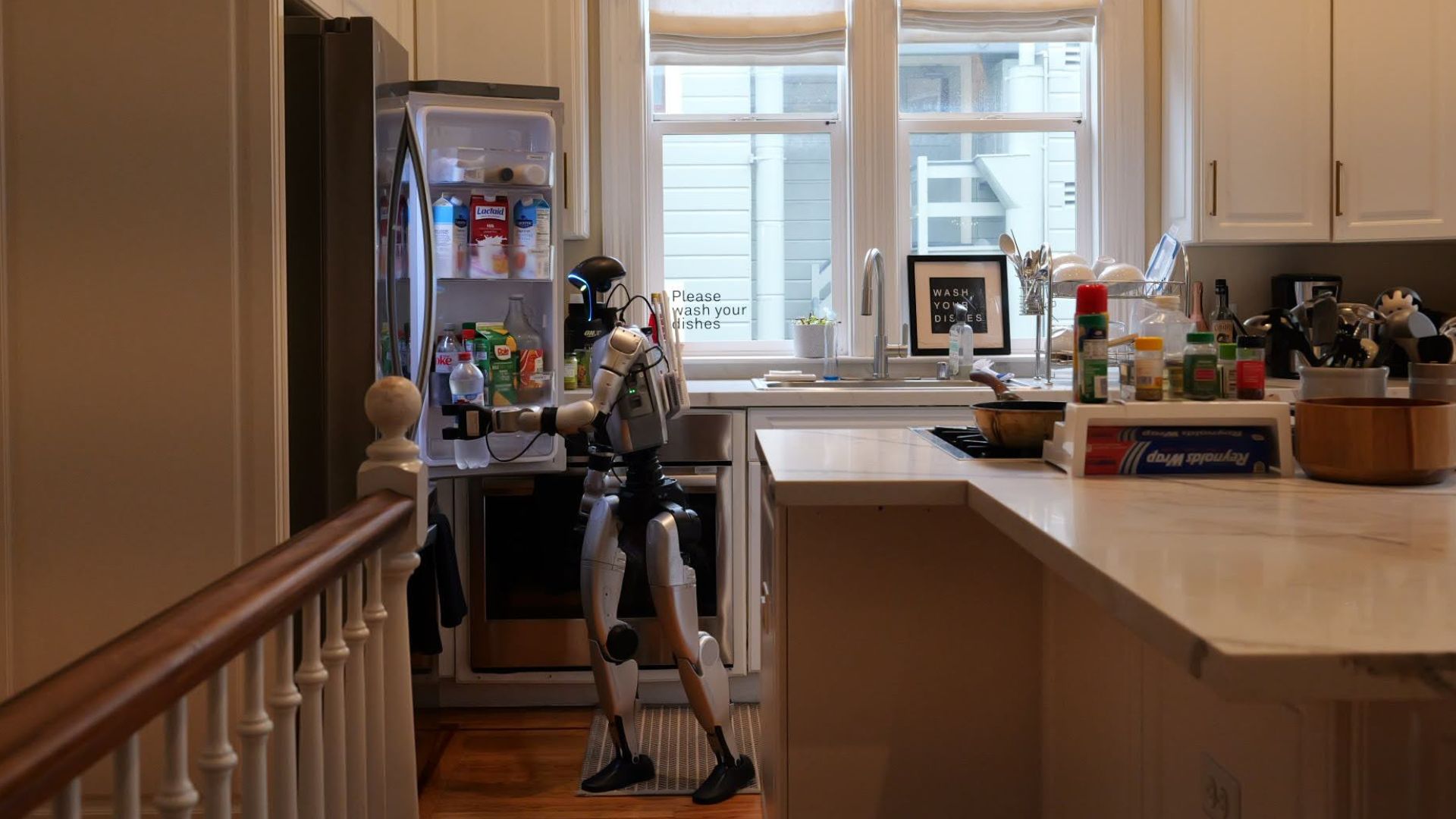
On May 14, 2026, a humanoid robot completed the first consumer home cleaning in U.S. history, booked through Gatsby‘s iOS app in San Francisco. This isn’t your Roomba bumping into furniture; we’re talking about a full-size robot doing household tasks like something straight out of The Jetsons.
The $150 Robot Experience
Flat-rate pricing meets on-demand cleaning through a simple app workflow.
Gatsby’s service costs $150 per cleaning regardless of apartment size—whether you’re in a studio or sprawling loft. The process works like ordering food delivery: open the app, set your address, book a time slot, then wait for your mechanical housekeeper to arrive. The robot handles the complete cleaning cycle and leaves, theoretically giving you back hours of weekend time for whatever actually matters to you.
Beyond Floor-Sweeping Robots
Humanoid capabilities tackle complex household tasks that traditional cleaning robots can’t touch.
Forget those disc-shaped vacuum robots that get stuck under couches. Gatsby’s humanoids handle surfaces, bed-making, and household tasks—the tedious stuff that consumes entire Saturdays. Founder Aron Frishberg calls housework “the largest unpaid job in human history,” positioning the service as time liberation rather than mere convenience. The robot’s human-like form factor means it can navigate spaces designed for people, reaching places specialized cleaning devices simply can’t access.
Service Platform, Not Hardware Race
Gatsby sidesteps expensive robot sales by focusing on cleaning as a service model.
Rather than competing in the brutal humanoid hardware market, Gatsby built a “consumer distribution platform for humanoid robotics.” Translation: they’ll use whoever makes the best robots without forcing customers to drop tens of thousands on hardware that might become obsolete next year. This approach could prove smarter than direct robot sales, assuming they can solve the logistics of maintaining and deploying expensive machines across cities.
San Francisco Beta, Everywhere Else TBD
Limited geography and waitlist management reveal early-stage constraints.
Currently, Gatsby operates only in San Francisco with other cities listed as “coming soon”—startup speak for “we’re figuring out the economics.” Demand requires waitlist management, suggesting either genuine interest or severely limited robot inventory. The real test isn’t whether wealthy San Franciscans will pay $150 for robotic cleaning; it’s whether this model scales beyond early adopters.
Your weekend cleaning routine might survive a few more years, but May 14th marked the moment household robots graduated from tech demos to actual service calls. Whether that’s revolutionary progress or expensive theater depends entirely on what Gatsby does next.