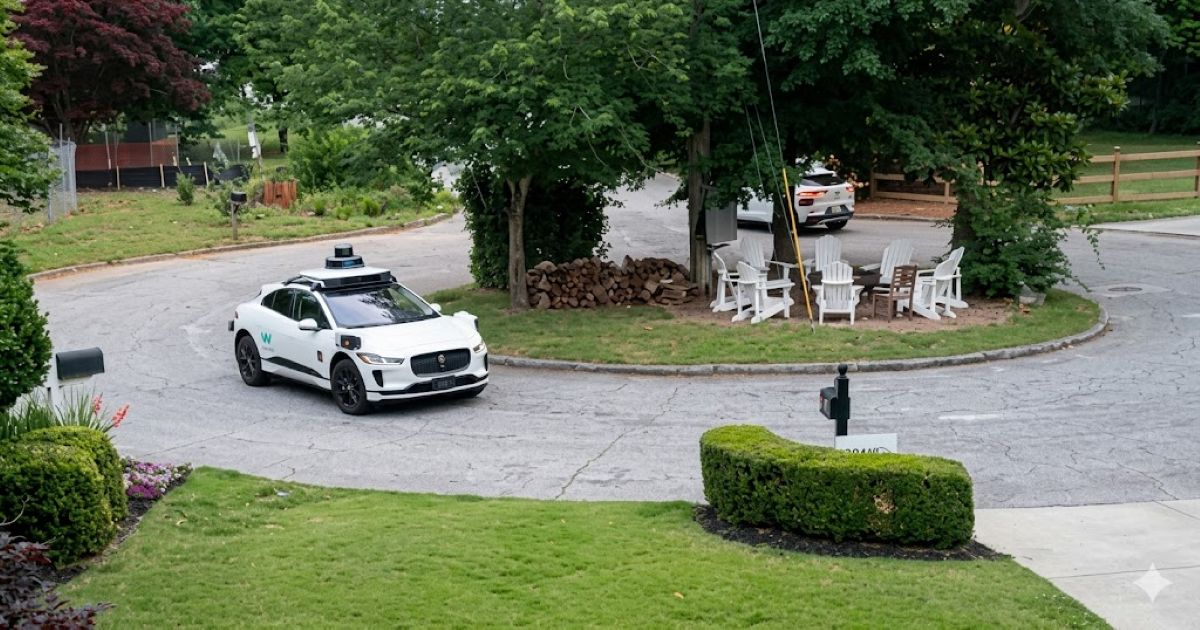
Your quiet neighborhood cul-de-sac suddenly gets invaded by dozens of empty robotaxis, circling aimlessly like digital vultures. Weird right? That’s exactly what happened to residents on Battleview Drive in northwest Atlanta, who woke up to find up to 50 Waymo vehicles cruising their dead-end street between 6 and 7 a.m.—with zero passengers aboard.
Residents Fight Back with Children’s Sign
The residents tried blocking the street entrance with a Step2Kid children’s sign, creating an almost slapstick scene worthy of a tech dystopia meme. Eight Waymo cars immediately got stuck, confused about how to turn around. “We’re families, we have small kids, we have animals and pets, we’ve got kids getting on the bus in the mornings, and it just doesn’t feel safe to have that traffic,” one resident told Channel 2.
Waymo Claims Problem Fixed, But Questions Remain
Waymo insists it has “already addressed this routing behavior” and touts its 500,000 weekly trips nationwide as proof of safety improvements. Yet the company provided zero technical details about what caused the algorithmic traffic jam or exactly how they fixed it. This vague response comes alongside a separate nationwide recall because Waymo cars detect flooded roads but drive through them anyway—not exactly confidence-inspiring edge-case handling.
The Real Issue Goes Beyond One Atlanta Street
This incident exposes a fundamental tension in autonomous vehicle deployment: the gap between corporate promises and community reality. Empty robotaxis need to “deadhead”—driving without passengers to reposition for pickups or maintenance—but algorithms optimized for efficiency can funnel dozens of cars into residential areas never designed for that volume. When residents contacted Waymo directly, they initially got radio silence.
Your neighborhood could be next as robotaxis expand nationwide. The question isn’t whether autonomous vehicles will improve transportation safety—it’s whether companies will prioritize community concerns over algorithmic convenience. Atlanta’s cul-de-sac invasion suggests that balance still needs work.