Video game commercials in the 80s and 90s promised the future, with controllers responding to your mind, voice, or invisible forces. The reality? Often expensive gadgets that struggled against environmental interference and technological limits. These ambitious add-ons, meant to boost immersion, frequently devolved into frustrating experiences due to laggy inputs or inaccurate sensors. Anyone who’s ever wrestled with a shoddy peripheral knows the pain.
5. Sega Genesis Activator
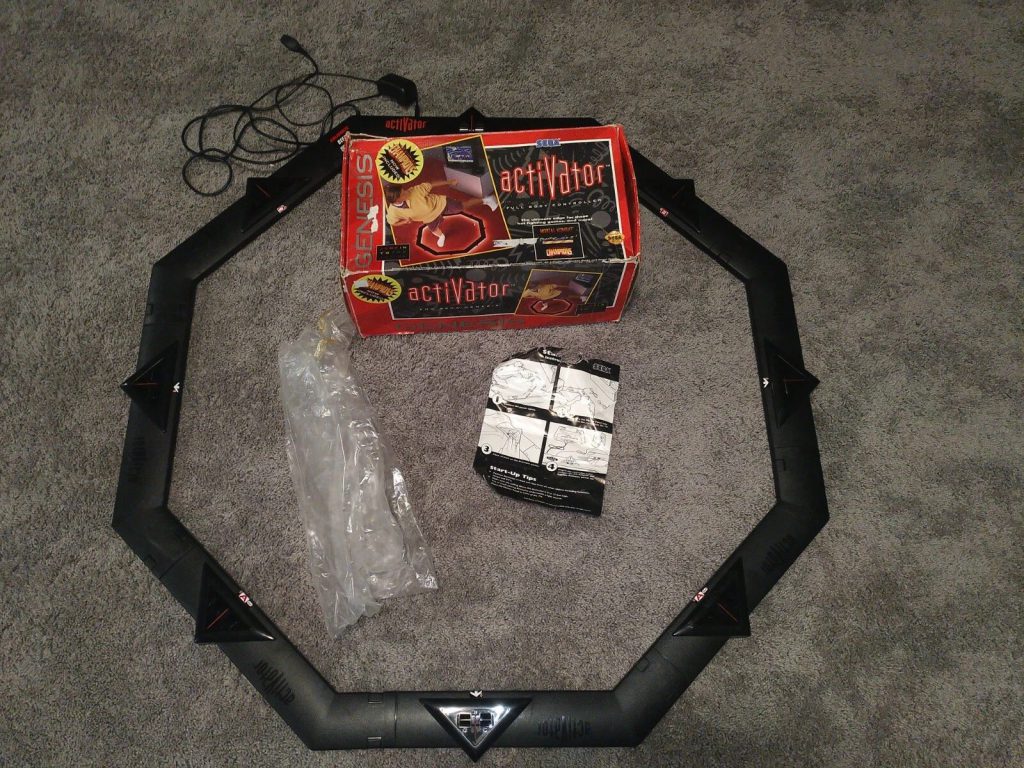
This massive motion mat turned living rooms into frustrating workout sessions.
Launched in 1993, the Sega Activator was a truly ambitious, if comically flawed, attempt to bring full-body control to the Sega Genesis. This massive black octagonal mat, roughly 4 feet in diameter, used eight infrared sensors to track limb movements. The idea was you’d punch, kick, and run your way through games like After Burner II or Mortal Kombat.
Unfortunately, the Activator was as finicky as a toddler refusing peas. Ceiling fans, uneven ceilings, or even sunlight could throw off its tracking, leading to lag that felt longer than a Zoom call with no agenda. The input lag meant you’d often throw a punch that registered seconds later, making precise gameplay a pipe dream. Players were essentially sacrificing comfort and accuracy for the novelty of flailing around their living rooms. It supported only four games effectively, and while it cost around $80 USD (about $170 today), its legacy is less about gaming innovation and more about how not to design a motion controller.
4. Konami LaserScope
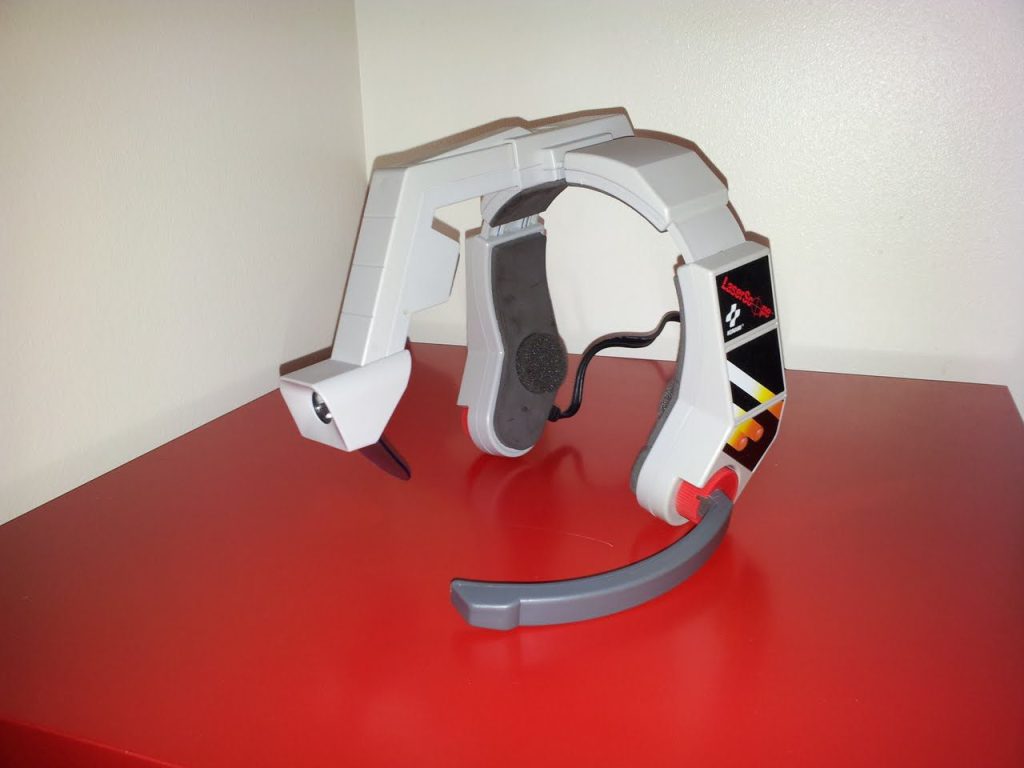
Voice-activated shooting that responded to every cough and bark in the house.
Launched in 1990 for the Nintendo Entertainment System, the Konami LaserScope was a headset-mounted light gun that aimed to put you right into the action with its head-tracking optics. It also featured a voice-activated microphone, meant to trigger shots with a command. Unfortunately, its “revolutionary” voice control meant any loud noise—like a dog barking or a cough—could trigger an accidental shot, turning gameplay into a chaotic symphony of unintended firing.
Trying to calibrate this beast was like wrestling an octopus in a phone booth, and most players ended up tapping the microphone or making clicking noises with their tongues to get it to work. The bulky headset offered significant calibration issues, making games that required quick reflexes nearly unplayable. Sunlight streaming through the window or even household noise could throw off its already questionable sensors. For about $50 USD at launch, you got a device that promised the future but delivered frustration, proving that sometimes, the best control scheme is still just holding a plastic gun.
3. Nintendo U-Force
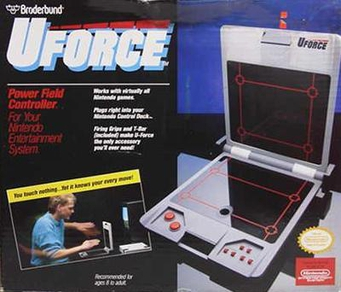
Touchless control that barely touched on playability.
Released in 1989, the Nintendo U-Force promised a revolutionary, touchless gaming experience, but delivered an exercise in futility. This clamshell-like device projected an “invisible power field” using infrared sensors designed to detect hand movements in 3D space. Think of it as a primitive Kinect, but way less effective. The reality? Sensors that were as finicky as a cat on a hot tin roof, struggling with even the most precise, slow gestures.
The U-Force suffered from significant input lag, sometimes taking seconds for your on-screen character to react to movements. Sunlight or even a rogue ceiling fan could completely disrupt its delicate infrared ballet, rendering it useless. Limited to just six official games, and priced at a hefty $70 USD (about $170 today), it was a spectacular flop. Most players found it easier to just use the standard NES controller and skip the virtual karate chop.
2. Game Boy Pocket Sonar
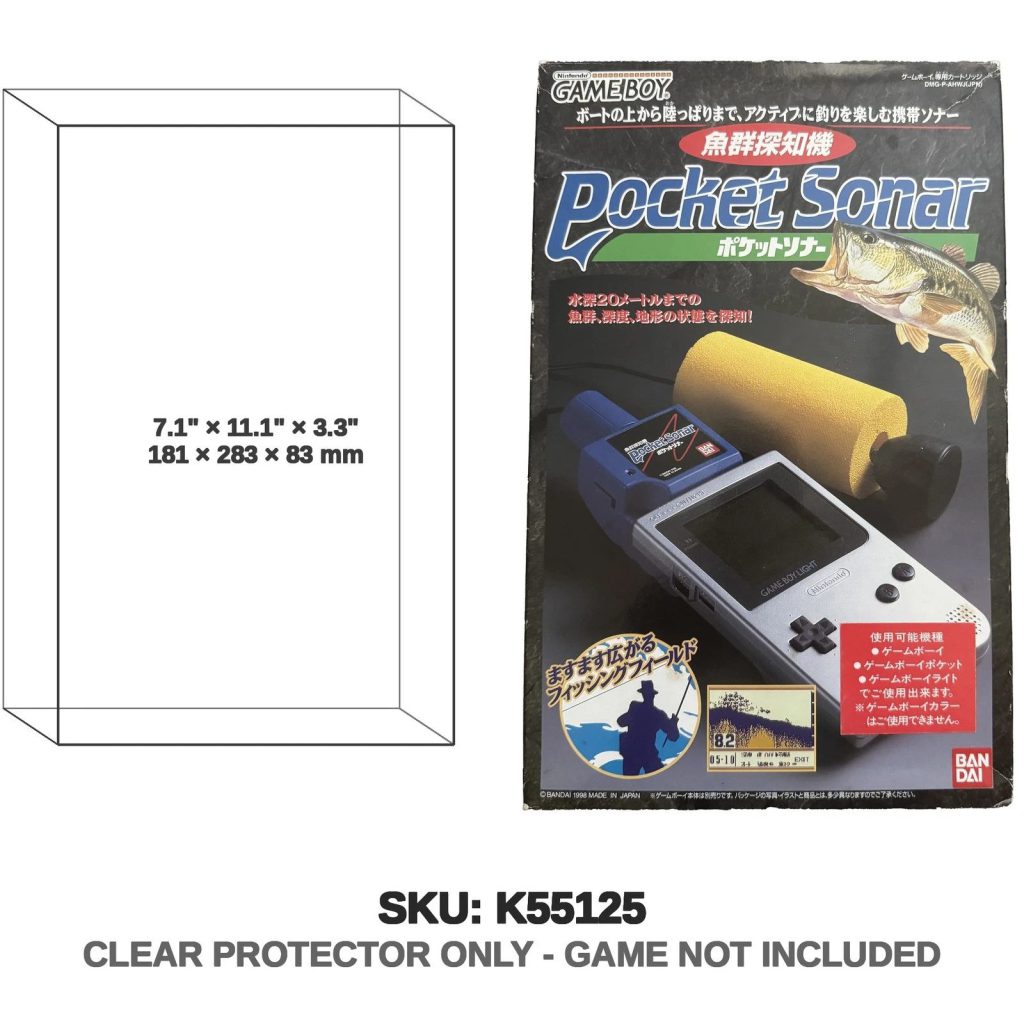
A genuine fishing tool disguised as a gaming peripheral.
Released in 1998, this Japanese-exclusive peripheral from Bandai was less a gaming accessory and more a genuine fishing tool, costing around ¥12,800 JPY (about $100 USD at launch). It featured a bright yellow cartridge that housed the software, paired with a waterproof sonar sensor on a 5-meter cable. When you dropped that sensor into the water, it could actually detect fish up to 25 meters away.
The Game Boy screen would then display their location, depth, and size in real-time, which is kind of wild. The kicker? This device offered zero integration with any actual Game Boy games. So, while you could use it to find your next lunch, you couldn’t exactly use it to catch a Magikarp. It was a niche gadget for fishing fanatics who wanted a portable sonar, proving that sometimes, tech innovation takes a sharp left turn into the wonderfully weird.
1. Power Glove
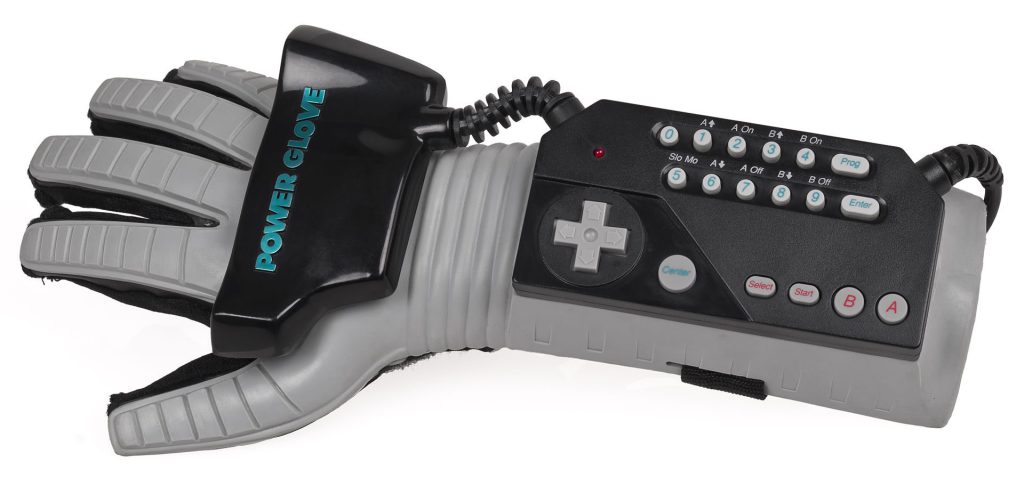
The sci-fi dream that turned hands into sweaty mittens of frustration.
Launched in 1989, the Nintendo Entertainment System’s Power Glove arrived with the fanfare of a sci-fi dream, costing $75 USD. This wearable controller promised a new era of gaming, boasting a 3-axis accelerometer and finger-tracking flex sensors. It even made a star turn in the movie ‘The Wizard,’ fueling gamer fantasies.
Anyone who’s tried to navigate its complexities knows the reality fell far short of the vision. The setup alone, requiring three infrared sensors taped to your TV, was a commitment. Then came the input lag, often a glacial 1–3 seconds, turning precise maneuvers into a frantic guessing game. Add in stiff sensors and a design prone to turning hands into sweaty mittens, and you have a piece of gaming history that’s more iconic for its ambition than its playability.