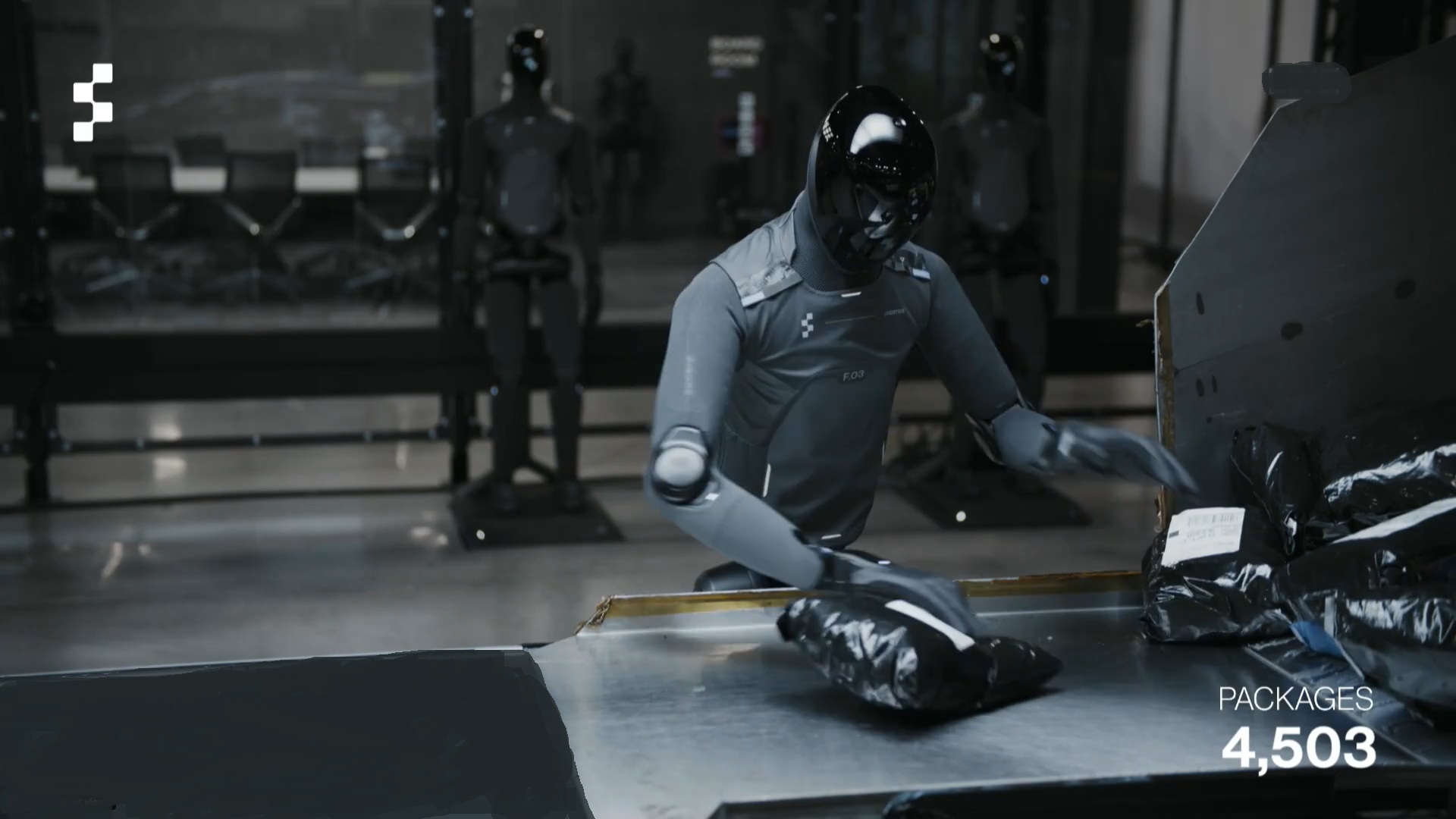
Industrial robots typically need constant human oversight—someone watching for jams, resets, and the inevitable moment when they get confused by a slightly moved box. Figure AI’s Helix-02 system just eliminated that expensive babysitting requirement. Their Figure 02 humanoid robots completed full 8-hour autonomous factory shifts, demonstrated through a livestream on May 13, 2026, that felt less like a tech demo and more like watching the future clock in for work.
From Code Mountain to Neural Simplicity
The breakthrough replaces 109,504 lines of traditional robotics code with unified neural networks trained on human movement data.
Helix-02 ditches the typical robotic approach of separate systems for vision, movement, and balance. Instead, it runs three neural networks simultaneously:
- System 2 for language understanding and planning at 7-9 Hz
- System 1 for vision-to-motion at 200Hz
- System 0 handling real-time balance at 1,000Hz
At BMW’s Spartanburg plant, these robots already moved 90,000+ parts for 30,000+ vehicles during previous 10-hour shifts. Now they’re sustaining 8-hour autonomous operations without human intervention, complete with self-diagnosis capabilities that send robots to maintenance when needed.
Kitchen Skills Meet Factory Precision
Demonstrations show robots handling everything from dishwasher loading to multi-robot coordination tasks under two minutes.
The practical capabilities extend beyond repetitive factory work. One demo shows a robot unloading and reloading a dishwasher in four minutes—navigating around obstacles, handling delicate items, and maintaining spatial awareness throughout. More impressive: two robots collaboratively reset an entire bedroom in under two minutes, coordinating visually without central control. Additional demonstrations included fine motor skills like:
- Unscrewing caps
- Extracting pills
- Syringe dosing
These aren’t pre-programmed routines but adaptive responses to real-world chaos.
Your Workplace Is About to Change
Autonomous 8-hour shifts signal the end of human-supervised robotic labor in manufacturing and logistics.
This development hits different than previous automation waves. You’re looking at robots that don’t need coffee breaks, don’t call in sick, and can work overnight shifts without safety concerns. Manufacturing jobs involving repetitive tasks face immediate displacement, while roles requiring human creativity, problem-solving, and interpersonal skills become more valuable. The economic implications ripple beyond factories into warehouses, fulfillment centers, and eventually service industries.
The transition from human-supervised to fully autonomous robotic labor isn’t coming—it just arrived, clocked in, and completed its first shift.