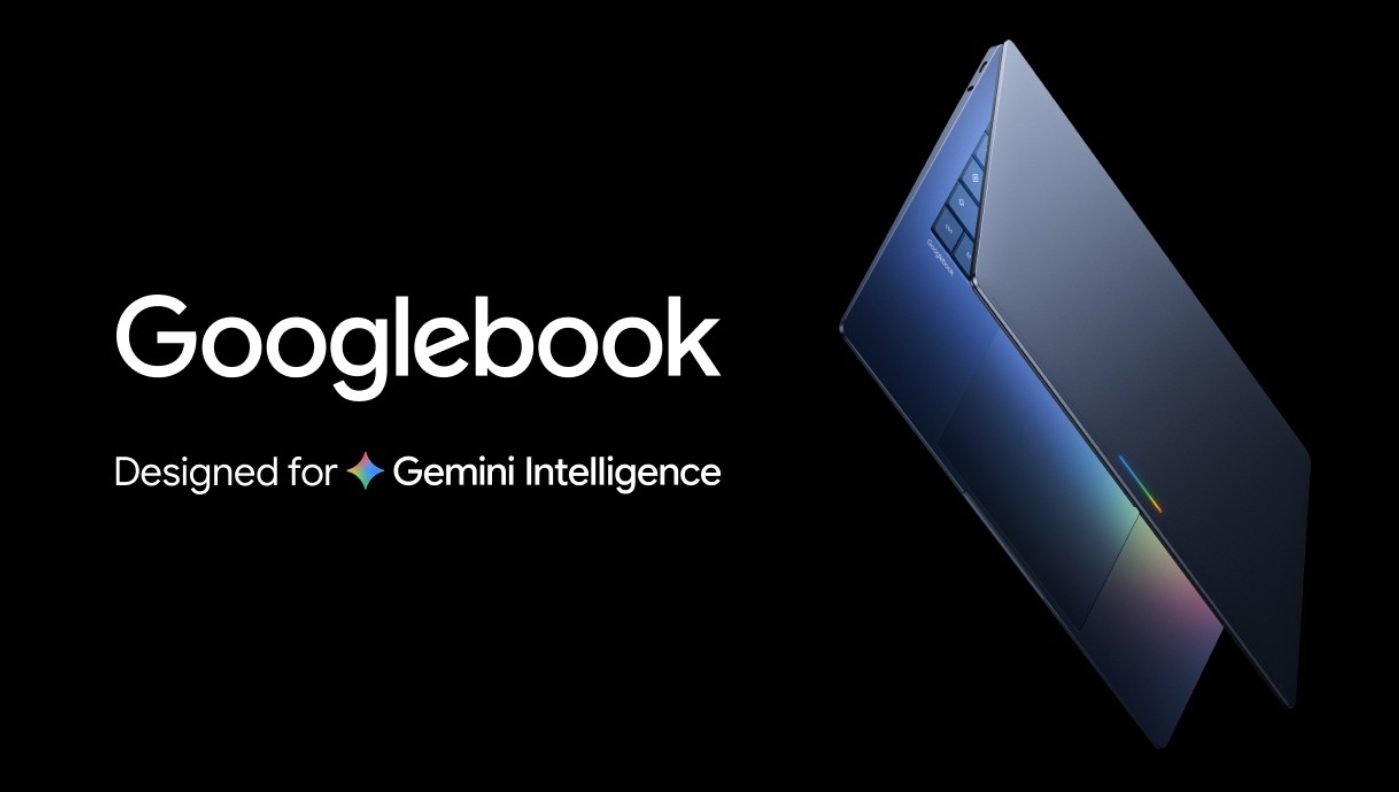
Court documents from Google’s antitrust case revealed what Chromebook users have been waiting for: an actual laptop OS that doesn’t feel like a browser pretending to be a computer. Meet Googlebook, Google’s Android-based replacement for ChromeOS that promises to deliver desktop power without the usual Google limitations.
Gemini AI Makes Your Cursor Actually Intelligent
The wiggling cursor feature turns any screen element into an AI interaction point.
Forget hunting through menus or opening separate AI apps. Googlebook’s standout feature lets you wiggle your cursor over any text, image, or interface element to trigger Gemini AI interactions. Need to understand a complex chart? Wiggle and ask. Want to plan something around a date mentioned in an email? Your cursor becomes a scheduling assistant.
You can even drag images together for instant combinations or create prompt-based widgets on the fly. It’s the kind of seamless AI integration that makes ChatGPT tabs feel primitive.
Your Android Phone Finally Talks to Your Laptop
App mirroring and file sharing work without unlocking your phone.
The Android integration fixes ChromeOS’s biggest weakness—the awkward gap between your phone and laptop workflows. Googlebook mirrors your Android apps and files directly to the desktop without requiring phone unlocks or complicated setup rituals.
Think of it like AirDrop’s smarter, more committed cousin that actually lives on your laptop. For anyone juggling work between devices, this eliminates the constant photo texting and cloud upload dance that currently defines cross-device productivity.
The Transition Won’t Be Pretty for Everyone
Legacy Chromebook owners face hardware compatibility limitations.
Here’s the catch that Google’s marketing materials won’t emphasize: not all current Chromebooks can run Googlebook. The Android kernel architecture requires newer hardware, leaving older devices stuck on traditional ChromeOS until their 2034 phase-out.
- Commercial testing starts late 2026
- Full release around 2028
Hardware partners like Acer, Asus, Dell, HP, and Lenovo are onboard for the transition, supporting both Arm and x86 processors across laptops, tablets, and 2-in-1s.
The real question isn’t whether Googlebook will be better than ChromeOS—that bar sits somewhere near the floor. It’s whether Google can finally build a laptop OS that doesn’t make you miss Windows, even just a little bit.