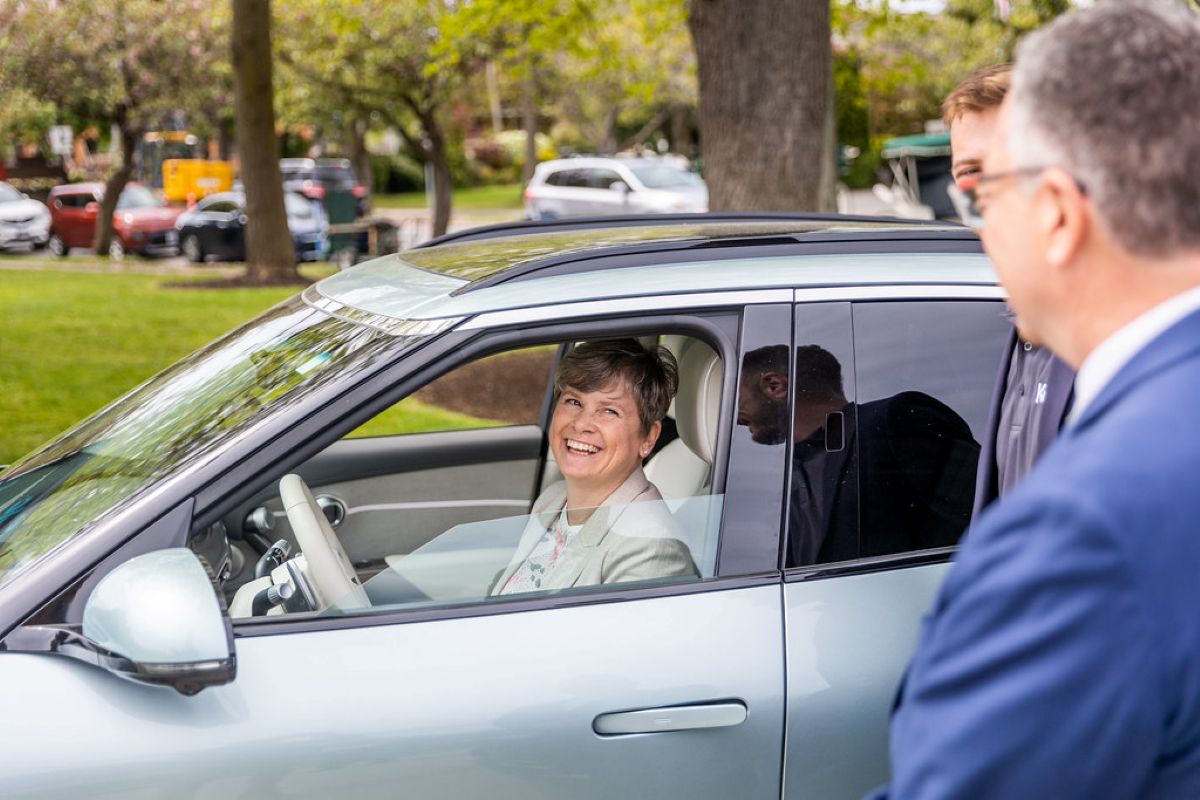
You’re 75, sitting in the DMV for another license renewal, wondering if this might be your last. Your neck doesn’t turn like it used to, your reaction time has slowed, and that last near-miss while changing lanes still haunts you. Here’s something the renewal examiner probably doesn’t know—modern electric vehicles pack safety technology specifically designed to compensate for these exact challenges.
Smart Safety Systems Fill the Gaps
Advanced driver assistance features address age-related driving limitations with precision.
EVs come loaded with automatic emergency braking, blind-spot monitoring, lane-keeping assist, and 360-degree cameras that essentially act as digital co-pilots. These aren’t just fancy add-ons—they’re solving real problems.
When your neck mobility decreases, blind-spot cameras eliminate the need for that painful shoulder check. Slower reaction times? Automatic emergency braking kicks in before you even realize there’s danger ahead.
According to Recharged, “automatic emergency braking, blind-spot monitoring… can seriously reduce stress on every drive.” The Volvo EX90 and similar EV models earn top NHTSA safety ratings partly because these systems work seamlessly together, creating multiple safety nets that traditional vehicles simply don’t offer.
Design Details That Actually Matter
EV ergonomics solve physical challenges that gas cars ignore.
Beyond the tech wizardry, EVs address aging bodies in surprisingly thoughtful ways. Higher seating positions make entry and exit easier on creaky joints. Digital mirrors reduce the physical twisting that causes neck strain.
One-pedal driving eliminates the constant brake-gas shuffle that can aggravate arthritis. Even the large windows and thin pillars improve visibility—crucial when cataracts or other vision changes affect night driving.
This isn’t just comfort marketing. These design choices directly address the physical realities that can trigger license restrictions during renewal evaluations.
When License Renewal Gets Serious
ADAS technology may help demonstrate continued safe driving capability.
State DMVs aren’t messing around anymore. In Texas, drivers over 79 must renew in person every few years, potentially facing vision tests, medical evaluations, or even road tests.
While no study definitively proves EVs help seniors “keep licenses longer,” vehicle modifications with advanced safety features are explicitly recommended interventions for aging drivers.
The technology creates documented safety improvements that renewal officials can evaluate. When your driving record shows fewer incidents and your vehicle actively prevents accidents, those renewal conversations shift from restriction to adaptation.
Your independence doesn’t have to end with your reflexes—sometimes it just needs better backup systems.