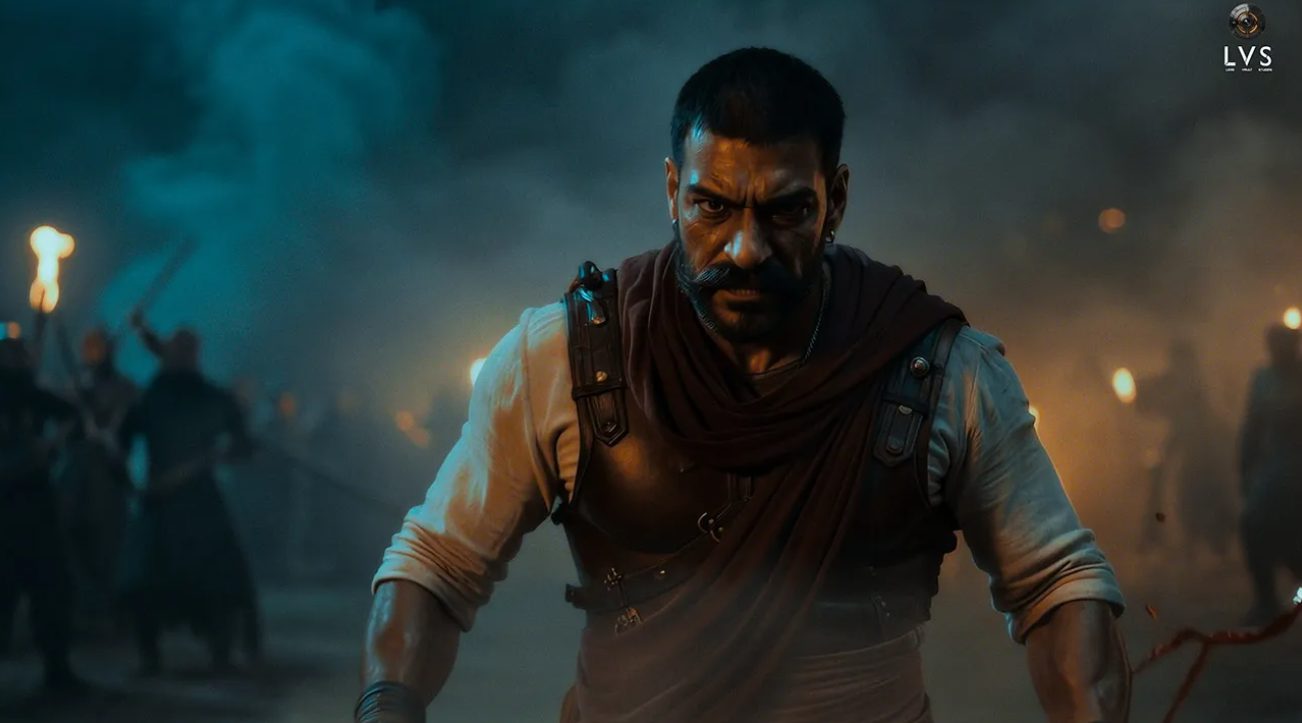
Director Rahi Anil Barve’s 80-minute film Mann Pisahach cost under ₹33,000 ($360) and was shot entirely on an iPhone. AI generated the costumes and fantastical worlds that would have bankrupted independent productions just three years ago.
Meanwhile, Studio Blo’s Kubrick platform now powers 80% of Indian films with AI storyboards, cutting pre-visualization timelines from months to days. These aren’t experimental art projects—they’re commercially viable films that prove Hollywood’s $200 million budgets might be as outdated as physical film reels.
Success Stories Without the Backlash
Audiences embrace AI enhancements while voice artists face an uncertain future.
Rekhachithram featured AI de-aged Mammootty and lip-sync alterations on late screenwriter John Paul’s archival footage, grossing ₹57 crore ($6.7 million) with zero audience pushback. NeuralGarage’s VisualDub technology enabled War 2 to release simultaneously in multiple languages with perfect lip-sync for stars Hrithik Roshan and Jr. NTR.
The technology works so seamlessly that you might not even notice the AI dubbing. But India’s 20,000 voice artists certainly have—they’re watching their livelihoods evaporate faster than a TikTok trend.
Legal Framework Fuels the Revolution
Indian copyright law gives studios unprecedented power to modify films across future technologies.
Indian copyright law positions studios as “legal authors” under work-for-hire contracts, granting them broad rights to modify content for emerging technologies, according to entertainment lawyer Priyanka Khimani. This legal framework, combined with the absence of powerful unions, creates a perfect storm for AI integration.
Survey data shows 85% of Indian cinema professionals endorse AI integration, reporting typical cost reductions of 20% across all production stages. Your favorite streaming platform’s next binge-worthy series might cost half what you’d expect, thanks to algorithms handling everything from script outlines to final color correction.
The revolution Hollywood feared isn’t coming—it’s already here, just not where anyone expected. While American studios negotiate AI clauses, Indian filmmakers are busy proving that creativity and technology make better collaborators than competitors.
The $360 Film That Changes Everything
Indian directors prove blockbuster budgets are obsolete with AI-powered micro-productions.
Director Rahi Anil Barve’s 80-minute film Mann Pisahach cost under ₹33,000 ($360) and was shot entirely on an iPhone. AI generated the costumes and fantastical worlds that would have bankrupted independent productions just three years ago.
Meanwhile, Studio Blo’s Kubrick platform now powers 80% of Indian films with AI storyboards, cutting pre-visualization timelines from months to days. These aren’t experimental art projects—they’re commercially viable films that prove Hollywood’s $200 million budgets might be as outdated as physical film reels.