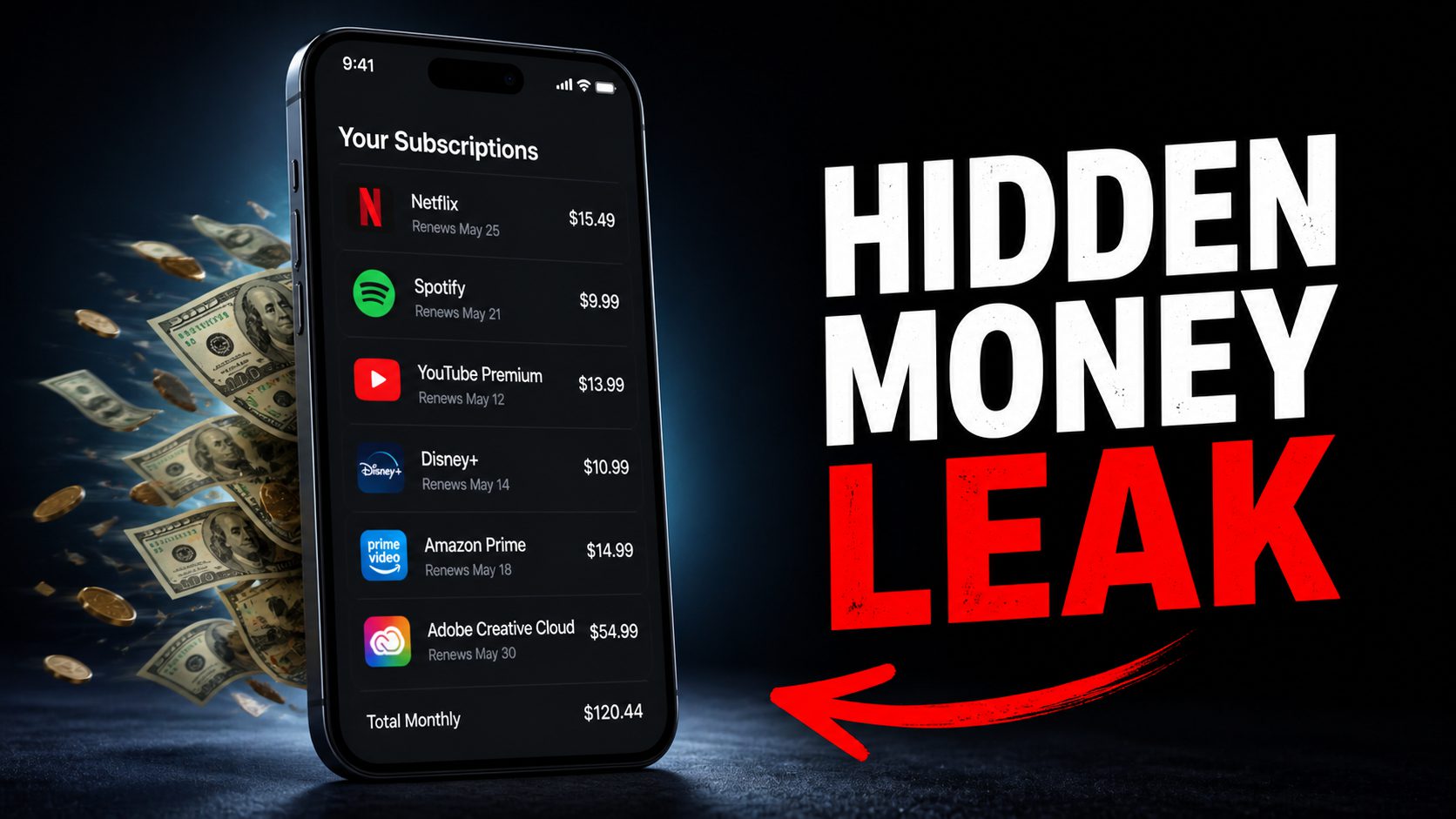
Frugality doesn’t mean living like a monk on ramen; it’s about smart choices that unlock more freedom. Think of spending habits like apps running in the background on your phone: some are essential, others just drain your battery. Many seemingly small, regular expenditures quietly siphon cash, leaving you wondering where it all went. This guide is your digital detox for your wallet, helping you spot those sneaky subscription drains and impulse buys that add up faster than TikTok trends.
10. Kill the Invisible Money Leaks (Subscription Audit)

Forgotten subscriptions are silently siphoning hundreds from your account each month.
Many people, even those earning six figures, are unaware of these invisible money leaks, often caught by recurring charges for unused gym memberships or duplicate software. The key habit here is a simple quarterly subscription audit. Commit to reviewing your bank statements every 3 months, searching for monthly payments, and honestly assessing if you’re still getting value.
This process can uncover significant monthly leaks by allowing you to cancel unused services, consolidate overlapping subscriptions, and downgrade premium features to essential ones. This isn’t about deprivation; it’s about redirecting funds to where they truly serve you and create more financial margin for your goals.
9. Annualize Before You Say Yes

Multiplying monthly payments by 12 exposes the staggering truth behind those small figures.
A $39 monthly subscription, for instance, quietly balloons to $468 annually. This tactic, wielded by marketers, transforms a potentially substantial expense into a manageable monthly bite, akin to offering a single M&M instead of the whole bag. Before you nod “yes” to that recurring charge, do the math.
Asking for the total annual cost forces a conscious decision, making you confront whether the value truly justifies the commitment. This simple habit keeps impulsive spending in check and prevents your bank account from slowly draining away on a dozen forgotten plans.
8. Put Friction Back into Easy Spending

The digital world has made impulse buys as easy as a TikTok scroll.
Removing saved credit card details from shopping apps like Amazon, and disabling one-click purchasing, forces a crucial pause. You actually have to dig out your card and type information, creating a vital hesitation point. This small delay acts like a bouncer at the club of your online cart.
It gives you a moment to question if that purchase is a genuine need or just a fleeting urge amplified by ease. This simple act helps ensure that when you do decide to spend, it’s for the right reasons, not just because the “buy now” button was practically begging you.
7. Decide Your Convenience in Advance

Pre-planning conveniences prevents emotional spending when stress hits.
Instead of deciding in the moment whether to order takeout or pay for express services, pre-plan your conveniences. Designate specific nights for delivery meals, like Friday pizza night, making that choice intentional. By setting limits on delivery meals or deciding in advance which conveniences are truly worth the fee, you avoid regret.
This planned convenience allows you to enjoy services without the guilt associated with reactive spending, ensuring that your chosen comforts align with your values and budget, providing genuine freedom instead of a financial hangover.
6. Delay Identity Spending by One Payment Cycle

Most “I deserve this” impulses fade faster than a viral TikTok dance.
When you’re riding that accomplishment wave, adding a shiny new gadget or luxury item to your cart feels like a reward. But here’s the trick: put those “treat yourself” moments on a mandatory chill-out list. Instead of buying immediately, jot it down and check back after your next payday.
If that item still sparks joy after a month, it’s likely a more considered purchase than a temporary emotional boost. This simple delay acts like a cool-down period for your spending brain, preventing regrettable buys that stack up faster than you can say “oops, another subscription.”
5. Buy Fewer Things, But Better Things

Quality that sticks around beats the lowest sticker price every time.
That old adage about “buy it for life” isn’t just for grandpas anymore; it’s smart money strategy. That $20 pair of shoes might feel like a steal, but if they fall apart after 6 months, you’re out $40 for the year. Meanwhile, a solid pair for $100 might last 5 years, saving you serious cash.
A single, high-quality tool that handles the job flawlessly is way more cost-effective than a cheap set you’ll replace twice. It’s like comparing a flimsy plastic raincoat to a Gore-Tex jacket: one might keep you dry for an afternoon, the other for a decade of downpours.
4. Capture Margin Before Your Lifestyle Expands

Lifestyle creep is why many people remain stressed even with fatter paychecks.
When a raise, bonus, or lucky windfall lands in your account, resist the siren song of immediate upgrades. Instead, deploy a “50/50 rule” or something similar. Divert at least half of that new dough straight into savings or investments.
Grabbing that margin first means your future financial self gets prioritized, building wealth with consistent savings rather than letting new income get gobbled up by a lifestyle that just keeps expanding like a deflated bouncy castle suddenly reinflated.
3. Track Margin, Not Every Dollar

Simple margin tracking beats meticulous budgeting that feels restrictive and tedious.
A more effective habit is to simply track your monthly margin—the difference between your income and expenses. Aiming for a specific margin target simplifies financial oversight. If your margin exceeds the target, you’re on track; if it falls short, you know adjustments are needed.
This approach focuses on financial freedom and progress, protecting your overall margin rather than getting lost in the minutiae of daily spending, which is the true engine of wealth building.
2. Use Simple Spending Rules

Concrete spending rules are your personal financial GPS, avoiding emotional potholes.
Trying to bankroll your dreams with pure willpower is like trying to herd cats—adorable, but ultimately futile. Instead of vague advice like “spend less,” try specific directives: “No impulse buys over $100” or “No new subscriptions until calculating the 12-month cost.”
These dogmatic rules, much like investing guidelines, remove guesswork and emotion from the equation. They ensure every dollar spent is a conscious choice, not a reactive splurge, safeguarding your cash flow and nudging you closer to your goals.
1. Plan Fun on Purpose

Budgeting for planned experiences makes them more meaningful than impulse buys.
Stop treating fun like a surprise guest who crashes your budget. Think of it like curating a killer playlist: you don’t just hit shuffle and hope for the best; you intentionally select tracks that vibe together. This intentionality costs less in the long run.
While spontaneous fun can be great, it often means paying a premium for convenience—like that last-minute concert ticket that costs double. Deliberately saving for these “joy points” ensures your money goes towards experiences that actually stick, proving that building memories is more about smart planning than impulsive splurges.