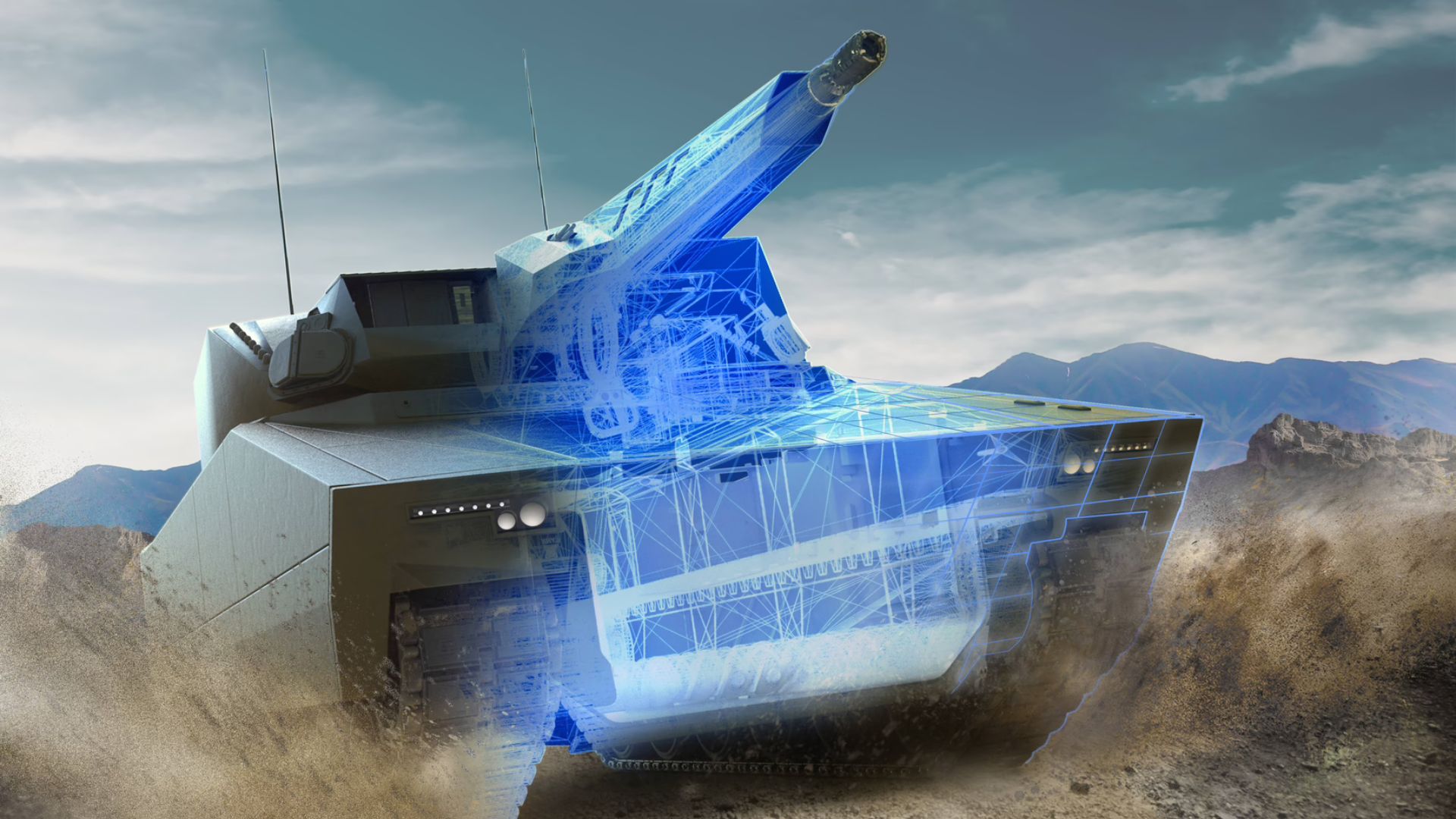
Bradley crews facing modern threats deserved better than 1980s firepower, and the XM30 finally delivers exactly that. The US Army’s long-awaited infantry fighting vehicle replacement features an advanced 50mm Bushmaster cannon that significantly extends engagement range beyond the Bradley’s 25mm chain gun capabilities—a genuine leap that changes how infantry engages enemy armor.
American Rheinmetall Vehicles leads Team Lynx, a consortium including:
- Textron Systems
- RTX
- L3Harris
- Anduril (bringing autonomy expertise)
After years of failed programs and cancelled contracts, the XM30 represents something rare in Pentagon procurement: a vehicle that addresses actual battlefield problems rather than contractor wish lists, similar to advances in hypersonic missiles.
Unmanned Turret Keeps Crews Breathing
Two-person operation from protected hull positions beats Bradley’s exposed crew compartment.
The XM30’s unmanned turret houses that powerful 50mm cannon while keeping both crew members safely inside the hull. Think Tesla’s camera-based driving, but for identifying and engaging threats at distances where enemy return fire becomes academic, much like the advanced targeting systems found in China’s new sixth-generation fighter. The system features linkless ammunition feeding that delivers 200-600 rounds per minute with precision the Bradley’s 25mm chain gun simply cannot match.
This two-person crew—driver and commander—operates while carrying up to six fully equipped infantry soldiers. When enemy armor appears at extended range, Bradley crews historically reversed course while XM30 crews can engage and win from protected positions.
Production Timeline Meets Reality Check
The system transitions from development to validation as program gains momentum.
The Army redesignated this program from “Optionally Manned Fighting Vehicle” in June 2023, signaling serious intent beyond PowerPoint presentations. This shift represents crucial validation testing before larger production runs as the program moves from development phase toward early manufacturing, while battlefield medical innovations like the new life-saving device continue to protect crews.
This isn’t revolution; it’s evolution addressing Ukraine-proven realities about drone swarms, electronic warfare, and long-range anti-armor threats that render 1980s-era Bradleys increasingly vulnerable. The XM30’s modular architecture and autonomous capabilities position it for software updates rather than complete redesigns when threats evolve again.