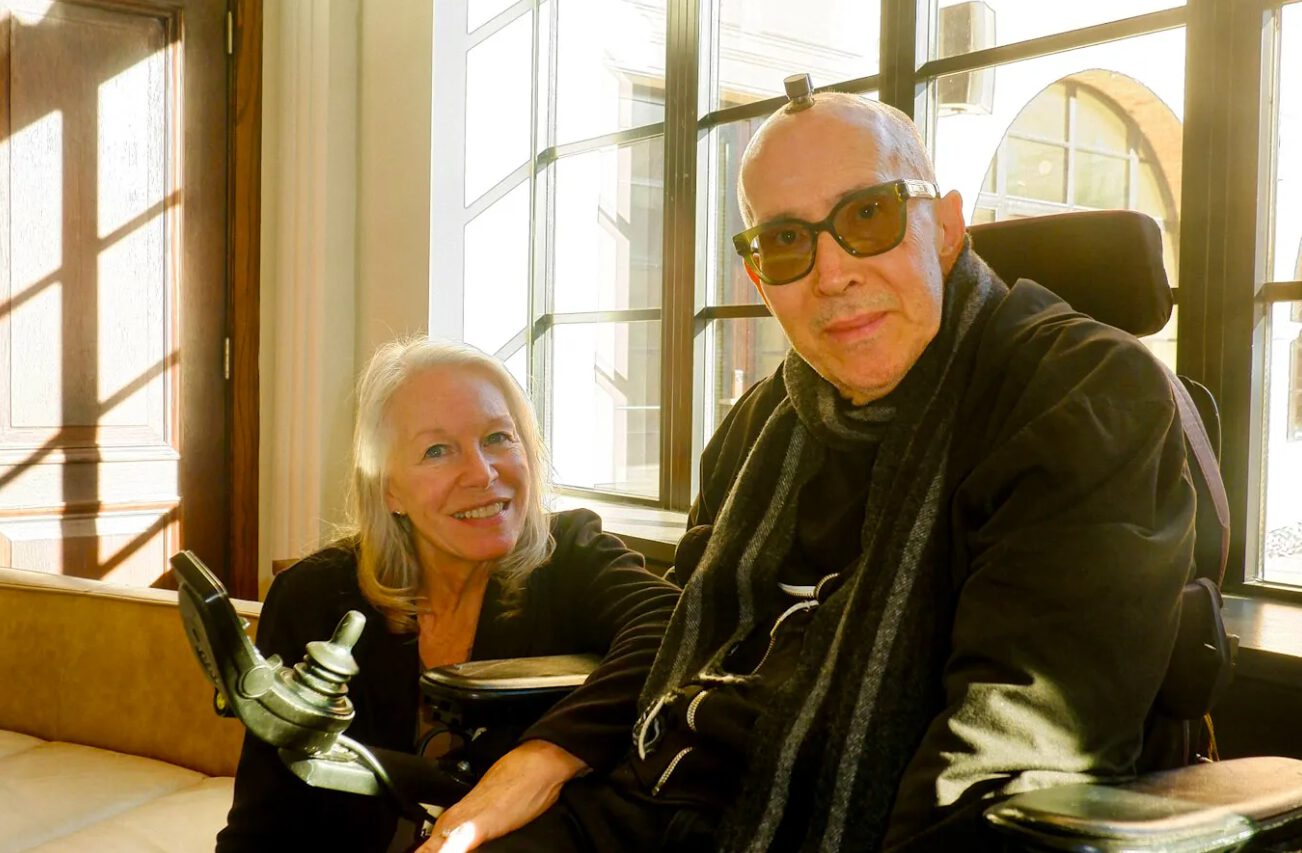
Picture generating a guitar riff without touching any instrument—just thinking about moving your toe. That’s exactly how 69-year-old Galen Buckwalter creates music now, thanks to six brain implants that decode his thoughts into sound. The research psychologist, paralyzed from the chest down since a diving accident at 16, has transformed clinical neurotechnology into a creative instrument for his 29-year punk band, Siggy.
Neural Networks Meet Power Chords
Brain implants translate imagined movements into real-time music generation.
Buckwalter’s setup resembles something from a sci-fi movie, but it’s pure engineering. Six Blackrock Neurotech Utah arrays—each packed with 64 microelectrodes—monitor 384 channels across his motor, sensory, and frontal cortices. When he imagines flexing his toe or moving his index finger, neurons fire at different rates.
Caltech grad student Sean Darcy built custom software that maps these firing patterns to pitch: higher neural activity raises the tone, suppression lowers it. The system currently handles two simultaneous tones, though Buckwalter compares playing multiple parts to “rubbing your head and patting your stomach.” Daily recalibration keeps the unstable neuron-channel mapping functional, but the technical challenges don’t dampen his enthusiasm.
From Lab Experiment to Album Art
Biosonified mushrooms inspired a punk band’s neural music integration.
The collaboration started with an unusual inspiration—biosonified mushrooms that generate sounds from biological processes. Buckwalter and Darcy integrated brain-generated tones into Siggy’s latest album “Wirehead,” released March 15, with Darcy manipulating the neural output live during recording sessions.
The result sounds like industrial punk filtered through a computer brain, which is essentially what it is. Buckwalter envisions full neural DJ setups where motor cortex activity controls entire performances, turning thoughts into beats that would make even TikTok musicians jealous.
Beyond Medical Restoration
Creative applications challenge narrow research priorities in brain-computer interfaces.
“Restoration, yeah, that’s first and foremost. But we’re a lot more than just moving and sensing,” Buckwalter argues, pushing back against purely clinical BCI research. He advocates for systems that prioritize participant creativity—music, art, even NFTs—over laboratory-defined goals. His approach transforms users from passive patients into active collaborators, proving that accessibility technology doesn’t have to be boring.
The implications stretch beyond punk rock. While companies like Neuralink focus on medical restoration, Buckwalter’s musical experiments suggest BCIs could become cultural instruments—turning neural activity into artistic expression that enhances rather than replaces human creativity. Your smartphone already knows your music taste; imagine what your actual brain could compose.