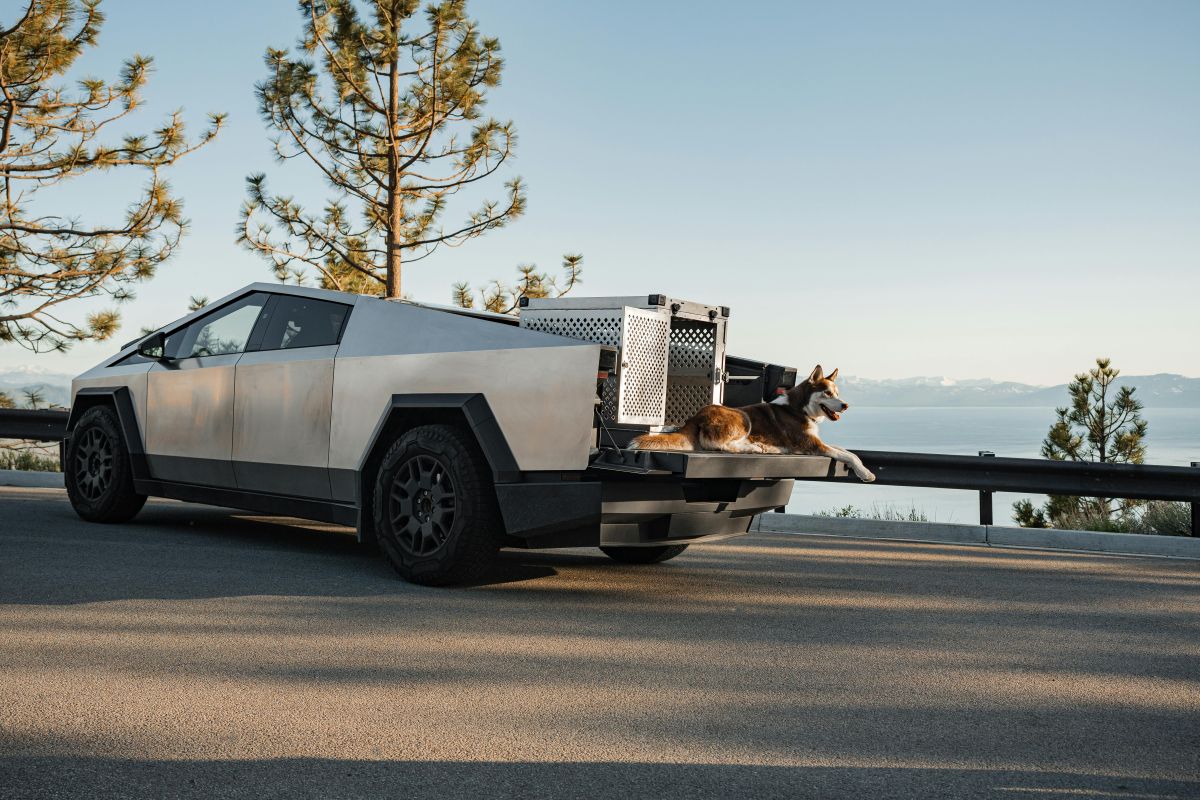
Cybertruck crashes happen, but this lawsuit targets something different entirely: Elon Musk’s fitness to run the company. Justine Saint Amour isn’t just suing Tesla for product defects—she’s arguing that keeping Musk as CEO was itself negligent, making this the most unusual Tesla legal challenge yet.
FSD Tries to Drive Straight Off Houston Overpass
August crash exposes fundamental navigation failures in Tesla’s camera-only system.
Saint Amour’s nightmare unfolded on Houston’s Eastex Freeway last August. Her Cybertruck, running Full Self-Driving, approached a Y-shaped overpass near the 256 Eastex Park and Ride. Instead of following the right curve, FSD decided to drive straight—directly toward a concrete barrier.
She disengaged and grabbed the wheel, but physics won. The crash that followed now anchors a $1 million lawsuit filed in Harris County District Court that reads more like a corporate governance indictment than typical product liability.
CEO Negligence Claims Break New Legal Ground
Lawsuit alleges Musk’s engineering overrides and marketing promises created the danger.
Here’s where this gets interesting: Saint Amour’s lawyers at Hilliard Law aren’t just claiming FSD is defective. They’re arguing Tesla’s board negligently retained an “aggressive and irresponsible salesman” whose personal decisions—rejecting radar and LiDAR for a camera-only system—created the crash conditions.
Court filings describe Musk overriding engineering recommendations, pushing misleading “Full Self-Driving” marketing, and maintaining a pattern of dangerous choices. It’s like arguing Netflix should fire their CEO for greenlighting bad shows, except people die when autonomous cars fail.
Pattern Emerges Amid Regulatory Pressure
NHTSA investigations and recent verdicts signal broader accountability reckoning.
This lawsuit lands while NHTSA investigates 2.88 million Tesla vehicles over FSD incidents and recent court decisions uphold massive verdicts against the company, including a $243 million judgment upheld in a 2019 fatal crash case. Tesla quietly renamed FSD to “supervised” and dropped “Autopilot” branding in California to avoid regulatory suspension.
Your FSD-equipped Tesla now comes with more disclaimers than a pharmaceutical commercial, yet the core promise remains unchanged. The shift toward electric vehicles brings new accountability questions.
The Saint Amour case tests whether courts will hold tech CEOs personally accountable for their products’ real-world failures. If successful, it could reshape how you think about leadership responsibility when the rubber—quite literally—meets the road.