Customer support used to mean long hold times and frustrating transfers between departments. New technologies are changing that. Companies now use tools that connect customers to help faster, solve problems remotely, and let people fix issues on their own time.
Here’s how five key technologies are improving the support experience.
1. Progressive Dialers
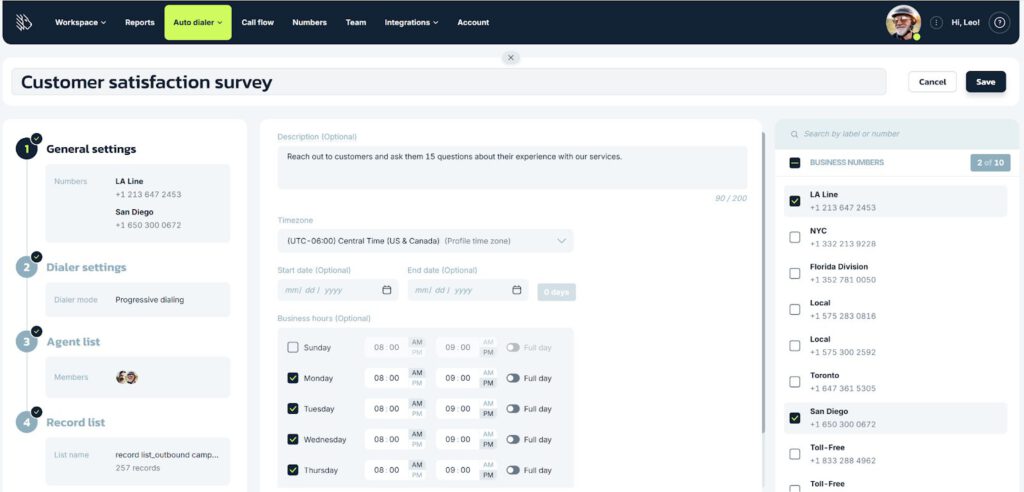
Support agents spend a surprising amount of time just dialing numbers and waiting between calls. Progressive dialers eliminate that wasted time by automating the calling process, and the system dials the next contact as soon as an agent finishes their current call. This automation runs continuously in the background, creating a seamless flow that keeps agents connected to customers without interruption.
When you call for support, an agent picks up immediately because the system has already routed your call to someone available. Nobody’s punching in numbers or searching for the next customer to contact, so the agent is already there and focused on helping rather than managing their call queue. This translates to shorter hold times and more attentive service from the moment you connect, since the technology handles all the busy work that used to create gaps between calls.
2. Remote Troubleshooting

What if your computer could be fixed without leaving your house? Support teams can now access your device directly after you give permission, which lets them see your screen, run diagnostics, and fix problems in real time. The technician sees exactly what you see and addresses it without any confusion about what’s happening or what needs fixing. This eliminates trips to repair shops, cuts out the time spent trying to explain what’s wrong over the phone, and improves customer experiences by turning complex technical descriptions into simple visual demonstrations.
Many problems that used to require an in-person visit now get solved in minutes through a remote session. For people without local repair options, this opens up access to expert help that wasn’t available before, which means geography no longer determines whether you can get quality support.
What used to be a half-day errand involving transportation, waiting rooms, and scheduling headaches becomes a quick screen share from your couch, and the resolution happens just as effectively as if someone were standing next to you.
3. AI-Powered Support

Technical problems don’t wait for business hours to strike. Chatbots and virtual assistants handle common support questions instantly, working around the clock to walk you through basic troubleshooting, answer account questions, and solve routine problems without human intervention. Your internet stops working at 2 AM? The chatbot provides step-by-step instructions based on your specific issue right then, delivering solutions in seconds rather than making you wait until morning. This immediacy matters because waiting can mean lost work or missed deadlines.
When the AI can’t handle something more complex, it passes you to a human agent with context about your issue already documented, so the handoff is seamless and you’re not starting from scratch. The agent already knows what troubleshooting steps you’ve tried and what information you’ve provided, which means they can jump straight to solving the harder problem instead of asking you to repeat everything. This combination of instant AI assistance for simple issues and informed human help for complex ones creates a support system that adapts to what you actually need.
4. Automated Ticket Systems

If your support ticket lands with the wrong department, you’re stuck explaining your problem all over again. Automated ticketing prevents that by routing your problem to the right specialist immediately, reading your issue description, categorizing it, and sending it straight to someone who can actually help.
The first person who picks up your case has the knowledge to solve it, which means you’re not bouncing between departments or repeating yourself to different people. The system does the routing work instantly based on keywords and context, so what used to require multiple transfers now happens in one smooth handoff.
Traditional support meant playing transfer roulette, getting passed from billing to technical to accounts while repeating your story at each stop. Automated systems cut through that by matching you with the right expert from the start, turning what used to be a frustrating maze into a direct path to resolution. The difference becomes obvious when your ticket lands with someone who immediately understands your problem and has the tools to fix it, rather than someone who apologizes and transfers you again.
5. Self-Service Portals

Some people don’t want to talk to support at all. Self-service portals give you direct access to troubleshooting guides, FAQs, and video tutorials that let you solve problems on your own schedule.
Many people prefer this approach, and these portals make it possible by letting you search for your specific issue and find step-by-step solutions immediately. Video tutorials show you exactly what to click or adjust, delivering the information the moment you need it without waiting for callbacks or chat responses. This independence appeals to people who want control over the resolution process and don’t want to work around someone else’s availability.
When the knowledge base is comprehensive and easy to navigate, companies save money on support costs while customers get faster resolutions, creating a system where both sides benefit from putting control directly in the customer’s hands. The portal becomes a first stop for many users, and only when the self-service option doesn’t work do they escalate to human support. That escalation often comes with better context, too, since users arrive having already tried the basic fixes and can explain what didn’t work, which helps support agents solve problems more efficiently.