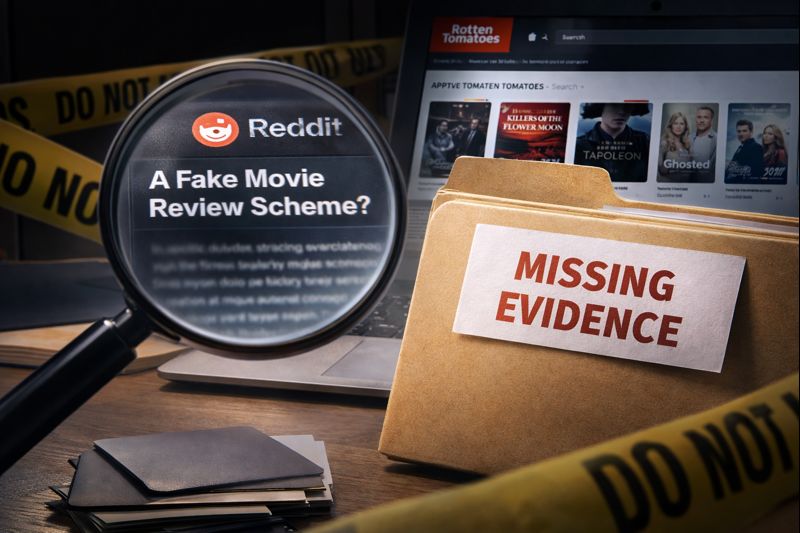
Redditors exposed a $50 movie review gig ad, only to have their viral post deleted by moderators — creating perfect irony about platform censorship of fraud discussions.
The Amateur Hour Scam That Reddit Couldn’t Keep Up
Users mocked a laughably overpriced fake review offer before moderators killed the conversation.
Dead movie marketing budgets apparently lead to desperate measures, but a recent Reddit post exposed just how amateur some review manipulation has become. Users in r/pics shared a screenshot of what appeared to be a recruitment ad offering around $50 to watch a full movie and post a review — no disclosure requirements mentioned.
The post went viral before moderators removed it for violating r/pics rules against promotional screenshots and social media content. The comment section preserved every detail of the scheme though, creating an unintended archive of the fraud attempt.
Professional Fraudsters Would Laugh at These Rates
The $50 offer revealed either complete inexperience or an elaborate honeypot operation.
Reddit users immediately spotted the red flags, noting that established fake review operations charge $1-5 per review through bot farms and gig platforms. Commenters joked that any movie requiring $50 bribes must be “criminal” — highlighting how the inflated rate actually made the scheme more suspicious, not more appealing.
This connects to broader review fraud scandals documented on platforms like Letterboxd and IMDb, where more sophisticated manipulation campaigns have emerged. Your typical streaming decision now requires navigating an entire ecosystem of manufactured opinions.
Your Streaming Decisions Just Got More Complicated
The removal created meta-commentary on platforms silencing discussions about their own manipulation.
Here’s the perfect irony: exposing potential review schemes led to post removal, while actual fraudulent reviews remain live across rating platforms. You rely on audience scores to choose what to binge, yet FTC guidelines requiring disclosure of paid endorsements face enforcement gaps on gig platforms.
The r/pics incident demonstrates how platform moderation can inadvertently protect the very manipulation users are trying to expose (talk about unintended consequences).
When Fighting Fake Reviews Becomes the Problem
Platform rules designed to prevent spam accidentally shielded potential fraud from scrutiny.
The discussion survived through share links and screenshots that migrated to r/technology and Twitter, proving that content moderation often just changes the venue rather than stopping conversations. Your trust in streaming recommendations now requires navigating not just potential paid reviews, but platforms that might suppress discussions about paid reviews.
The amateur $50 scheme becomes a symbol of “post-truth internet” fatigue — where you preemptively debunk before believing, mixing humor with cynicism about online authenticity. Sometimes the cover-up creates more problems than the original scandal.