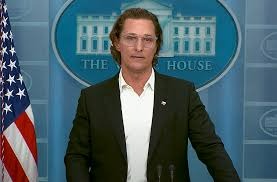
The actor secured eight USPTO trademarks covering his voice and likeness, creating a legal framework to battle unauthorized AI deepfakes through federal court.
A New Kind of Celebrity Protection Racket
McConaughey’s trademark strategy goes beyond traditional publicity rights to target AI-generated content.
Your favorite “Alright, alright, alright” catchphrase just became intellectual property. Matthew McConaughey secured eight trademarks from the US Patent and Trademark Office over recent months, covering everything from seven-second porch clips to his iconic Dazed and Confused line.
This isn’t vanity—it’s warfare against unauthorized recreations of his voice and likeness.
The strategy creates what McConaughey calls “a clear perimeter around ownership” in an AI world where deepfakes proliferate faster than TikTok trends. Unlike state right-of-publicity laws that remain untested against AI-generated content, federal trademarks enable immediate lawsuits against unauthorized uses.
“We have to at least test this,” says his lawyer Kevin Yorn, acknowledging they’re unaware of other actors pursuing such broad self-trademarking.
The Hollywood-AI Paradox
McConaughey simultaneously fights unauthorized AI while investing in the technology he’s trying to control.
Here’s where it gets interesting: McConaughey isn’t anti-AI. He invests in and partners with ElevenLabs, the voice-cloning company that creates Spanish versions of his “Lyrics of Livin’” newsletter. Michael Caine joins him in this authorized AI venture, proving the issue isn’t technology itself—it’s consent and control.
This tension reflects broader Hollywood anxiety that peaked during the 2023 SAG-AFTRA strike, where AI likeness issues dominated negotiations. Actors feared cheap digital replacements; McConaughey found a middle path between embracing innovation and protecting his brand.
What This Means for Your AI Experience
Celebrity trademark battles will reshape how consumer AI tools handle voice cloning and deepfake generation.
McConaughey’s legal experiment could trigger industry-wide changes. If courts uphold celebrity self-trademarking, expect other A-listers to follow suit. That pressure will push AI companies toward stronger consent mechanisms and celebrity partnership models rather than scraping unauthorized content.
You’ll likely see more “official” celebrity AI voices on platforms while unauthorized recreations face federal legal challenges. The days of generating convincing McConaughey impressions without permission may be numbered—assuming his unprecedented legal strategy holds up in court.