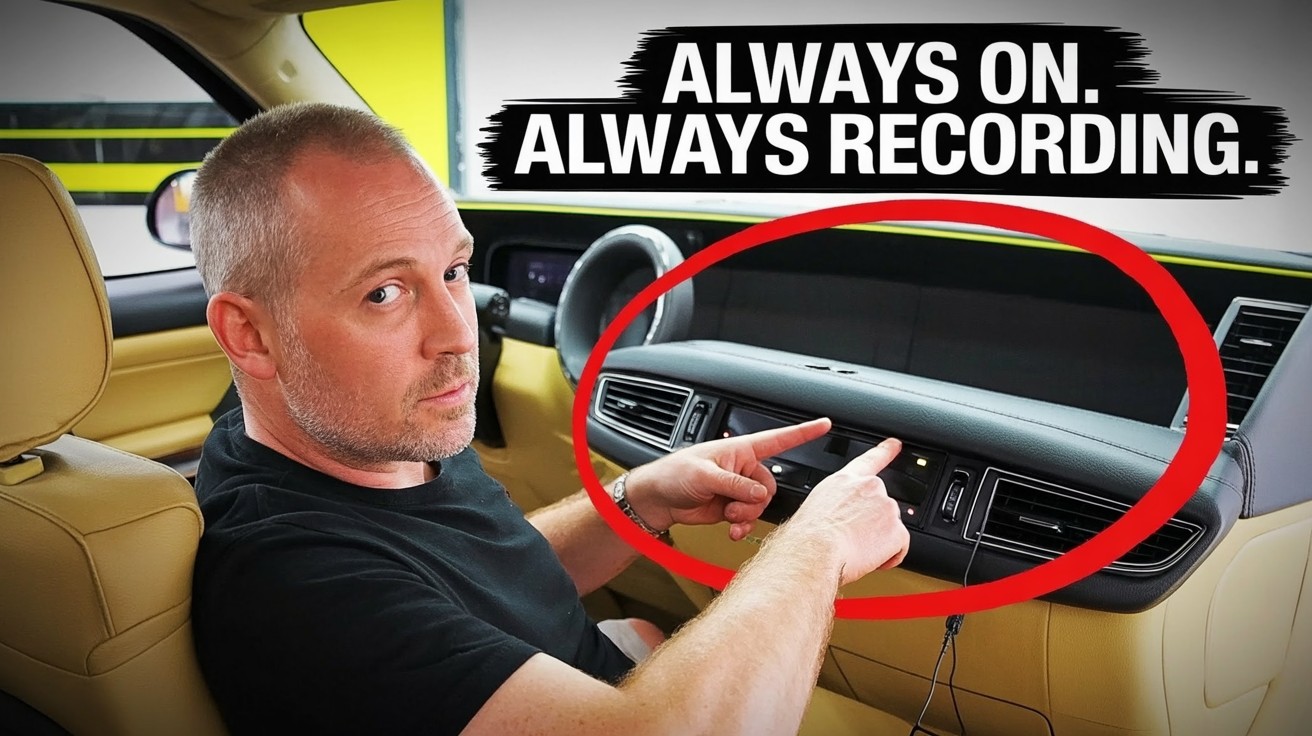
That hands-free call feature in your Honda feels like a convenience, but your car’s microphone never truly stops working—even when you think it’s off. Modern vehicles engage in low-level, passive listening beyond explicit activation, capturing audio snippets amid road noise through advanced filtering. While you’re singing along to Taylor Swift or discussing weekend plans, your car’s collecting data that goes far beyond emergency assistance.
The Always-On Reality Behind Your Dashboard
Voice recordings get stored onboard and uploaded to cloud servers whenever your car connects to Wi-Fi or cellular networks.
Your vehicle’s microphones don’t just wait for “Hey Siri” commands. They analyze audio for what automakers call “driver analytics”—inferring your emotions, stress levels, and even biometrics like fatigue or heart rate from conversation tone. This data gets tagged with your vehicle ID and stored indefinitely, often anonymized but still traceable.
According to Mozilla Foundation privacy researchers, cars have become rolling surveillance hubs that make Amazon Echo devices look privacy-friendly by comparison. At least you chose to install Alexa in your living room—your car came pre-loaded with surveillance capabilities you never explicitly agreed to activate.
Your Conversations Are Worth Money
Data brokers and automakers monetize your private conversations through insurance partnerships and targeted advertising networks.
This isn’t passive data collection—it’s active monetization of your private moments. Ford has literally patented cabin conversation recording for targeted advertising purposes. Your audio gets shared with insurers who might adjust rates based on detected stress, marketers crafting personalized ads, and sometimes law enforcement through emergency microphone access.
One forensics investigation of a rental car yielded data from 70 previous drivers, including calls, texts, and social media history from connected phones. Security vulnerabilities in Skoda and Volkswagen systems allow hackers remote access to microphones, turning your daily commute into an unwitting broadcast. As one tech privacy analyst documented, “Your data is like a hundred percent being like, collected, monitored.”
Spotting the Signs
Call static, unexpected battery drain, and radio interference might indicate your car’s microphone activity exceeds normal operation.
Detection isn’t straightforward since these systems integrate deeply into vehicle electronics. Unfortunately, no universal fuse disables telematics without voiding warranties or disabling critical safety features. Physical inspection around data ports, fuse boxes, and metal surfaces can reveal additional surveillance devices, but built-in systems operate beyond easy detection.
Your best defense remains awareness—understanding that your car’s privacy promises often conflict with its data collection reality. That morning commute just became a data harvesting session, whether you consented or not.