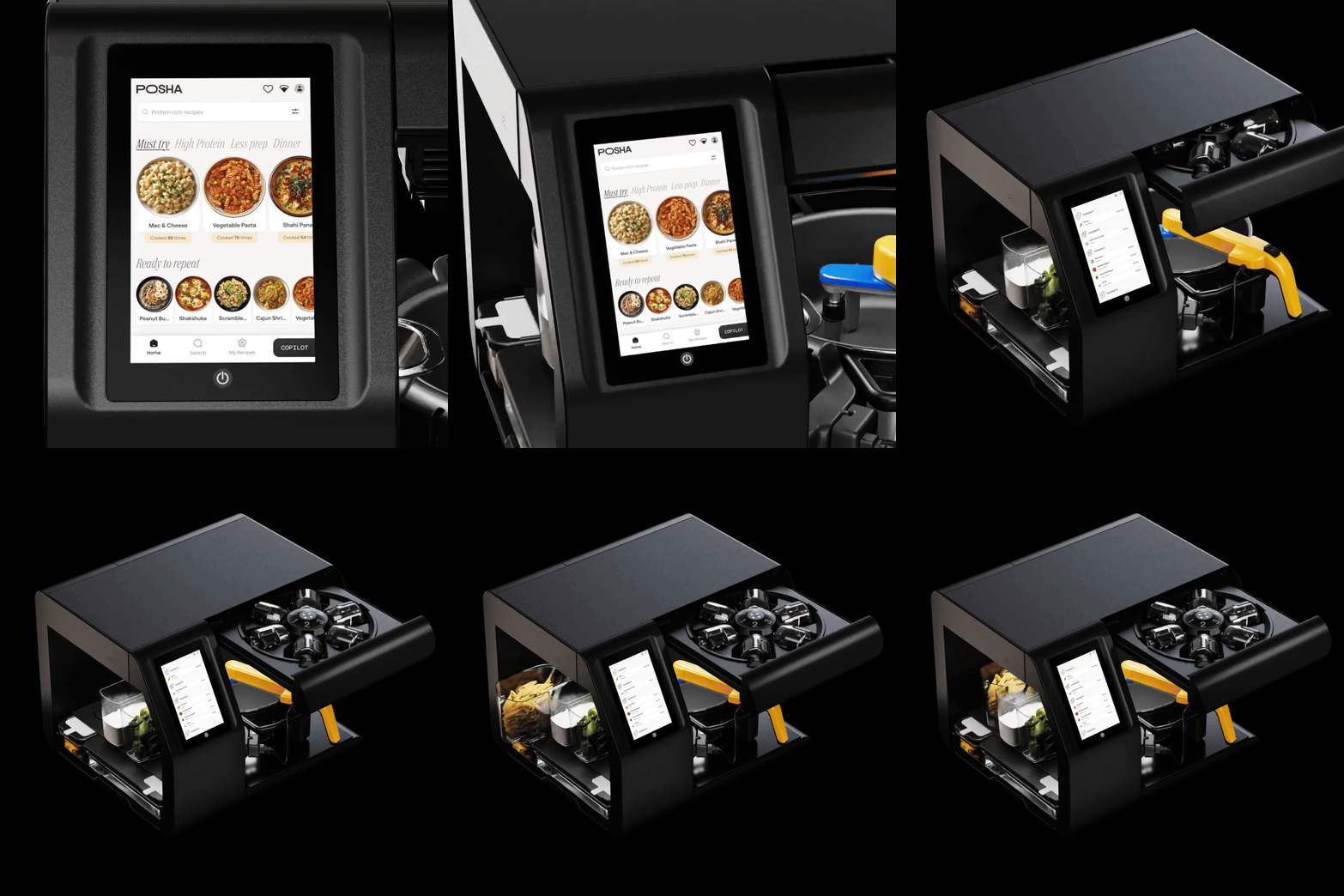
Standing over a hot stove stirring curry for 45 minutes shouldn’t be your evening routine, but Posha’s computer vision turns that chore into downtime. This $1,500 countertop robot doesn’t just follow timers like your multicooker—it literally watches your food with a built-in camera, tracking color changes, texture development, and bubble patterns to make cooking decisions in real time.
Computer Vision Meets Culinary Instincts
Posha’s camera system detects cooking stages that usually require human judgment calls.
Think of it as hiring a sous chef who never gets distracted by their phone. Posha monitors your pan continuously, recognizing when onions turn golden, sauce reaches the right consistency, or rice needs to shift from boiling to simmering. The robot automatically dispenses spices, oils, and water from refillable containers while controlling heat and stirring speed.
It’s like having someone stand at your stove—except they never taste-test your food or leave to check Instagram.
The Coffee Machine Comparison Actually Works
You handle the prep work, Posha manages the active cooking process.
Founder Raghav Gupta compares Posha to a coffee machine for food, and the analogy holds. You still shop, wash, peel, and chop ingredients before loading them into designated containers. Once you hit start, though, Posha takes over the tedious stuff—stirring, seasoning, adjusting heat—while you handle other tasks.
The company claims this cuts active cooking time by 70%, dropping daily kitchen work to roughly 10-20 minutes for deciding meals, light prep, and cleanup.
Global Recipes Meet Generative AI
Current recipe library spans cuisines, with AI-generated dishes coming soon.
Posha’s touchscreen and companion app offer recipes from Indian curries to French ratatouille, Italian pasta, and Pad Thai. More intriguingly, the team plans to use generative AI for creating custom recipes based on your constraints—dietary restrictions, available ingredients, desired macros—then automatically converting those ideas into machine-executable instructions.
It’s the kind of feature that sounds like marketing fluff until you realize the computer vision system could theoretically handle recipe variations that traditional programmable devices can’t.
Premium Price for Early Adopters
First batch sold out quickly, but the investment requires serious cooking commitment.
Posha launched in January 2025 and immediately sold out its initial production run, with preorders open for the next batch. At $1,750 plus an optional $15 monthly membership, this targets households already cooking several times weekly—not people hoping to start.
The San Francisco-based company, backed by $8 million from Accel, is betting that computer vision represents the next evolution beyond basic smart appliances. Whether that vision pays off depends on how often you actually want to eat home-cooked meals without standing over a stove.