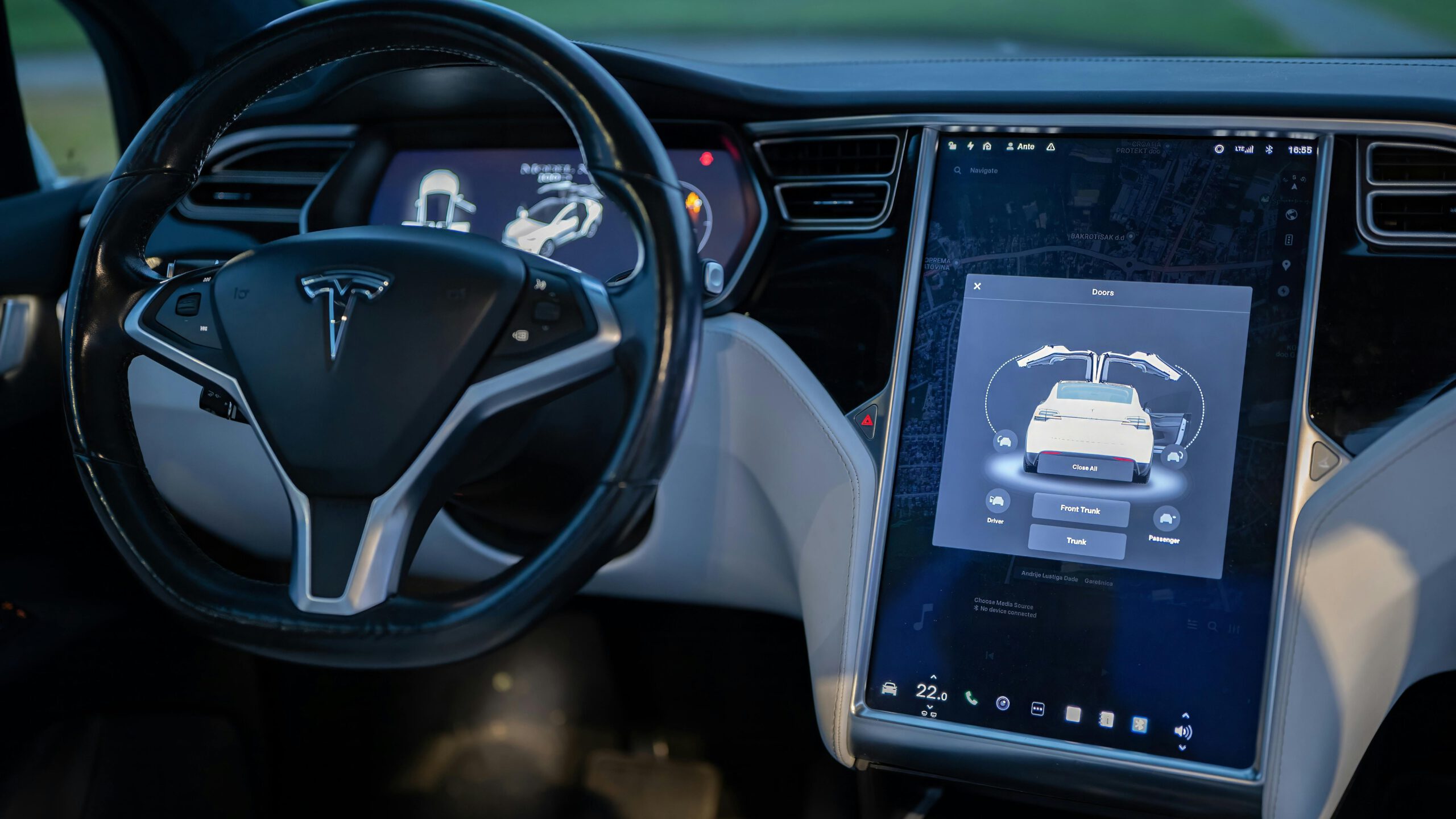
That gleaming 15-inch touchscreen controlling everything in your luxury EV? It’s essentially a $8,000 ticking time bomb, and the automotive industry knows it. Welcome to what engineers quietly call “Silicon Sepsis” — the systematic failure of car dashboards that weren’t built for the punishment of daily driving.
The Non-Automotive Truth
Your luxury car’s brain uses tablet-grade components in an automotive hellscape.
Your Tesla’s screen uses the same Innolux panels found in tablets, rated for coffee shop use, not the thermal hell of a car dashboard. These Grade 4 components fail automotive Grade 2 standards for heat resistance, leading to the signature “yellow banding” that makes your display look like a burnt iPhone.
When summer hits, and your dash reaches 180°F, those non-automotive-grade components start their slow suicide. The adhesive bubbles, the capacitive layers drift, and your $60,000 investment begins its transformation into an expensive paperweight.
When Screens Die, Safety Dies
Complete dashboard blackouts while driving are becoming the new normal.
Tesla Model S and X owners from 2012-2018 know this pain intimately — failure rates exceeded 30% in certain build months, generating over 10,000 warranty claims. The J.D. Power 2025 study confirms infotainment systems remain the most problematic feature across all brands, causing 42.6 issues per 100 vehicles.
Meanwhile, 2024 Chevy Silverado owners report complete dashboard blackouts while driving, losing the speedometer and navigation simultaneously. Those blackouts aren’t just inconvenient — they’re dangerous. According to Michael Brooks from the Center for Auto Safety, “It’s so dangerous that it’s automatically a violation of federal motor vehicle safety standards.”
Yet 97% of post-2023 vehicles now route critical functions through these failing screens, creating what amounts to built-in obsolescence for your most expensive purchase.
The Repair Racket Reality
Your car’s most sophisticated feature can’t handle a Clorox wipe.
Here’s the kicker: replacement screens cost $3,000 to $8,000 and are VIN-locked to your specific vehicle. That’s assuming you can get parts at all. The automotive industry’s 400% profit margins on these components suddenly make sense when you realize they’re designed to fail just outside warranty periods.
Even cleaning protocols reveal the fragility. Fleet operators saw 94% of touchscreen failures disappear simply by switching from liquid disinfectants to UV-C sanitization. Your car’s most sophisticated feature can’t handle a Clorox wipe.
The NHTSA continues investigating these failures while manufacturers issue quiet service bulletins and extended warranties. But the fundamental problem remains: automotive infotainment systems are computer problems masquerading as automotive-grade equipment. Your luxury car’s brain is having an identity crisis, and your wallet pays the price.