Charcoal grilling has a loyalty problem. People who love it swear by the flavor. People who don’t love it all say the same thing. It’s too hard to control the temperature. Getting a fire to hold at 250°F for a brisket or recovering heat after you open the lid to flip a steak? That’s where most people give up and go back to gas.
Weber knows this. When the company surveyed its customers, flavor ranked as the number one reason people choose charcoal. Temperature control ranked as the number one reason people avoid it. Lighting a fire, getting it to temp, and holding it there for hours. Those are the friction points that keep a lot of would-be charcoal cooks on the sidelines.
“Lighting a fire, getting a fire up to temperature, and holding a temperature are like the biggest pain points we wanted to overcome when it came to introducing smart technology into charcoal,” said Tom Fuller, Weber’s Director of Product Development.
Weber’s 2026 answer is two products: the Performer Premium Smart grill and the Kettle Smart Ring. Both use fan-controlled airflow and Wi-Fi connectivity to take the guesswork out of charcoal cooking.
I sat down (virtually, from a very cold Maine) with Weber’s Director of Product Development Tom Fuller and Head Grill Master Dustin Green for a hands-on walkthrough. Here’s what stood out.
The Performer Premium Smart: A Full Redesign
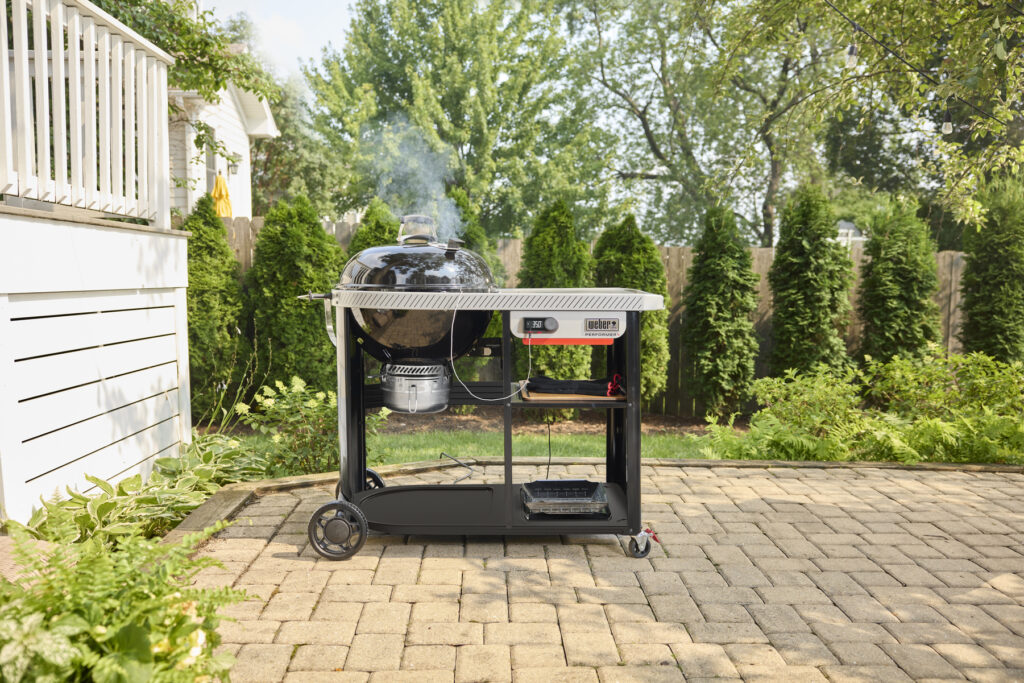
The Performer has been in Weber’s lineup since the 1990s. It hasn’t changed much in that time. The 2026 version is a ground-up refresh. New aesthetics, new tech, new functionality.
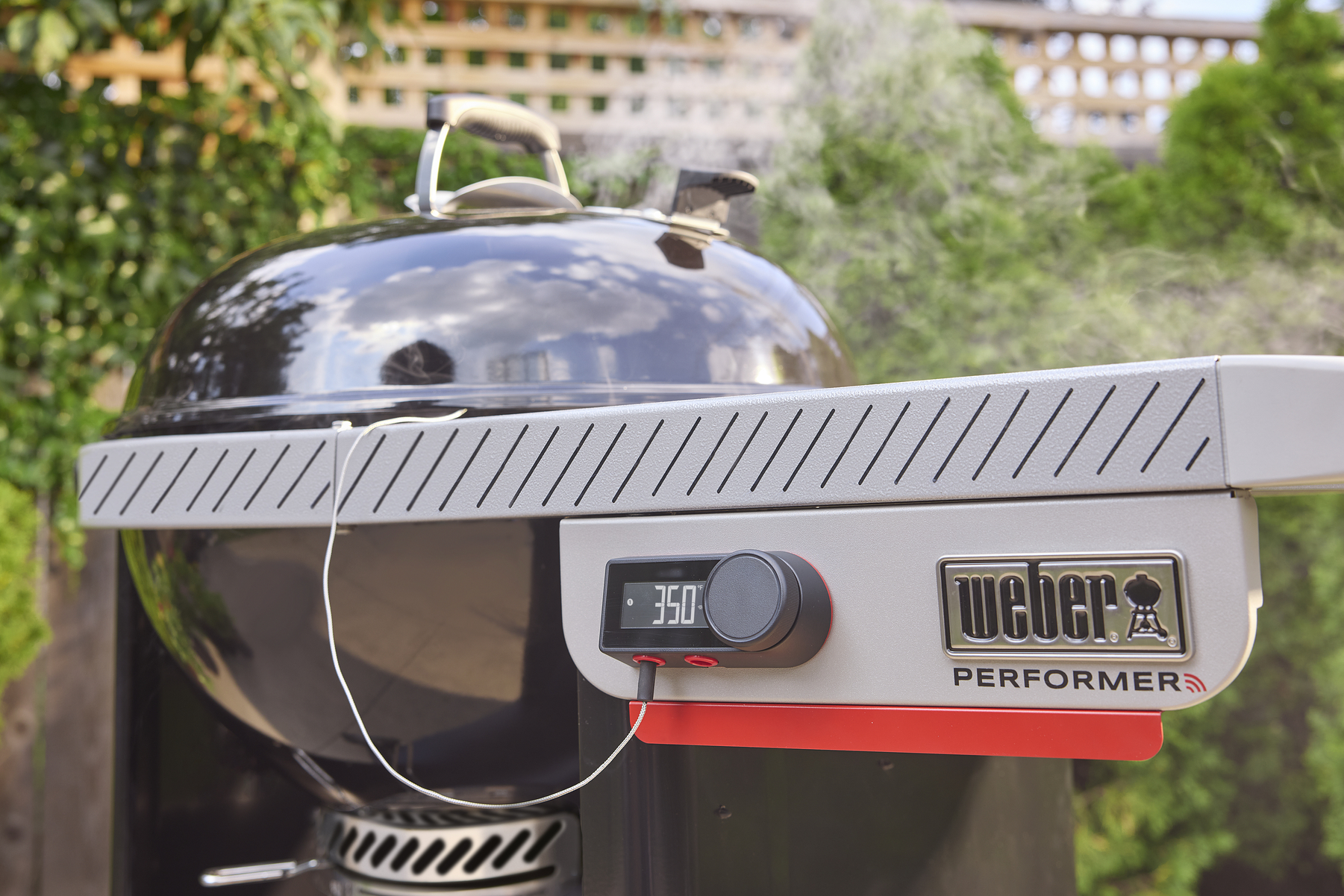
The centerpiece is a Wi-Fi LCD controller mounted on the control panel. Set your target temperature anywhere from 180°F to 600°F in five-degree increments, and the grill’s integrated fan handles the rest. The fan sits below the charcoal grate and regulates airflow based on a built-in thermocouple that reads the cavity temperature. Weber calibrated the firmware against nine sensor points during development, so that single thermocouple is pulling from an averaged algorithm, not just reading one hot spot.
A Rapidfire Control Mode gets the grill to your set temperature as fast as possible. Once you’re cooking, the system monitors and adjusts automatically. Open the lid to flip steaks? The fan kicks in to recover temp. Doing a low-and-slow brisket at 250°F? It throttles back and just keeps the fire breathing.
The whole thing runs off USB-C power. You can plug into an outlet or run it from a portable power bank. The kind you’d use to charge your phone. Weber says at lower smoking temps, a fully charged bank can run the fan for five to six hours. The controller itself draws around 2,400 milliamp-hours, and the fan pulls roughly 100 milliamps during operation. That’s sipping power, not chugging it.
Weber is introducing four Performer models in 2026. The Premium Smart sits at the top. Pricing starts at $599 and up, with availability expected summer 2026.
Setup Is Different Than Traditional Charcoal
There’s no chimney starter involved. Weber prescribes specific charcoal arrangements depending on what you’re cooking. For low-and-slow, you build a loose snake pile to one side with lighter cubes buried in the coals. For high heat, it’s a center pile. Light the cubes, wait two to three minutes for ignition, close the lid, set your temp, and let the fan take over.
The grill also integrates Weber’s Weber Works accessory system. That includes snap-on caddies, paper towel holders, condiment trays, a grill light, and drawer storage that fits Weber’s largest outdoor bin. The whole thing is designed to function as an outdoor kitchen station.
No Electric Ignition. And That Was Deliberate
One thing Weber did not include: an electric heating coil to light the charcoal. They looked at it during development and decided it didn’t fit the product scope at this price point. You’re still manually lighting fire cubes.
That said, the manual process here is simpler than the traditional chimney-dump-spread routine. Weber estimates you save 10 to 15 minutes on startup compared to the chimney method.
The Kettle Smart Ring: Smart Tech for the Grill You Already Own
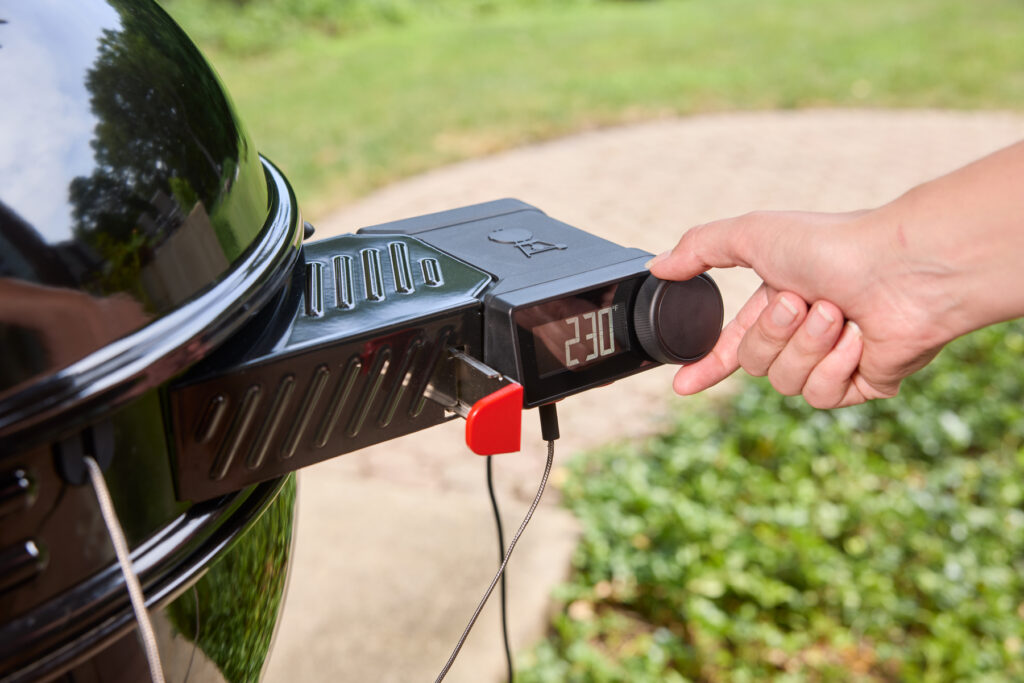
Weber says it has sold approximately one million 22-inch charcoal kettles in the last five to seven years. The Smart Ring is aimed squarely at those existing owners.
It’s a three-piece porcelain-enameled ring that sits between the bowl and lid of any standard 22-inch Weber kettle. No drilling. No modifications. The fan and LCD controller mount directly to the ring, and the whole system connects to the Weber Connect app over Wi-Fi for remote monitoring, temperature alerts, and guided cooking.
I covered the Smart Ring in detail here.
The key difference from the Performer: the Smart Ring’s temperature range tops out at 425°F in PID mode (the automated setting). Because the ring is a three-piece design with inherent gaps, and the cooking grate sits higher off the coals, it’s optimized for low-and-slow smoking and roasting rather than high-heat searing. There is a manual fan mode (settings 1 through 10) that lets you push temps higher if you want to experiment.
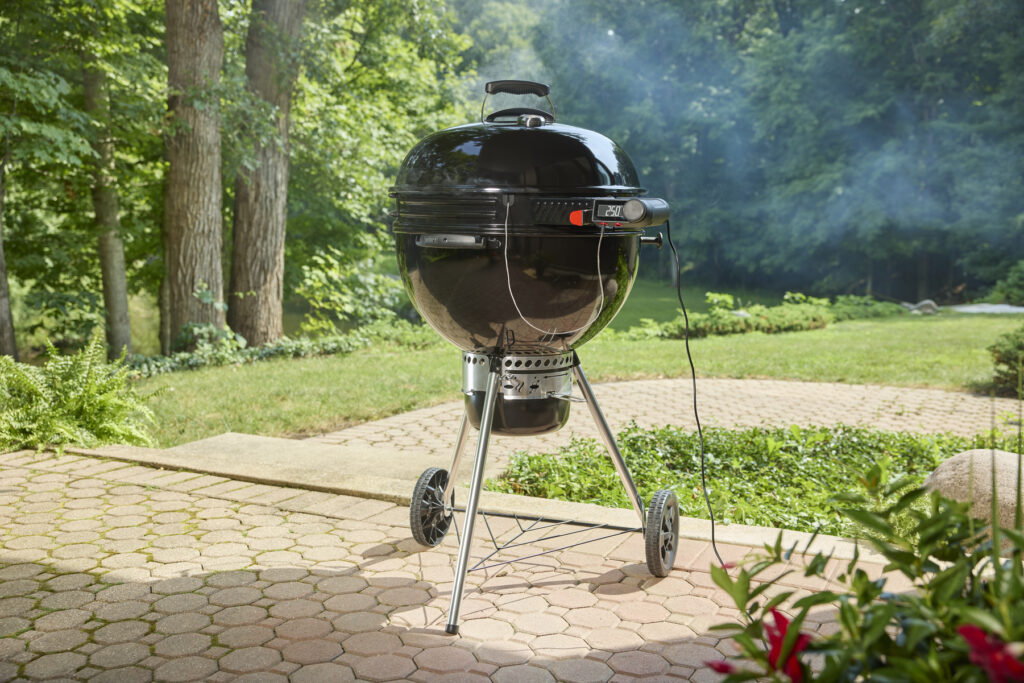
The ring also fits older Performer models, so if you’ve got a pre-2026 Performer sitting in the backyard, this works too.
Price: $279.99. Exclusive to weber.com. Expected spring 2026.
IPX4 Weather Rating
Both the Performer Smart and the Smart Ring carry an IPX4 rating on the electronics, meaning they’re protected against splashing water from any direction. The Smart Ring’s controller tucks underneath the ring for added physical protection. Weber also includes a closable damper door on the fan tunnel. They recommend shutting it after each cook to keep residual heat away from the electronics.
The controller carries a three-year electronic warranty.
What This Means for the Charcoal-Curious
Weber’s pitch is straightforward. The number one reason people choose charcoal is flavor. The number one reason people avoid it is temperature control. These products are designed to close that gap.
During my briefing, Green ran a whole chicken at 375°F on the Performer Smart. The fan held temp steady, and when he opened the lid to check, recovery was fast. The Weber Connect app pinged his phone when the chicken hit 170°F internal.
Fuller cooked ribs in sub-zero Chicago weather the week prior. He set the grill at 250°F and ran it for five hours. He didn’t add charcoal once.
“I went out there, I set it up… you close that thing and you run back in the house,” Fuller said. “And now you’re sitting on your couch and you’re just watching this thing go up.”
That’s the kind of detail that matters when you’re deciding whether smart charcoal is worth the investment. The system managed the burn rate well enough to stretch a single load of fuel across a full cook in brutal conditions.
My Early Impressions
I haven’t gotten hands-on time with these yet. What I can say from the briefing is that Weber appears to be solving the right problems.
“We’re trying to make it easier for people to not have to worry about the grill itself,” said Dustin Green, Weber’s Head Grill Master. “We’re trying to take that element out so it allows them to focus on other things they’re doing.”
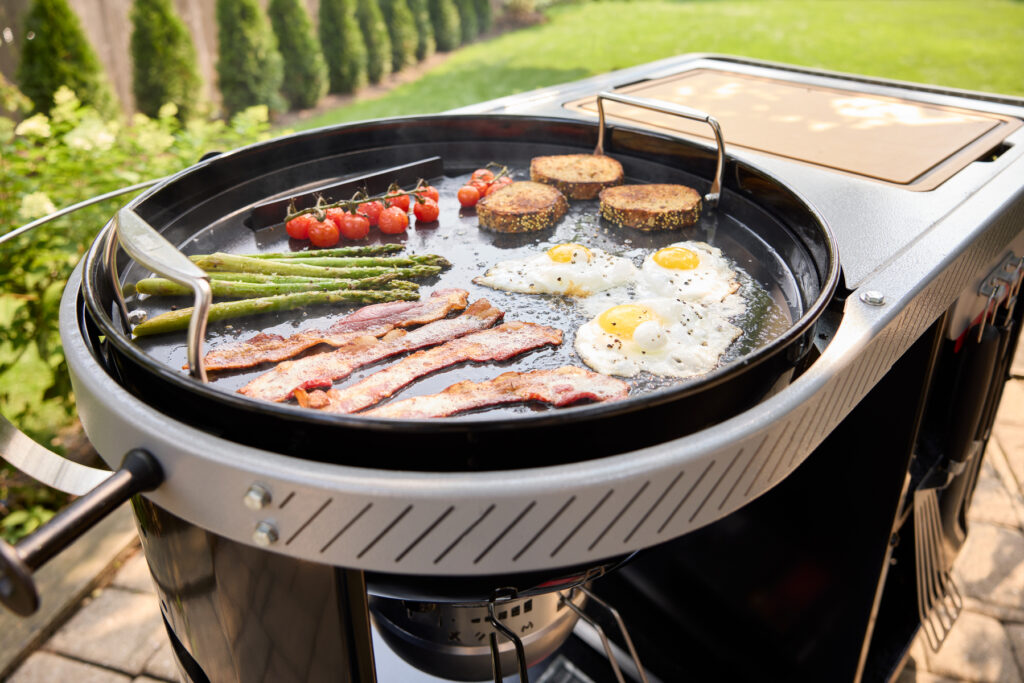
Cold weather cooking looks genuinely viable. Fuller grilled ribs in single-digit temps outside Chicago. Green did a whole chicken in similar conditions. Both times the fan kept things locked in. If you live somewhere that gets real winters, this could extend your grilling season by months.
Temperature management could save you charcoal. This stood out to me. The fan regulates airflow so precisely that you’re not burning through fuel faster than you need to. Fuller’s five-hour rib cook on a single charcoal load is a good proof point. The system finds the sweet spot and holds it there.
Setup is simpler, even if it’s not fully automatic. There’s no electric ignition, which is a slight disappointment. You’re still lighting fire cubes manually. That said, Weber has stripped out the chimney starter step entirely and prescribes exactly how to arrange and light your charcoal for each type of cook. It’s fewer steps and less guesswork than the traditional method.
The app does the planning for you. Weber Connect doesn’t just monitor temperature. It walks you through setup with guided recipes that tell you how much charcoal to use based on what you’re cooking and what temperature you need. They’re prescribing fuel amounts by weight (four pounds for low-and-slow, six pounds for high heat) so you’re not eyeballing it. That takes a real variable out of the equation for beginners.
Weber’s main competition in this space is Masterbuilt’s gravity-feed series, which uses a side hopper and convection fans to move hot air into the cook box. Weber’s approach keeps the charcoal directly under the food inside the kettle. Same cooking method that’s worked for 75 years, now with a fan doing the vent work for you.
Both products also include a manual mode that bypasses the PID algorithm entirely. You can turn off the smart features and grill the old-fashioned way whenever you want. Think of it like cruise control. Nice to have on the highway, but you can always just drive.
Quick Specs
Performer Premium Smart
- Temperature range: 180°F – 600°F
- Control: Wi-Fi LCD controller with PID and manual modes
- Power: USB-C (wall outlet or portable power bank)
- Fan draw: ~100 mA
- Accessory system: Weber Works compatible
- Weather rating: IPX4
- Price: Starting at $599
- Availability: Summer 2026
- Where to buy: Wider retail availability
Kettle Smart Ring
- Where to buy: Exclusive to weber.com
- Temperature range: 180°F – 425°F (PID mode)
- Control: Wi-Fi LCD controller with PID and manual modes
- Power: USB-C (wall outlet or portable power bank)
- Compatibility: 22-inch Weber kettles and older Performer models
- Construction: Three-piece porcelain-enameled ring
- Weather rating: IPX4
- Warranty: Three-year electronic warranty
- Price: $279.99
- Availability: Spring 2026