Manufacturing vehicles without human controls while your autonomous software remains unproven? That’s peak Tesla right there.
Hardware Before Software Strategy
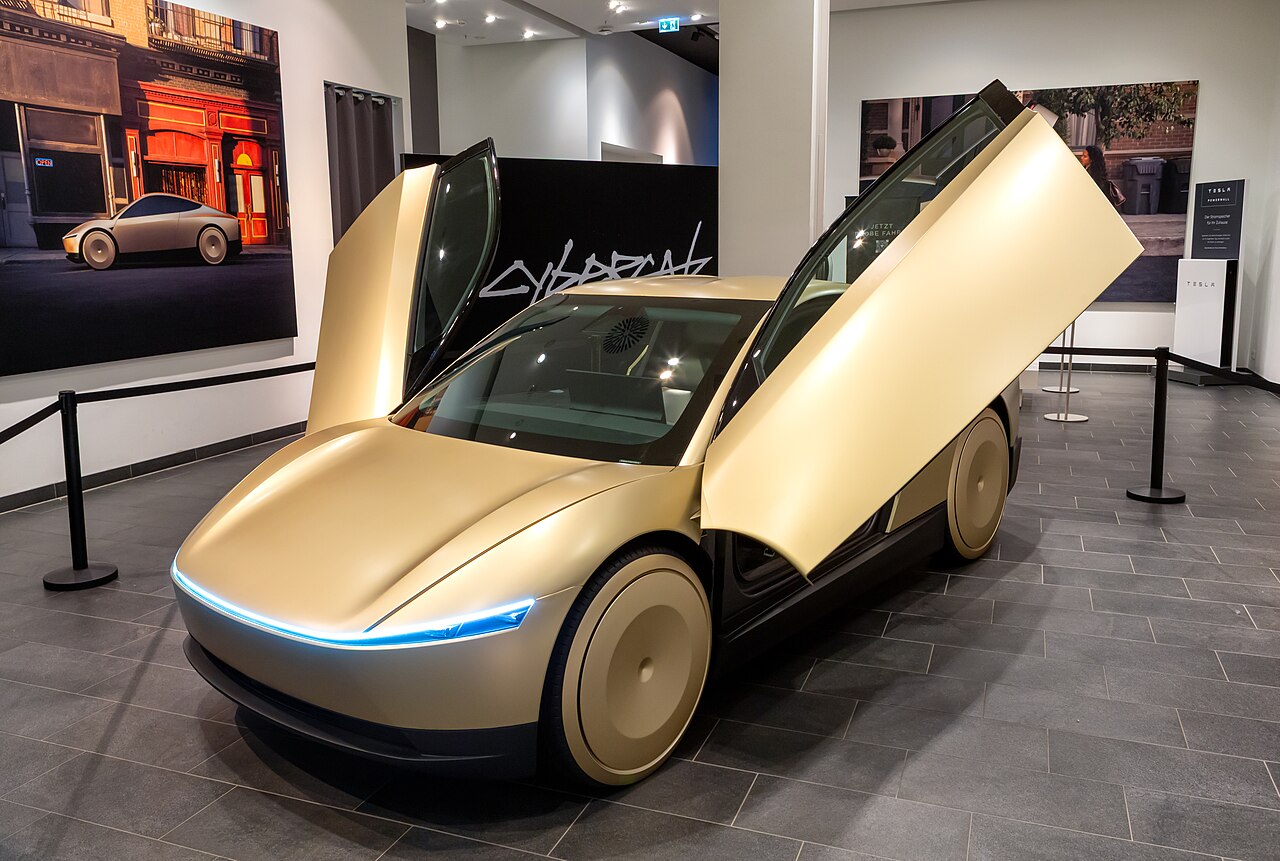
Tesla announced on X that the first production Cybercab rolled off the assembly line at Gigafactory Texas on February 17, 2026. The vehicle features butterfly doors, no steering wheel, no pedals, and complete dependence on Full Self-Driving software that isn’t ready for unsupervised operation.
Volume production is slated to begin in April 2026 using Tesla’s “unboxed” manufacturing approach. The company targets one unit every ten seconds with roughly half the parts of a Model 3. You’re witnessing Tesla’s familiar playbook: build the hardware, figure out the software later.
The Cybercab includes:
- 35 kWh battery providing approximately 200 miles of range
- Inductive charging capabilities
- Vision-based FSD with camera washers
Prototypes have undergone testing across Texas, California, New York, Buffalo, and Alaska.
The Autonomous Reality Check
Tesla’s existing robotaxi pilot using Model Ys in Austin and San Francisco reveals the challenge ahead. The service currently operates with safety monitors, managing limited availability with approximately 200 vehicles total in the fleet.
Elon Musk stated in January 2026 that Tesla needs 10 billion miles of driving data for safe unsupervised operation, with that milestone projected for July 2026 at current data collection rates. The Cybercab relies entirely on AI4 hardware, since the more advanced AI5 chip faces delays until mid-2027.
These production Cybercabs depend completely on vision-based AI with no backup human controls—a significant departure from current pilot operations that maintain safety drivers.
Tesla’s Reversal Track Record
Tesla has reversed several autonomy-focused hardware decisions in recent years:
- 2021: Removed radar sensors, which led to performance issues
- 2022: Eliminated ultrasonic sensors, disabling certain parking features
- 2023: Introduced controversial yoke-only steering wheel, later supplemented with traditional wheel options and retrofit programs
- 2023: Removed turn signal stalks in Model 3 Highland refresh, only to return in 2025 with retrofit programs available
Tesla chair Robyn Denholm reportedly suggested including a steering wheel in the Cybercab design, but Elon Musk overruled the recommendation.
Regulatory Roulette
The Cybercab faces substantial regulatory hurdles that could impact deployment. Federal exemptions for vehicles without steering wheels and pedals remain unclear, similar to those needed by competitors like Zoox. State-level requirements for registration and insurance also need resolution.
Tesla has indicated willingness to add traditional controls if regulators require them, though this would fundamentally alter the vehicle’s design philosophy. The company’s “Cybercab” trademark has been extended to March 14, 2026.
With a target price under $30,000, the Cybercab represents Tesla’s boldest bet yet on solving autonomy through production pressure. Given their track record of hardware reversals, the timeline for actual unsupervised operation remains highly uncertain.