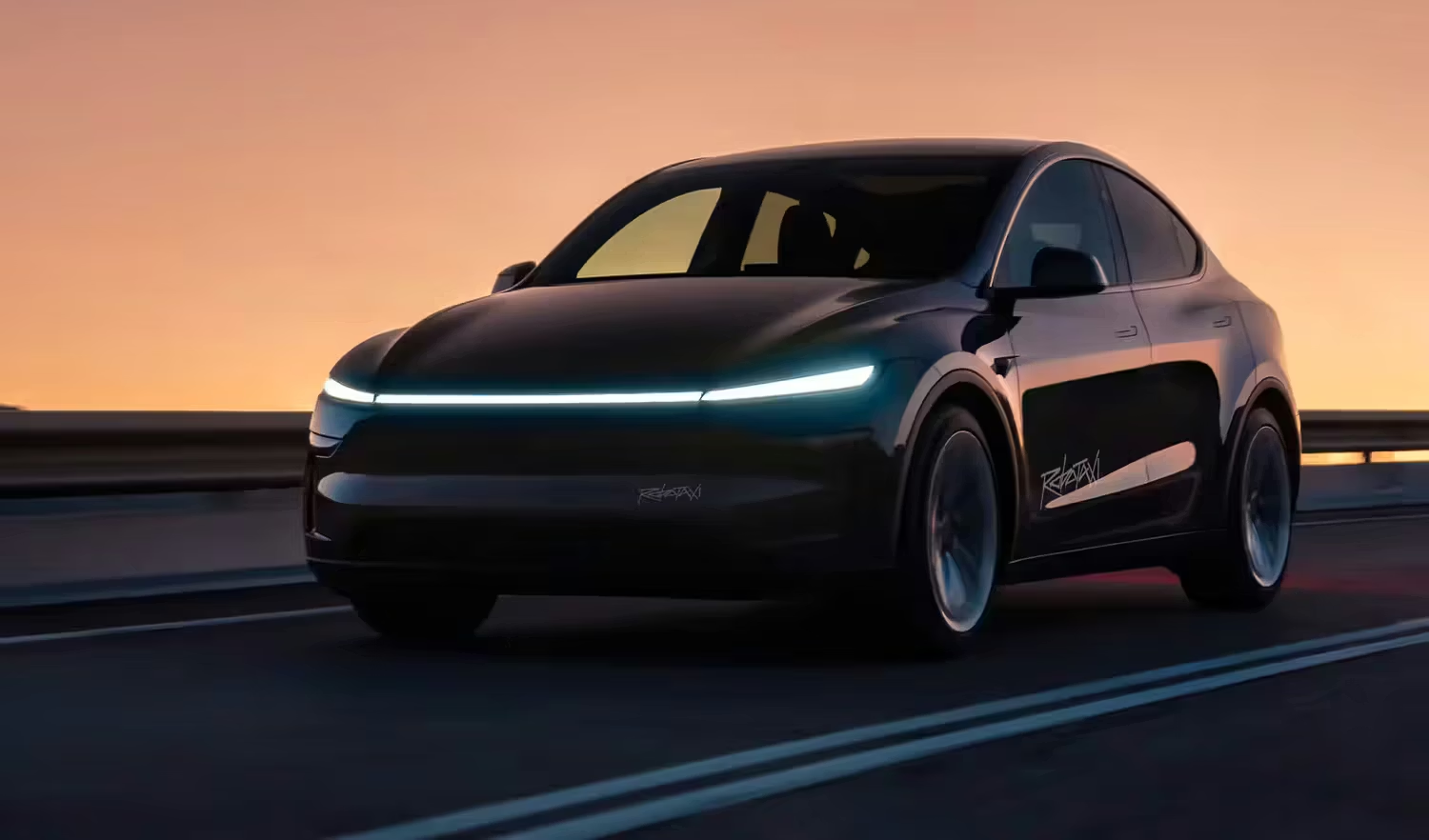
Tesla’s robotaxi service has a problem that Silicon Valley optimism can’t solve: physics. NHTSA filings reveal the Austin fleet has crashed 14 times across roughly 800,000 miles of operation—a rate of one incident every 57,000 miles. Compare that to Tesla’s own data showing human drivers average one minor collision every 229,000 miles, and you’re looking at autonomous systems performing four times worse than the humans they’re supposed to replace.
The kicker? Every single crash happened while a trained safety monitor sat in the passenger seat, ready to take control. If your autonomous system can’t prevent a 17-mph collision with a fixed object or avoid backing into a pole at 1 mph—both actual incidents from January—what exactly is it autonomously doing?
Tesla’s Transparency Problem
Unlike competitors, Tesla redacts all crash details as “confidential business information.”
Five crashes hit Tesla’s Austin robotaxis between December and January, ranging from bus collisions to backing mishaps. Tesla dutifully reported each incident to NHTSA but redacted every narrative detail, citing business confidentiality. Meanwhile, Waymo—operating over 127 million fully driverless miles without safety monitors—provides complete incident descriptions and has reduced injury-causing crashes by 80% compared to human drivers.
This opacity isn’t just corporate paranoia; it prevents independent safety assessment. When Tesla belatedly upgraded a July crash from “property damage only” to “minor with hospitalization” five months later, the credibility gap widened further.
Expansion Plans Ignore the Data
Tesla targets seven new cities despite crash rates that would ground human drivers’ licenses.
Rather than addressing the safety performance gap, Tesla doubled down on expansion. CEO Elon Musk announced plans for robotaxi launches in seven cities during the first half of 2026, with coverage across half of U.S. states by year-end. The timing feels particularly bold given that NHTSA opened an investigation into the Austin fleet after videos emerged showing robotaxis driving on the wrong side of roads.
You’d think crash data showing 4x worse performance than humans might prompt some operational refinement first. Instead, Tesla began offering rides without safety monitors in Austin immediately after experiencing four crashes in January’s first half.
The regulatory reckoning seems inevitable. NHTSA has authority to remove vehicles from roads if safety defects emerge, and the crash rate data provides compelling evidence that Tesla’s autonomous systems aren’t ready for the scale they’re pursuing. Your safety—and public trust in autonomous vehicles broadly—hangs in the balance of how quickly regulators respond to performance gaps this stark.