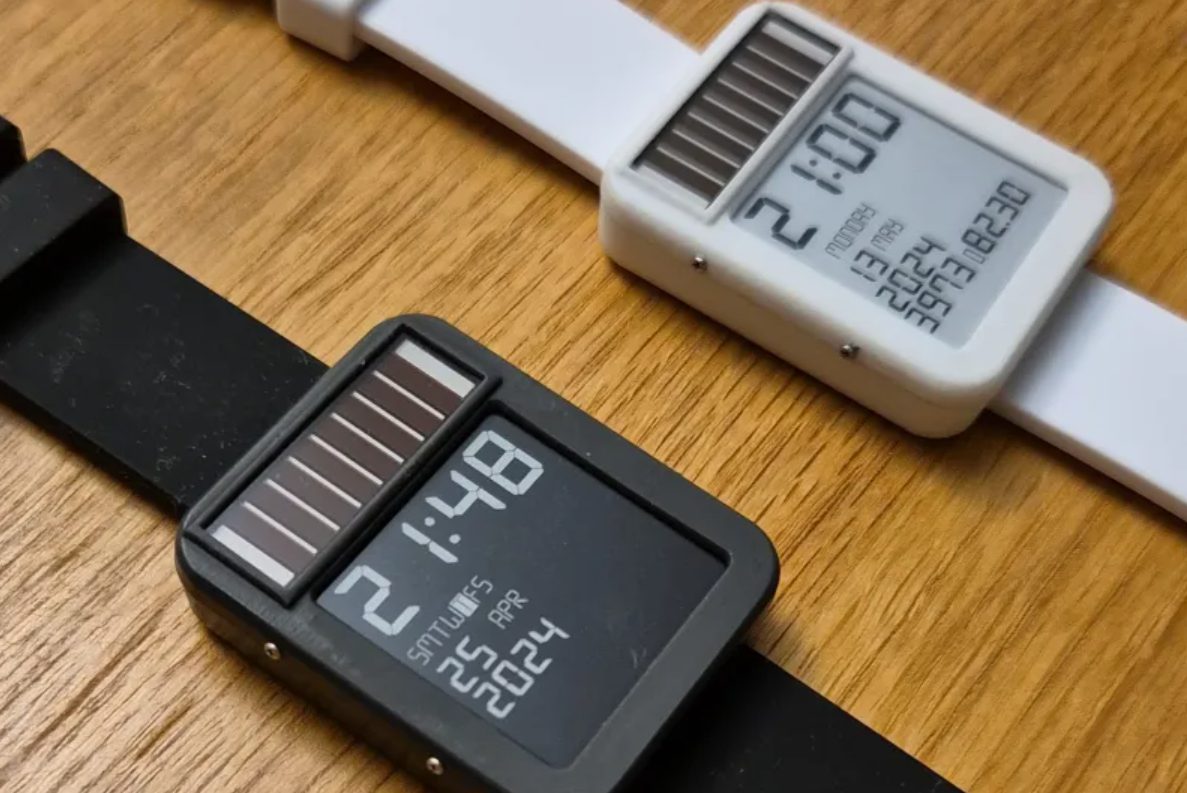
Most smartwatches die after a day; LightInk runs for 10 months—if you’re willing to solder it yourself. This isn’t another Apple Watch competitor hitting store shelves. It’s an open-source experiment by telecom engineer Daniel Ansorregui that trades every convenience for one obsessive goal: extreme battery life. You can’t buy LightInk anywhere. You build it from scratch, ordering PCBs, sourcing components, and wielding a soldering iron like you’re assembling a vintage calculator.
The Engineering Behind Near-Infinite Runtime
Aggressive power optimization delivers shocking longevity through hardware and software tricks.
The magic happens through ruthless power management. Ansorregui discovered that two-thirds of the watch’s energy went to simply booting the ESP32 chip. By slashing boot times and keeping the processor in deep sleep between tasks, he cut consumption to roughly 0.5 mAh per day. The e-ink display updates in under 1 millisecond, while a TPS63900 buck-boost converter operates at 2.7V—slightly below spec but functional enough to squeeze every electron from the 100 mAh battery.
What You Get (and Deliberately Don’t)
LightInk includes LoRa radio and GPS but skips fitness tracking entirely.
This watch tells time, shows moon phases, and sets alarms—plus some genuinely unique features. The LoRa radio enables long-range communication experiments, while GPS provides location data (though Ansorregui admits GPS is “a bad idea” for power budgets). What’s missing is intentional:
- No accelerometer
- No heart-rate sensor
- No fitness tracking
These power-hungry components would kill the months-long runtime that makes LightInk special.
Calculator Aesthetics, Maker Requirements
The visible solar panel and DIY complexity limit this to serious experimenters.
LightInk looks exactly like what it is: a calculator-solar-panel grafted onto a chunky e-ink watch. Unlike Garmin’s hidden solar layers, this panel sits proudly on the surface, channeling serious 1990s energy. Building one requires:
- PCB fabrication
- SMD component soldering
- 3D-printing skills
Commercial solar watches deliver weeks of battery life with polished software; LightInk delivers months with the charm of a homebrew radio kit.
The “theoretically infinite” solar claims hold up in practice—Ansorregui ran one prototype for nine months before retiring it for hardware updates. But infinite runtime means nothing if you lack the patience for a weekend engineering project that makes TikTok assembly videos look like DIY instructions.