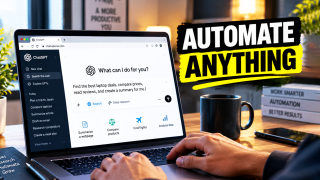
Racing through spreadsheets at 2 AM or crafting the fifteenth draft of that project proposal? Those late-night knowledge work marathons might become obsolete faster than you think. Mustafa Suleyman, Microsoft’s AI chief, just dropped a timeline that makes other tech predictions look glacial: artificial intelligence will automate most routine white-collar computer tasks within 12 to 18 months.
The Man Behind the Bold Prediction
Suleyman isn’t some startup founder throwing around buzzwords for attention. The British AI entrepreneur co-founded DeepMind before Google acquired it, then launched Inflection AI before joining Microsoft as CEO of its consumer AI division in March 2024.
Speaking to the Financial Times, he targeted specific professions—lawyers, accountants, project managers, and marketers—for near-term disruption. His timeline cuts dramatically against Anthropic CEO Dario Amodei’s more conservative five-year prediction for entry-level role automation.
Microsoft’s Enterprise AI Gambit
Behind Suleyman’s prediction lies Microsoft’s aggressive push into what he calls “professional-grade AGI”—artificial general intelligence capable of handling nearly all human computer-based professional tasks. The company is simultaneously reducing its reliance on OpenAI, accelerating development of in-house AI models to achieve self-sufficiency.
This isn’t just about better chatbots; it’s about capturing enterprise customers before competitors lock them in.
The Bigger Picture Timeline
Suleyman’s vision extends beyond immediate job displacement. He anticipates AI agents managing complex organizational workflows within 2-3 years, with custom AI model creation becoming “as easy as making a podcast or writing a blog.” Every institution and individual could theoretically build tailored AI assistants.
That accessibility sounds democratizing until you realize it also means your specialized knowledge work might become as commoditized as stock photography.
What This Means for Your Career
Whether Suleyman’s 18-month timeline proves accurate or Amodei’s five-year forecast holds, the direction remains clear. Your competitive advantage increasingly lies in tasks requiring human judgment, creative problem-solving, and relationship management—areas where AI still struggles.
The question isn’t whether automation will reshape knowledge work, but how quickly you’ll adapt your skills to stay relevant. Start identifying which parts of your job involve genuine human insight versus routine computer tasks. The clock is ticking louder than anyone expected.