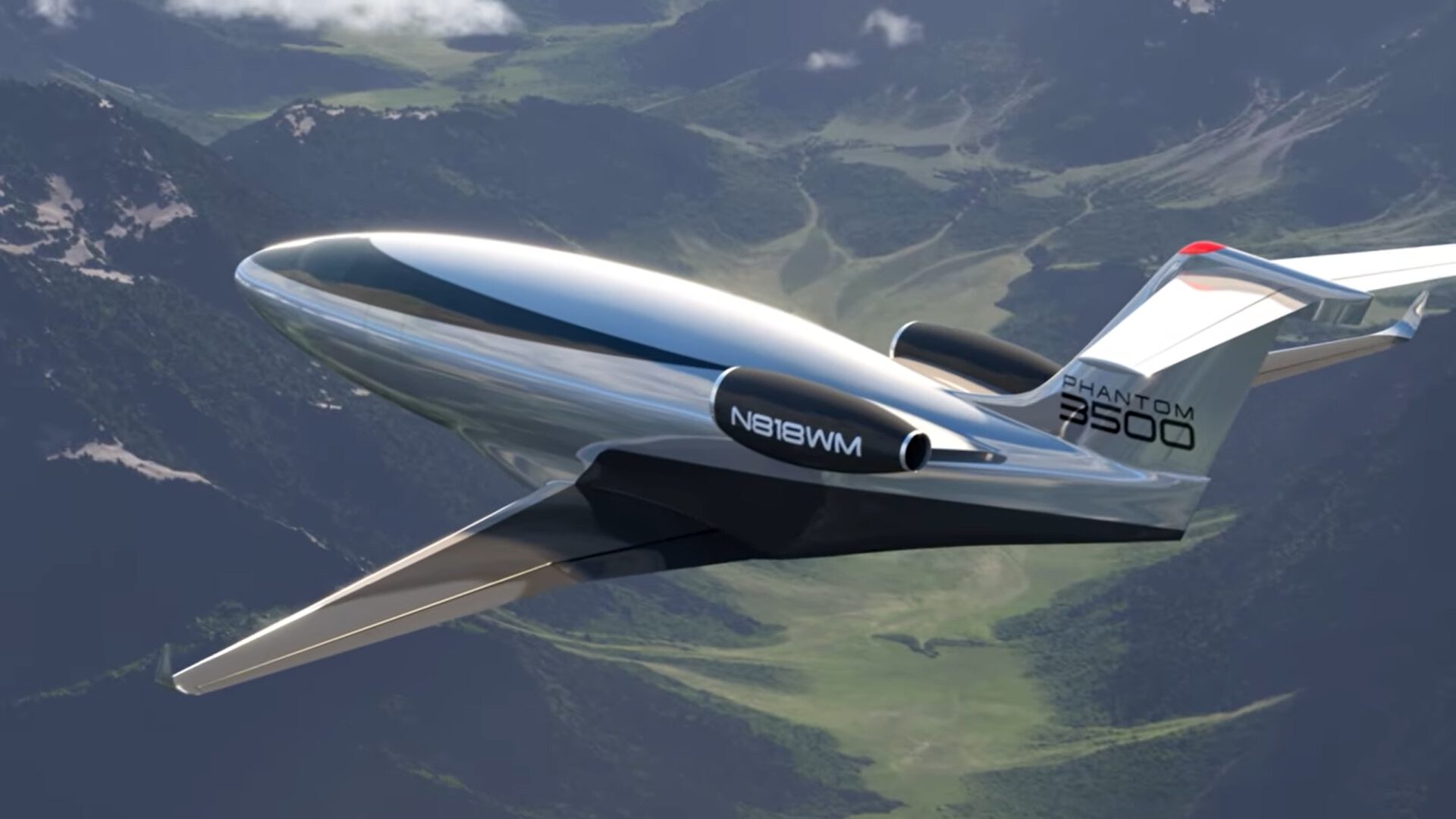
Flexjet just placed a $6 billion order for 300 Phantom 3500 jets, marking the largest deal in business aviation history. But here’s the twist that makes this more than another luxury purchase: this super-midsize jet has no windows.
Living Room in the Sky Gets a Digital Makeover
Instead of peering through tiny portholes, you’ll watch real-time exterior views on massive 4K OLED displays lining the cabin walls. Otto Aerospace calls it “Supernatural Vision,” partnering with LG for ruggedized screens that can stream live feeds, overlay augmented reality, or display entertainment.
The windowless design creates an elliptical cabin with 800 cubic feet of space—6 feet 5 inches of headroom and seating for nine passengers. Dr. Craig Lewiston, the ex-Apple engineer leading software development, designed the user experience. Think iPad simplicity meets private jet luxury.
Fuel Economy Meets Mach 0.8 Performance
The Phantom 3500’s party trick lies in its ultra-smooth composite fuselage that maintains laminar airflow—basically, air slides over the surface like water off a duck’s back. This aerodynamic wizardry cuts fuel burn by 60% compared to traditional jets while cruising at Mach 0.8-plus speeds.
Range hits 3,500 to 4,000 nautical miles, powered by Williams FJ44 engines. On sustainable aviation fuel, emissions drop 90%. Your transcontinental flights suddenly become less guilt-inducing.
Sustainable Luxury Commands Premium Pricing
The $19.5 million price tag positions the Phantom 3500 against established players like Bombardier’s Challenger 3500. Flexjet plans to integrate these aircraft into fractional ownership programs, making sustainable luxury accessible to corporate executives and high-net-worth individuals who want environmental credibility with their convenience. The math works when operating costs drop by half.
First Flight Still Years Away
Reality check: first flight won’t happen until 2027, with deliveries starting in 2030. Otto Aerospace remains a Texas startup, though led by aerospace veterans with serious backing. The timeline gives competitors plenty of opportunity to respond—or for Otto to prove their laminar flow promises actually work at altitude.
Private aviation’s sustainable future might look radically different than today’s fuel-hungry status symbols. Whether passengers embrace digital views over real windows remains the ultimate test.