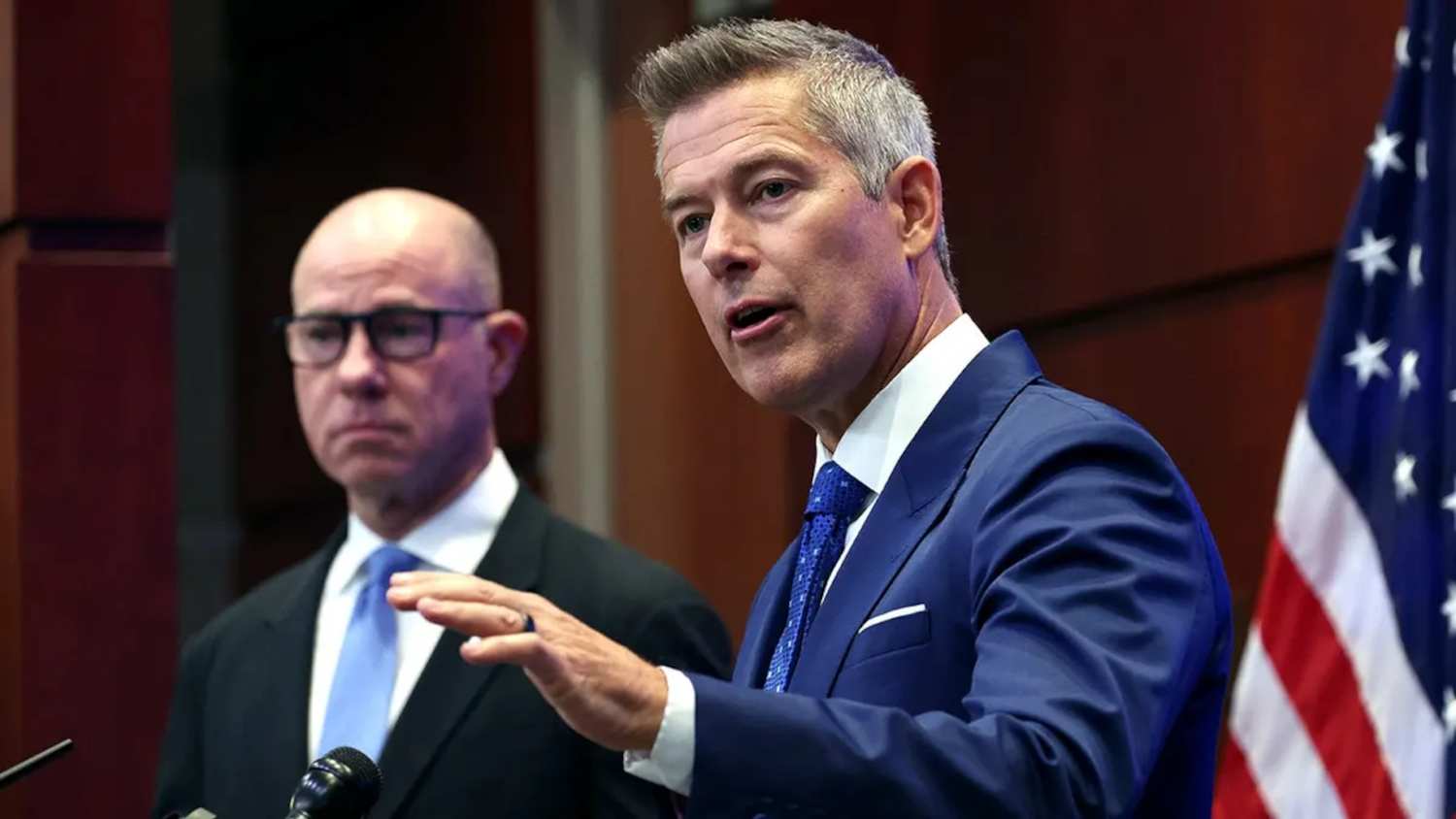
A rare nationwide network disruption disrupted U.S. air travel for roughly 4.5 hours on November 13. The official explanation did not stay the same between Friday and Saturday. Transportation Secretary Sean Duffy initially pointed to overloaded switches and routers producing inconsistent communications and radar data.
By Saturday, Duffy identified a more specific cause. Contractor L3Harris was converting old copper telecommunications lines to fiber-optic equipment at a remote FAA facility, and the upgrade reportedly flooded other routers with data. Duffy said the system recorded more than 1,000 connection attempts every four to five seconds, disrupting both aircraft communications and radar feeds.
Officials framed the ground stop as a safety precaution rather than a total system failure. The FAA later identified locations in El Dorado, Arkansas, and Amarillo, Texas, as two potential sources of the excessive data flooding. L3Harris said it was supporting the FAA’s investigation, and no official determination of cause had been made publicly as of Sunday.
Controllers Question the Timeline
Washington Examiner reporter Anna Giaritelli told CNN that roughly 60 air-traffic controllers she spoke with were unconvinced by the secretary’s account.
None of them are buying what he said.
Anna Giaritelli, Washington Examiner homeland-security reporter, speaking to CNN
The controllers’ reported objection centered on timing. According to Giaritelli, telecommunications work affecting critical communications infrastructure is typically performed overnight or during low-traffic periods, not on a busy Friday afternoon.
That skepticism does not prove Duffy’s explanation is false. It does suggest a credibility gap between the administration’s public account and the operational experience of personnel inside the system. The official materials reviewed do not directly address the timing question.
Thousands of Flights Caught in the Disruption
The ground stop affected more than 3,500 flights and produced a cascade of cancellations and delays that persisted through the weekend.
Disruptions continued well after the halt was lifted. By Sunday evening, NPR reported more than 2,300 cancellations and more than 8,000 delays. FAA Administrator Bryan Bedford warned travelers to expect continuing schedule recovery through the week.
The SMART Question
Duffy denied that the FAA’s recently deployed SMART system played any role in the outage, though no public evidence currently links it to the November 13 disruption.
SMART, which stands for Strategic Management of Airspace, Routes, and Trajectories, was previously announced by the FAA as a tool to reduce delays and cancellations across the agency’s air-traffic-control centers. Duffy said the system was “not even plugged in” at the time of the outage. No public evidence currently links SMART to the November 13 disruption.
A Warning the GAO Had Already Filed
A September Government Accountability Office report cautioned that the FAA’s fragmented modernization strategy could increase the risk of outages and service disruptions.
The GAO warned that poorly coordinated upgrades to aging, interdependent systems could trigger exactly the kind of disruption that grounded thousands of flights Friday. That warning provides structural context for the incident, though the available reporting does not establish that it predicted this specific failure. The report’s concerns about delivery speed outpacing operational continuity now frame the broader questions surrounding the outage.
Political Fallout and What Comes Next
The incident intensified existing political pressure over FAA staffing, infrastructure funding, and the administration’s modernization strategy.
Officials said there was no evidence of a cyberattack, though they had not fully ruled out the possibility. Duffy used the incident to renew his call for substantial congressional funding to overhaul air-traffic-control infrastructure, though the precise figure cited in his proposal should be confirmed against the specific legislation he referenced. The investigation remained open as of Sunday, with the FAA, L3Harris, and federal officials still working to determine whether contractor error, faulty equipment, or broader modernization failures were primarily responsible.