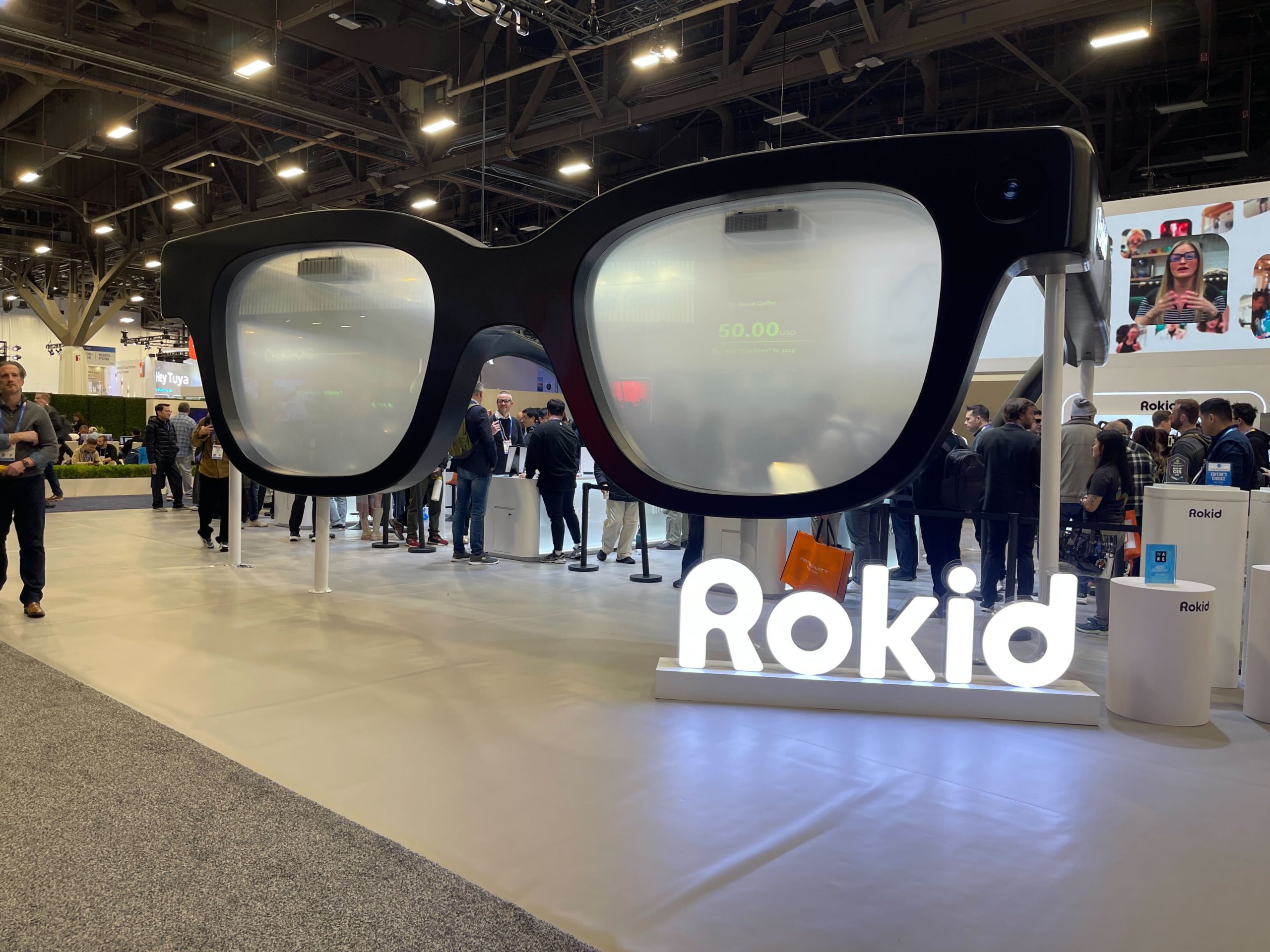
Fumbling for your phone while balancing coffee and boarding passes just became optional. Rokid’s AI glasses, now integrated with Alipay+ GlassPay, let you complete payments through voice commands and biometric authentication—no pocket diving required. The $299 Rokid Ai Glasses Style, unveiled at CES 2026, turns checkout into a conversation with your eyewear rather than a hardware treasure hunt.
Voice Meets Vision
AI voice commands, QR scanning, and biometric security create seamless transactions.
The system works like having a personal payment assistant perched on your nose. Say “pay for this coffee,” and the glasses scan QR codes through their built-in camera while authenticating your identity through iris recognition. Your voice becomes the trigger, the AI interprets your intent, and biometric checks ensure security—all while the transaction processes through Alipay+’s network of 1.8 billion connected accounts across 40+ payment providers.
Beyond Novelty Gadgets
Smart glasses gain practical purpose through everyday payment scenarios.
Unlike previous AR experiments that felt like solutions hunting for problems, payment integration tackles genuine friction points. Airport terminals, tourist districts, and busy cafes become testing grounds where hands-free transactions actually matter. The $299 price undercuts Meta’s Ray-Ban smart glasses (which exceed $579) while delivering utility that extends beyond taking photos or playing music. However, privacy concerns around iris recognition data collection remain largely unaddressed in the rollout.
Global Wallet, Local Convenience
Cross-border payments through smart glasses could reshape travel commerce.
The Alipay+ backbone connects travelers to merchants in 100+ markets without app-switching or currency conversion headaches. Previous pilots with Meizu smart glasses in Hong Kong proved the concept works in real-world scenarios. For frequent travelers accustomed to mobile payment ubiquity, glasses eliminate the “which app works here?” guessing game that still plagues international commerce.
Mainstream AR’s Missing Link
Payment functionality could drive smart glasses adoption beyond early adopters.
Smart glasses have struggled with the “why would I wear these?” question since Google Glass. Adding payment capability creates the same practical pull that made smartwatches essential through Apple Pay integration. When your eyewear handles transactions as naturally as checking notifications, the value proposition shifts from futuristic novelty to daily necessity—exactly the breakthrough AR wearables need to move beyond the current 2% market penetration rate.